
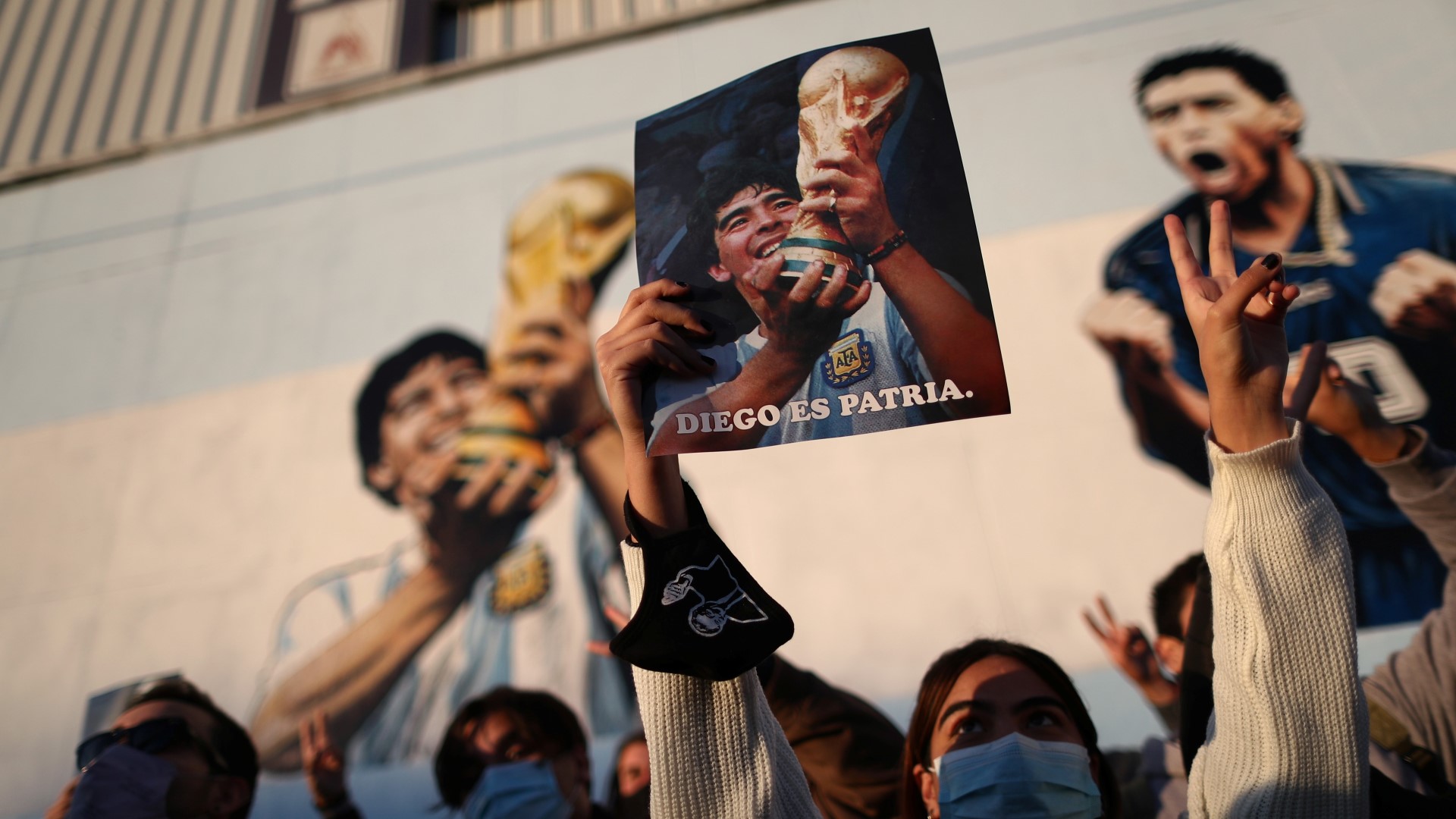
Its been 5 years since Diego Maradonas death. His memory lives on in these four spots
 Fernando Romero NunezNovember 25, 20254 Mins read
It’s been five years since football legend Diego Maradona passed away, a moment eternally seared in every Argentine’s memory. Maradona, El Diego, Pelusa, El Diez — he represented something for people of all ages. A national tragedy of sorts that united friends and rivals across the Argentine footballing spectrum. Those over 40 viewed him as a magician with the ball, the man behind the win in the 1986 FIFA World Cup in Mexico, and a symbol of the country’s sporting prowess. For the younger generation that only saw footage of him play, he was a fountain of popular wisdom and the measuring stick for every upcoming star that came along. As an idol, he gifted every fan who met him with moments of extraordinary kindness and joy. Despite the fact that the trial over Maradona’s death is currently in limbo, his place in popular memory is alive and well. And in no other place is that more on display than in Buenos Aires. From the first home we owned to an iconic corner to a gigantic mural, here are some of the places you can visit to soak in the Maradona experience. Corner of Segurola and Habana – Villa Devoto The intersection of these two otherwise unassuming Buenos Aires streets is perhaps the most well-known of all the city’s Maradona geographic references. It all started with an invitation to a fight. The year was 1995. Diego Maradona had just made his return to Argentine football to play for Boca Juniors after leaving the country 13 years before to go play for FC Barcelona — in exchange for a then world record figure. At 35, El Pelusa was once donning the number 10 jersey of the team he was a lifelong fan of. The particular incident took place following a match Boca played against Colón de Santa Fe on October 7. Still on the pitch after the end of the game, a rival player walked around claiming Maradona had convinced the referee to send him off and that he’d gladly settle the issue hand to hand. Never one to shy away from conflict, Maradona barked back. “I’m at Segurola and Habana, 4310, seventh floor. Let’s see if he lasts 30 seconds against me,” he said. The hand-to-hand combat never came to pass, but the phrase stuck as an amusing piece of Maradona’s mythology. When he passed, fans flocked to the corner — even though it had been years since he had actually lived there — to leave their tribute. The street signs got covered in football-related stickers, becoming Diego and Maradona, an unofficial change to the street names. In December 2020, the Buenos Aires City legislature installed a plaque on the corner, officially branding the intersection as the “Diego Maradona Corner.” La Casa de D10S – La Paternal Not far away, in the neighborhood of La Paternal, we can find another address linked to Maradona’s history. Nowadays known as La Casa de D10S (God’s House, with a ten as the I and the O), the house located at Lascano 2257 was the first home Maradona officially owned. He was gifted the house by Argentinos Juniors — the club where Maradona made his debut in 1976 before moving to Boca Juniors — as part of the terms of his first professional contract. His parents and 7 siblings moved in with him, and they all lived there between 1978 and 1980. The house remained on the market until 2008, when a neighborhood historical studies board took it under its wing. In 2015, it became a museum of Maradona’s life there. The rooms hold over 3,000 original objects that belonged to the star, from the original furniture to record players, pictures, and more. The museum is open to visitors, with a cost of AR$10,000 for Argentine nationals (who must present a DNI) and AR$15,000 (just over US$10 at the official rate) for foreigners. Visits must be booked at the museum’s website. Maradona’s Childhood Home – Villa Fiorito Maradona dedicated one of his most famous lines to his childhood home: “I grew up in a gated community, gated away from water, electricity, and phones.” Despite the tongue-in-cheek comment, he never showed anything but pride about his origins. Located at Azamor 523, in the low-income neighborhood of Villa Fiorito, Buenos Aires Province, the house where Maradona lived from the moment he was born until he moved to La Paternal became synonymous with El Diez and his story. The house is no longer in the hands of Maradona’s family. After the star received the new house from Argentinos Juniors, his mother gifted the house to a neighbour who had helped her through the process. She and her family still live there. The house retains many of its original features. It has a wire fence gate and dirt courtyard, a living room, and two bedrooms. In 2021, it was declared a place of national interest, offering legal protection against its demolition or alteration. The house and several places linked to Maradona’s childhood and early years can be seen in the Comunidad de D10s free walking tour. Inaugurated in 2024 with the presence of Maradona’s daughters Dalma and Giannina, the tour features seven key milestones in Diego’s life in Fiorito, like his childhood school, house, and the Estrellas Unidas club, in which Maradona first played football. Murals across the city Despite living in only three neighborhoods during the vast majority of his years in Argentina, Maradona’s presence is felt across Buenos Aires City. His death sparked a fury of murals and artistic expressions all over the city, paying tribute to his skill, charm, and bravery. Perhaps the most famous of them all is in the southern neighborhood of Constitución, at the corner of San Juan Avenue and Virrey Cevallos. Inaugurated in October 2022 to coincide with Maradona’s 62nd birthday, it’s 45 meters high and 40 meters wide. Artist Martín Ron painted it in 25 days, based on a photo of the Argentine star taken during the 1990 World Cup in Italy. Another impressive one can be found in La Boca, a neighborhood inextricably linked to Maradona via his passion for Boca Juniors. At Aristóbulo del Valle 100, you can find the 40×20 meter mural called San Diego It was authored by artist Alfredo Segatori, who started working on it the day Maradona died. Segatori later said that he already was thinking about doing a mural in honor of Maradona when he found out that the star had died. The sadness he felt was what convinced him to go ahead. “My idea was to portray Diego as a saint or patron saint of La Boca,” Segatori explained to La Nación in 2023. Those two examples are hardly the only ones. La Paternal and La Boca are covered with Maradona imagery, and many others can be found across the city.

Conectividad regional, auge de escapadas y la pasión por el turismo deportivo del viajero argentino
El pulso del turismo emisivo en la Argentina atraviesa un momento de...
 WindwhistlerOctober 13, 20260
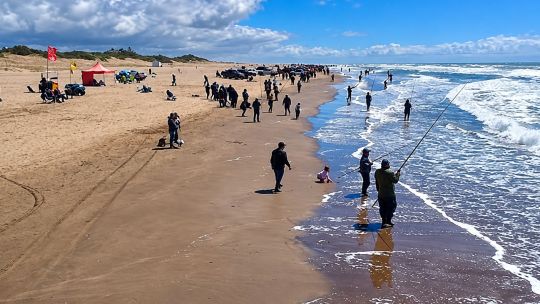
El último tiro cambió todo: pescó un pez elefante y ganó $ 20.000.000
Promediando el cierre de la semana pasada los pronósticos parecían tronchar la...
WindwhistlerOctober 13, 20260
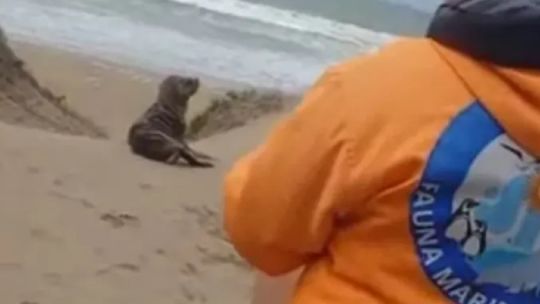
Así rescataron a un cachorrito de lobo marino de un pelo en los médanos de Miramar
Un sorpresivo y emotivo procedimiento de preservación ambiental conmovió por completo a...
WindwhistlerOctober 13, 20260



Proyectan exportaciones récord del agro en 2027, pero advierten que aún faltan dólares para el año electoral
A un año de las elecciones presidenciales, la pregunta sobre si estarán...
WindwhistlerOctober 13, 20260
