
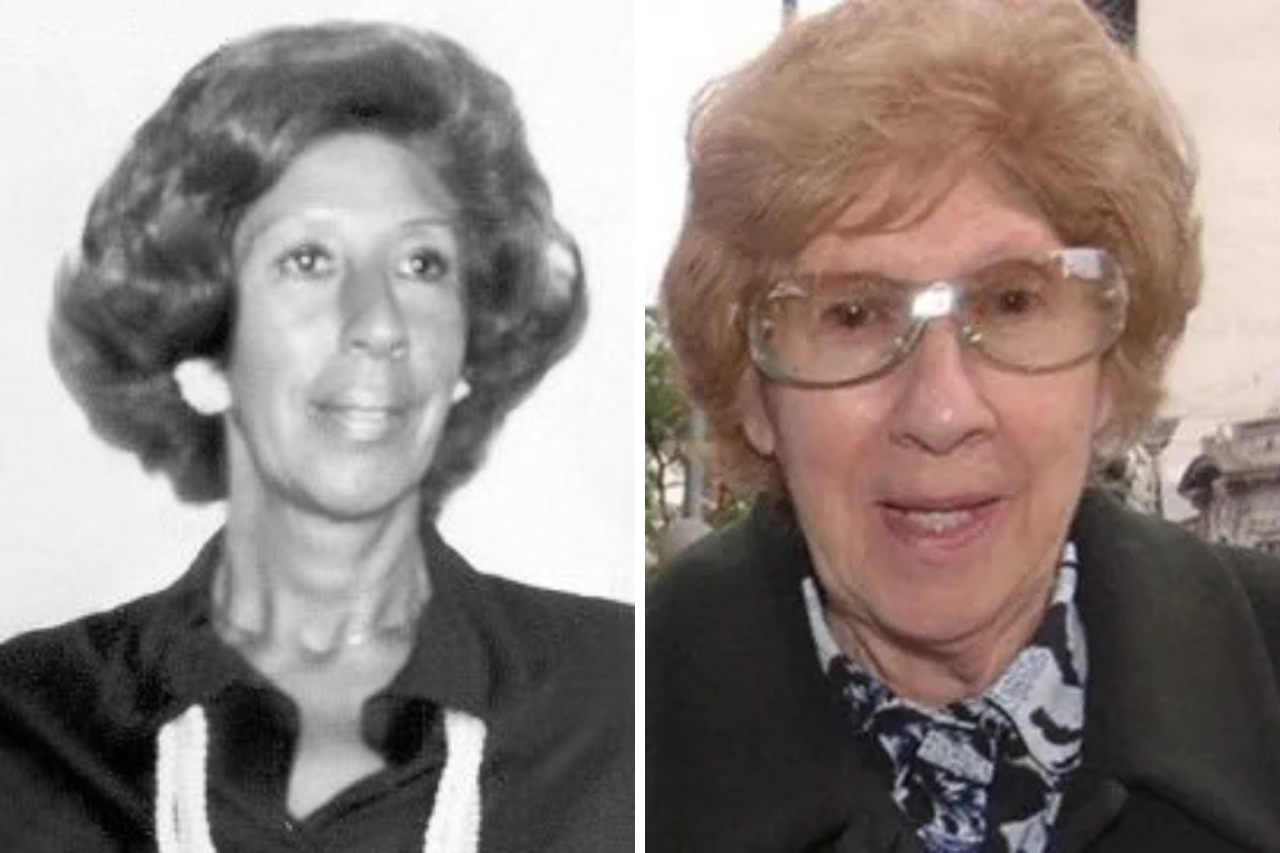
They sat down for tea and pastries; Yiya Murano served them cyanide instead
 Buenos Aires HeraldNovember 29, 20255 Mins read
An elegant elderly woman, “Yiya” Murano couldn’t help but smile when Mirtha Legrand — Argentina’s most established TV host — offered her pastries on-air during her popular lunch talk show. Legrand also appeared to suppress a laugh, a moment of singular dark humor, considering the circumstances that had made Murano notorious enough to be invited on her top rated program. Seventeen years before, in 1979, the then 49-year-old wife and mother killed three women — a neighbor, a family friend, and a cousin — by poisoning the afternoon tea and pastries she herself served them. The motive? A pyramid scheme that had left Yiya heavily indebted to her victims, a situation that led her to become the first woman serial killer on record in Argentina. After her arrest, Murano became a character of morbid intrigue to the Argentine public and her case turned into local lore. Her nickname, “Yiya,” is still used as a synonym for “poisoner.” A horrifically negative side of the elegant five o’clock tea concept, her story has transcended generations, and even became the subject of a mainstream musical that premiered in 2016, written by Osvaldo Bazán, with songs by Ale Sergi from Miranda, one of the country’s most popular pop bands. Now her legend is reaching new audiences with a new series, Yiya, that premiered on local streaming platform Flow. From housewife to killer Born María Bernardina de las Mercedes Bolla Aponte in 1930, in the province of Corrientes, “Yiya” grew up within a humble military family, yearning to leave for the big city of Buenos Aires. At the age of 23, she married a lawyer named Murano, raised a son and moved within Buenos Aires’ middle-class circles, cultivating the image of a wealthy porteña. Murano flaunted a lifestyle that didn’t exactly match her husband’s income, wearing jewels and furs she would later confess to getting from her more than 200 lovers — years later, the then-infamous Yiya bragged that they included famous and powerful men. Although the number was never confirmed, she did indeed have several lovers, some of whom she swindled for money with various methods, including blackmailing. Eventually, she became an informal lender and began taking money from her friends and acquaintances in her Monserrat neighborhood, with promises of high returns. It was all, in fact, an old-fashioned pyramid scheme. In early 1979, when her cash flow started to collapse, she plotted a solution as cold as it was calculated: eliminating her creditors. Between February and March of that year, three women close to her died suddenly and soon after having an afternoon tea with Yiya. The first two victims were her neighbor Nilda Gamba and family acquaintance Lelia Formisano de Ayala. As a friend, Yiya “assisted” the women’s families through the process of obtaining official death certificates, which stated the women had died from natural causes — her alibi. But right after the death of her latest victim — her second cousin Carmen Zulema del Giorgio de Venturin, or “Mema” — a daughter of the deceased noticed that the IOUs Yiya had given Mema were gone. She learned from the building’s super that Yiya had been the last person who was inside the apartment and had taken away some items. Mema’s daughter took the issue to the police, which led to the exhumation of the victim’s body and a chilling discovery: traces of cyanide poisoning. Yiya was arrested on April 27 of that year. She denied all charges and was actually acquitted by a court for lack of evidence. A regular reader of Agatha Christie’s crime novels, she had learned that death by poisoning was among the hardest to actually prove. However, a Chamber of Appeals dismissed the first ruling and instead sentenced her to life in prison, in 1985. Early reports indicated that police suspected Yiya had killed even more people. “An absolute egomaniac” Long before true-crime documentaries and podcasts became a thing, her case ignited national fascination: a seemingly refined woman, accused of murdering those closest to her using a poison straight out of a whodunit novel. Murano always maintained her absolute innocence, and while police suspected a third person was involved — someone who provided the cyanide, which wasn’t easily accessible — they were never able to identify them. Yiya’s son Martín once described her in an interview as “an absolute egomaniac, an egocentric person” who used sex to obtain money and power. “She was ridiculously histrionic all the time and a compulsive liar, which was stated in her forensic psychiatric evaluation. She was a contradiction in herself,” he added. In one of the books Martín wrote about his mother, he revealed that he almost became her fourth victim. Back when he was ten years old, he saw her put some liquid from a small bottle on a cake she was about to serve him, but just as he was about to eat a piece, she took it away. “It’s not like she had second thoughts; she simply didn’t dare to do it, which is very different,” he said. “Murderers never tell the truth” Because of sentence reductions, changes to Argentina’s penal code, and a three-year period in which her sentence was revoked and then reinstated, Yiya ended up serving only 13 years before her release in 1995. Outside of prison, she remained a public figure, giving occasional interviews and appearing on TV in an attempt to remain in the spotlight and gain notoriety. Reporters remember Yiya touring every newsroom, trying to sell her story. She never ceased to claim she was innocent, suggesting wild hypotheses like the fact that the victims hadn’t even been poisoned — as she told a reporter once, “murderers never tell the truth.” In the meantime, she managed to marry several times. One of her last husbands was Julio Banín, an elderly blind man who had been a newspaper proofreader. Banín’s daughter would later reveal she believed Yiya had slowly poisoned her father to death to get his pension and his life savings. She also claimed Yiya attempted to poison her several times. Murano spent her last years in nursing homes, her health and memory deteriorating with age. She died in 2014 at 84, not remembering who she was and far from the notoriety that once made her a piece of Argentine crime culture. Contrary to her wishes, her family didn’t put her famous nickname on her gravestone but buried her under a reduced version of her real name. Some of the reporters who interviewed her throughout her life said she would tease them by carrying an envelope, which — she said — told the whole truth about her and the murders — for a considerable fee. Legend has it, a journalist once managed to get a quick glimpse inside the envelope when the famous “Poisoner of Monserrat” got distracted signing an autograph. It was empty.


Conectividad regional, auge de escapadas y la pasión por el turismo deportivo del viajero argentino
El pulso del turismo emisivo en la Argentina atraviesa un momento de...
 WindwhistlerOctober 13, 20260
El último tiro cambió todo: pescó un pez elefante y ganó $ 20.000.000
Promediando el cierre de la semana pasada los pronósticos parecían tronchar la...
WindwhistlerOctober 13, 20260

Así rescataron a un cachorrito de lobo marino de un pelo en los médanos de Miramar
Un sorpresivo y emotivo procedimiento de preservación ambiental conmovió por completo a...
WindwhistlerOctober 13, 20260



Proyectan exportaciones récord del agro en 2027, pero advierten que aún faltan dólares para el año electoral
A un año de las elecciones presidenciales, la pregunta sobre si estarán...
WindwhistlerOctober 13, 20260
