
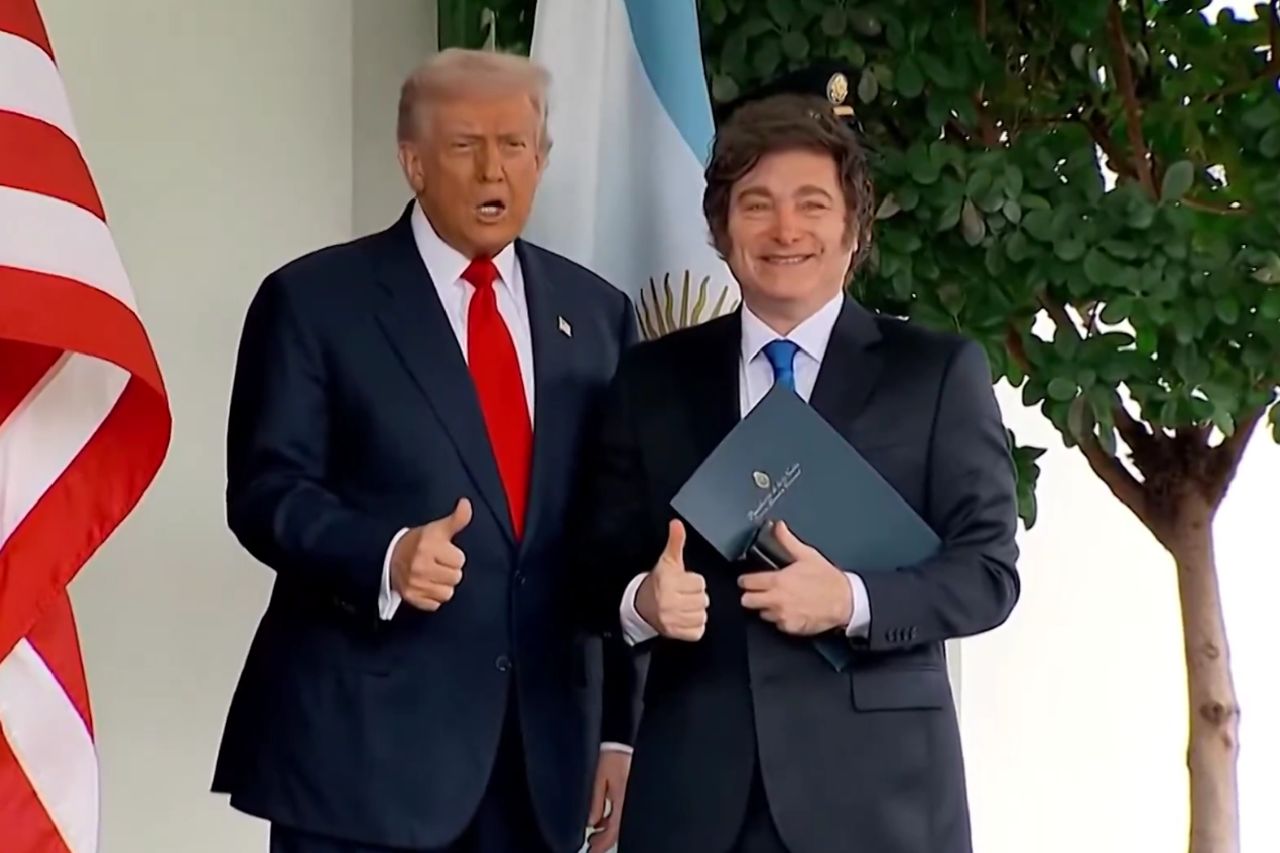

I just got back from a week in the United States, where I had wide-ranging conversations — with a diverse group of bankers and investors from Fundarus’ advisory boards, up-and-coming entrepreneurs, and educators and technologists from product teams at a major Silicon Valley education platform. From boardrooms to cafes, investor dinners to late-night meetups, every time I mentioned I was from Argentina, the response was some version of “What the hell is going on with that bailout?” It wasn’t just the question. It was the tone. Democrats were angry. Republicans were confused. Some thought it was a joke, others thought it was a scandal. But nobody thought it was a good idea. And more importantly, nobody thought it was America’s idea. Because it wasn’t. It was Donald Trump’s. In October, the U.S. Treasury, under Trump’s Secretary Scott Bessent, funneled billions of dollars to Argentina’s central bank. The deal was packaged as a currency swap, fast-tracked during a U.S. government shutdown, and activated even before it was formally signed. It was designed to stabilize the peso just days before Argentina’s midterms, buying Milei time, credibility, and a crucial electoral win. Trump said it outright: if Milei lost, the money would disappear. This wasn’t foreign policy. It was a political favor. We didn’t vote for this In the U.S., the backlash was swift. Senator Elizabeth Warren called it economic manipulation. Marjorie Taylor Greene denounced it as a betrayal of America First. A YouGov poll showed 56% of Americans opposed the bailout. Even Trump’s own voters rejected it two to one. Satirical shows went in hard. Jon Stewart mocked Trump’s populism for extending to a libertarian president on another continent. Saturday Night Live cast Milei as an erratic foreign Mini-Me. The message was clear: we didn’t vote for this, and we won’t pay for it later. One Republican tech investor I met in Mountain View summed it up. “I’ve got nothing against Argentina,” he told me. “But we just had the longest government shutdown in U.S. history because Trump didn’t want to renew healthcare subsidies for our own people. And while Americans were out of work, we were pumping billions into a country with socialized healthcare? Before the ink was even dry? How do you think that makes us feel?” There’s no answer to that. Because it doesn’t make sense. Not economically. Not politically. Not morally. What Milei secured wasn’t a relationship with the United States. He tied Argentina’s financial survival to the favor of one man. There was no bipartisan agreement. No enduring strategy. Just a swap line, a media stunt, and a blank check signed by a campaign. That’s not diplomacy. That’s dependency. Trump will not be in office in 2029, no matter what happens in Argentina. If Milei wins a second term, he will face it without his only international political backer. And even if he doesn’t, Argentina as a country will still have to deal with the consequences of aligning itself with a temporary, deeply polarizing figure. Whoever leads the United States next — Republican or Democrat — is already signaling that this arrangement will end. The mechanics of the deal speak volumes. A US$20 billion swap, routed through the central bank to dodge Argentina’s constitutional requirement for congressional approval. A phantom US$20 billion private-sector bond plan that never happened. No published terms. No oversight. No clarity. Populism dressed as policy. A one-time liquidity injection sold as salvation. Pure smoke And it came at an institutional cost. Argentina’s law requires new sovereign debt to be approved by Congress. But by labeling it a swap and hiding it in the balance sheet of the central bank, the Milei administration bypassed Parliament entirely. When billions are exchanged with repayment terms and political strings, that’s debt. Even the supposed Wall Street bond deal — marketed as private investment — was pure smoke. No bank ever committed. No contracts were signed. It was never real. To add shade to the whole situation, the U.S. started selling dollars into Argentina’s market before the swap was even announced. The Treasury was intervening silently, behind the backs of furloughed American workers, without public disclosure. An unaccountable flow of foreign currency, benefiting a foreign government, hidden from the American people. Yes, the peso stabilized briefly. Inflation dropped. Imports surged. Milei’s coalition won. But the gains were artificial, financed with borrowed dollars and enforced by intervention. Today, exchange rates are splitting again. Reserves are leaking. And confidence is evaporating. Without a second Trump term, this entire stabilization stunt is at risk of collapse. Argentina, once again, is borrowing money to subsidize the dollar. Not to invest. Not to grow. Not to export. Every dollar borrowed so far has been spent holding down the price of another dollar — so imports stay cheap, the rich get to move money, and campaign optics stay intact. This isn’t monetary policy. It’s a political firewall. And no one can say what comes after. The real cost isn’t economic. It’s diplomatic. Argentina is now seen — by lawmakers across Washington — not as a partner, but as a pawn. As a temporary client of a populist U.S. president who used our crisis for his campaign math. Once Trump is gone, Argentina will be remembered not for recovery, but for complicity. And when the next crisis hits, the question in Washington won’t be how can we help Argentina. It will be, why would we?
Conectividad regional, auge de escapadas y la pasión por el turismo deportivo del viajero argentino
El pulso del turismo emisivo en la Argentina atraviesa un momento de...
 WindwhistlerOctober 13, 20260
El último tiro cambió todo: pescó un pez elefante y ganó $ 20.000.000
Promediando el cierre de la semana pasada los pronósticos parecían tronchar la...
WindwhistlerOctober 13, 20260

Así rescataron a un cachorrito de lobo marino de un pelo en los médanos de Miramar
Un sorpresivo y emotivo procedimiento de preservación ambiental conmovió por completo a...
WindwhistlerOctober 13, 20260


Proyectan exportaciones récord del agro en 2027, pero advierten que aún faltan dólares para el año electoral
A un año de las elecciones presidenciales, la pregunta sobre si estarán...
WindwhistlerOctober 13, 20260
