


Two years ago, President Javier Milei had such a tiny congressional minority that people were asking how he would govern. Today, his La Libertad Avanza party has the largest bloc in the lower house and a more powerful presence in the senate. In early December, the new deputies elected in October’s mid-term elections were sworn in, ringing in the start of the libertarian economist’s third year in office. Over the last three weeks of 2025, Congress is holding extraordinary sessions to debate a series of reforms and key bills such as the budget. But, while Milei is hoping that legislating will be a clear run, even with allies he’s short of an overall majority. In the end, the real test may be whether he can keep everyone onside for long enough to implement his ideas. The president hopes to pass a flurry of business-friendly bills, including labor and tax reforms and the rollbacks of environmental protections. But in the past few days we have learned that he can take nothing for granted. On Friday night, Milei and his party celebrated as the Senate passed his 2026 budget by a comfortable 46-25 margin. It is the first time the president has passed a budget, after working with extensions of the 2023 budget in 2024 and 2025. However, getting the bill passed was not all plain sailing. The Chamber of Deputies approved the budget in the early hours of December 18, but lawmakers voted against a politically sensitive chapter that would have overturned laws granting funding to universities and people with disabilities. The decision infuriated the Casa Rosada to the point that Milei had to give public assurances that he would not veto his own budget. The rejection of the chapter was delivered by deputies from provinces such as Catamarca and Tucumán, whose governors are Peronists who have supported Milei in the past. Likewise, some from the normally-supportive UCR broke ranks. This shows he cannot take congressional or regional support for granted. Instead, he must treat it as a balance that requires constant upkeep. The horse trading in 2026 will be worth monitoring. PROblems After the budget was debated in the lower house, a surprising conflict broke out between LLA and their closest allies, the PRO party, who have provided key congressional support to Milei. In a last-minute decision, the Lower House leaders elected new members of the powerful National Audit Office. The appointments made it clear that the ruling party had negotiated with Peronism on the side, leaving their allies out of the loop. PRO’s response was furious: they are challenging the move in court, and a high-ranking party source told Ámbito that PRO would no longer “support, provide a quorum for, or do anything we are not obligated to do” to support LLA. In public, Interior Minister Diego Santilli (PRO) has denied a rupture. It remains to be seen whether this rift deepens or heals in 2026. The next challenge Perhaps the most contentious of the reforms on Milei’s agenda is the labor reform. Originally scheduled for discussion during December’s extraordinary sessions, this has now been pushed back to February. Milei’s pitch is that Argentina must make it easier and cheaper for companies to hire workers — and fire them — if it wants to bring more people into formal employment. This, in turn, would create a larger base of contributors to the nation’s pension system. His government’s bill includes a cheaper severance pay calculation, a time bank system that would reduce the hours paid as overtime, and provisions allowing companies to pay in foreign currency, or even food. Argentina’s labor movement has come out hard against the reform, calling it a massive roll-back of basic rights. A large march took place on December 18, and the CGT trade union federation has threatened a general strike if the government doesn’t come to the negotiating table. It is unlikely that everything in the current bill will make it through Congress, and getting the bill approved will be further complicated if LLA does not have PRO’s full support. Expect marches and vehement disputes when it hits the house floor in February. Other issues likely to be debated in this second period of extraordinary sessions include a tax reform, modifications to the Glacier Law that would pave the way for certain mining projects (also socially contentious), and criminal code reforms. Clouds on the horizon? While Milei focuses on Congress, the average Argentine is more concerned by economic instability and what is going on in their pockets. With inflation stabilizing at just over 30% in recent months, the main worry now is the quarter of a million formal jobs that have been lost and around 30 businesses that have gone bankrupt every day since Milei took office at the end of 2023. Families are also falling behind on loan repayments at record levels. The economy has avoided recession on a technicality. According to political analyst and consultant Facundo Cruz, the concern motivating many opposition voters “is no longer ‘my money won’t be worth the same at the end of the month,’ it’s ‘will I still have a job at the end of the month?’” Despite this glum panorama, Milei has received powerful backing from U.S. President Donald Trump. In September, the U.S. Treasury announced a US$20 billion currency swap with Argentina, providing a financial lifeline. Analysts argued at the time that this would limit pessimism on Argentina, because betting against Buenos Aires would mean betting against Washington. However, there are a few reasons to take this international endorsement with a pinch of salt. A separate US$20 billion that the U.S. Treasury had said would arrive in the form of a credit package from private banks was shelved in favor of a far smaller arrangement. This Argentina bailout has also proved unpopular across the political spectrum in the U.S. As our political columnist Adrián Genesir has argued, this can be read as support from President Donald Trump to President Javier Milei, not from the U.S. to Argentina. Since Trump cannot stand for another term and even his Republican allies are opposed to the deal, Milei cannot count on having this support throughout a potential second term. Nonetheless, in 2026, Trump’s contingent support of the Milei administration will continue to influence Argentina’s international agenda. Peronist discord The lack of clear leadership in the Peronist opposition means that, despite the ailing economy and a hat trick of corruption scandals that hit Milei in 2025, voters still do not have a convincing political alternative. This lack of competition works in Milei’s favor. Former President Cristina Fernández de Kirchner is currently serving out a corruption sentence under house arrest after exhausting her appeals back in June. She is also on trial in the “Cuadernos” case. Many Peronist supporters continue to look to her as their leader. Meanwhile, Buenos Aires province Governor Axel Kicillof — Kirchner’s erstwhile protégé — is consolidating his position ahead of a potential future presidential run. Yet, former mentor and mentee spent much of 2025 mired in disharmony. Nominally, it was about whether to hold the Buenos Aires provincial elections on the same day as the national vote. In reality, it had more to do with a struggle for power. In practice, it means that two years into Milei’s presidency, the opposition is still struggling to unite around a leader, resulting in a lack of direction. “As opposition, you can either oppose, or oppose and propose, and Peronism hasn’t been proposing,” Cruz said. If things go well for Milei in 2026, it could be a victory lap year in which he delivers key reforms that will prove popular with the business community. But if things go poorly, it could be a year of economic doldrums, street protest, and political fracture. “I think we need to watch the government’s strategy to maintain its first-minority status in deputies. Many of the reforms that both the national and international economic establishment are asking for have to pass congress, because he needs to show governability,” Cruz said. “What he needs to maintain stability, and not a block that has already proven shaky with the budget.”


Conectividad regional, auge de escapadas y la pasión por el turismo deportivo del viajero argentino
El pulso del turismo emisivo en la Argentina atraviesa un momento de...
 WindwhistlerOctober 13, 20260
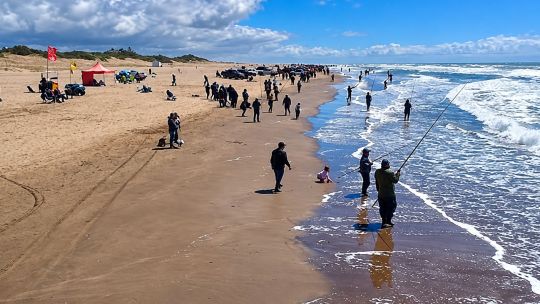
El último tiro cambió todo: pescó un pez elefante y ganó $ 20.000.000
Promediando el cierre de la semana pasada los pronósticos parecían tronchar la...
WindwhistlerOctober 13, 20260

Así rescataron a un cachorrito de lobo marino de un pelo en los médanos de Miramar
Un sorpresivo y emotivo procedimiento de preservación ambiental conmovió por completo a...
WindwhistlerOctober 13, 20260



Proyectan exportaciones récord del agro en 2027, pero advierten que aún faltan dólares para el año electoral
A un año de las elecciones presidenciales, la pregunta sobre si estarán...
WindwhistlerOctober 13, 20260
