
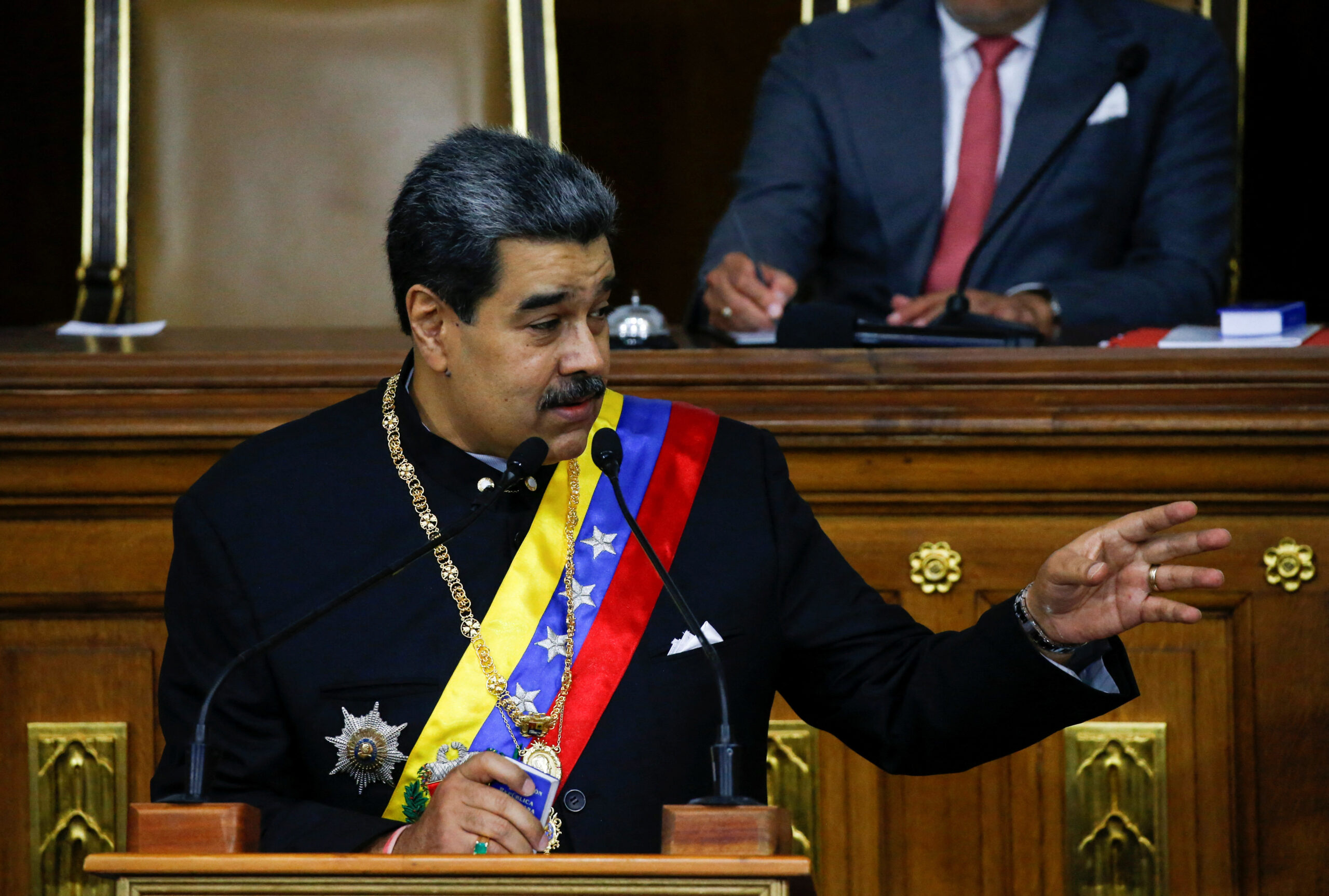
United States grabs Maduro in military strike on Venezuela
 Buenos Aires HeraldJanuary 3, 20267 Mins read
United States security forces have launched a “large-scale strike against Venezuela” in which they captured President Nicolas Maduro and his wife and removed them from the country, U.S. President Donald Trump announced on his TruthSocial social media platform on Saturday morning. Maduro’s Vice President Delcy Rodríguez confirmed the strikes in a telephone message broadcast on Venezuelan television. She initially said that she did not know the whereabouts of Maduro or his wife, Cilia Flores, and demanded that the United States provide proof of life. Hours later in an interview with Fox News, Trump stated that Maduro had been taken to the U.S.S. Iwo Jima, one of the U.S. Navy ships that have been stationed in the Caribbean during the attacks on boats suspected of being involved in the drug trade. From there, he said the Venezuelan leader will be taken to New York to face charges. Trump also posted a photo on TruthSocial that he said showed Maduro aboard the Iwo Jima. The image appeared to show Maduro in a gray tracksuit, blindfolded and wearing ear muffs, his hands cuffed in front of him. “We demand respect for international law,” Rodríguez said. “We condemn this brutal, savage attack against our people, which has claimed the lives of military officials who have become martyrs, and has claimed the lives of innocent Venezuelan civilians at the various points of attack, both in the capital city and in the states of Aragua, Miranda, and La Guaira.” Numbers of casualties were not immediately available. The U.S. strikes targeted military bases, and at the time of writing the Venezuelan government had not provided specific information about how the attacks had affected civilians or the military. Photos of the aftermath of the strike on the La Carlota air base in Caracas by Reuters news agency showed anti-aircraft vehicles burned out, their frames still smoking. Videos of the strikes posted online show explosions in Caracas, followed by large plumes of smoke. Venezuelan human rights organization Foro Penal posted that they did not have up-to-date information about the situation of political prisoners following the strikes. “The isolation they are submitted to makes them particularly vulnerable,” the organization wrote. “We remain in contact with their families and have activated our permanent watch system.” Trump said in a press conference at his Mar-a-Lago resort at 11.39 a.m. Florida time (1.39 p.m. Argentine time): “we are ready to stage a second and much larger attack if we need to do so.” You may also be interested in: Trump: ‘We’re going to run Venezuela until such time as a proper transition can take place’ U.S. Attorney General Pam Bondi announced online that Maduro and Flores had been indicted in the Southern District of New York on drug and weapon charges. “They will soon face the full wrath of American justice on American soil in American courts,” she wrote on X. What happens in Venezuela now U.S. President Donald Trump announced his country will “run Venezuela until such time as we can have a safe, proper and judicious transition,” after the U.S. military captured Venezuelan President Nicolas Maduro in Caracas in the early hours of Saturday, in what Trump described as a “spectacular attack.” However, Trump has not yet announced how and who will be involved in that transition. According to the Venezuelan constitution, if the president is “absent” (either because he dies, resigns, or is removed) from office in the first four years in office, the Executive Vice President assumes the role and elections must be held within 30 days. Maduro’s current term began in January 2025, so this provision should apply to the current situation. The situation, however, is muddled by the accusations of severe irregularities and fraud committed during the July 2024 elections that ended with Maduro claiming victory. The ousting of Maduro opens the doors for demands made by many in the international community that the election results be amended and that opposition candidate Edmundo González Urrutia, whom the Venezuelan opposition’s unofficial count declared winner, became president. Argentine Foreign Minister Quirno was one of the first to voice this position in his tweet endorsing the U.S. attack, saying that the Argentine government hoped that the capture of Maduro would allow González Urrutia to take power “in accordance with the people’s will.” He also made a point of voicing his support for recent Nobel Peace Prize winner Marina Corina Machado, for her “defense of democracy and freedom in Venezuela.” Machado is the main opposition figure but was not allowed to run in the elections because she is banned from holding public office due to her alleged involvement in a plot to get the United States to impose economic sanctions on Venezuela. In a post on X posted Saturday at noon, Machado endorsed the position that the Maduro administration must be ousted entirely. “[It is the time of citizens] who chose Edmundo González Urrutia as the legitimate Venezuelan president, who must be inaugurated immediately and recognized as the Commander in Chief of the Armed Forces,” she wrote, adding that they were “prepared to validate their mandate and take power.” Remnants of the Maduro government, meanwhile, are vowing to stand their ground. Telesur television stations broadcast recorded footage of Venezuela Defense Minister Vladimir Padrino Lopez saying that the military will deploy “all capabilities” to defend the country. The military leader stated that all “land, air, navy, and missile resources” will be deployed to “confront imperial threats.” Speaking to Fox News, Trump seemed to hit the brakes on endorsing Machado and her party as the new Venezuelan government. “Well, we have to look at it right now,” he said when he asked if he would support her. “They have a vice president, as you know. I mean, I don’t know what kind of an election that was, but, you know, the election of Maduro was a disgrace.” Reports from Caracas According to sources in Caracas, the situation in the city following the attack is tense but calm. The few supermarkets and drugstores that remain open are being swarmed, a source told the Herald. While the government has called Venezuelans to take to the streets and protest, a report confirmed that very few have answered the call. Most people have chosen instead to stay home and wait for the situation to develop. “People are also afraid to express themselves over what has happened because we all know too well how the government’s repressive apparatus works,” the source added. A 30-year-old Venezuelan man who lives close to a military facility in the outskirts of Caracas that was not hit in the strikes told the Herald that he started to hear strange sounds between 1 and 1.30 a.m. local time. “Soon afterwards, the power went out, and I could still hear the sound. I started to hear explosions in the sky one after another,” he said via voice note. He asked to remain anonymous because he has relatives in the security forces. Soon after, his friends started to text him and tell him that Caracas was being bombed. His power and internet went down at around 2 a.m. for nine hours, although he has mobile data. Although possible further attacks worry him, he is more concerned over the reaction of the government’s paramilitary groups. “Because they can take you to participate in the ‘battlefront,’” he said. He is staying at home because he has food and cash, but in the streets outside, he can see government special forces and colectivos — the pro-government paramilitary groups — passing by. Some of his friends have spent three hours queuing up to buy food, and he provided videos of long lines at supermarkets. “I haven’t wanted to celebrate, because I experienced the transition from [deceased former President Hugo] Chávez to Maduro, and there was a kind of emptiness, a lot of uncertainty.” Global reactions Argentine President Javier Milei celebrated the attack in a post on X. “FREEDOM ADVANCES,” he wrote. “LONG LIVE FREEDOM, DAMN IT!” Argentina’s Foreign Minister Pablo Quirno welcomed the U.S. strike and the capture of Maduro, whom he called “leader of the Cartel de los Soles,” a supposed drug gang that the Trump administration claims is led by the Venezuelan government. He added that Argentina hoped the events would bring “decisive progress against the narcoterrorism affecting the region” and bring “democracy, the reign of law, and respect for human rights” to the Venezuelan people. President Gustavo Petro of Colombia posted on X that he had deployed his country’s security forces along the Venezuelan border and asked for the United Nations Security Council to meet. “The government of Colombia rejects the attack on the sovereignty of Venezuela and Latin America,” he wrote. Brazilian President Luiz Inácio Lula da Silva said that the attack “crossed an unacceptable limit” and called on the United Nations to respond. “Attacking countries, in flagrant violation of international law, is the first step to a world of violence, chaos, and instability, where the law of the strongest prevails over multilateralism.” The Grupo de Puebla, a forum of progressive regional leaders, issued a statement saying that the U.S. attack is a “violation of the UN’s charter letter and puts peace in Latin America at risk.” They demanded an “immediate end” to the attack and “unrestricted respect for Venezuelan sovereignty.” Chilean President Gabriel Boric also condemned the attack, stating his “adhesion to basic principles of international law, like the proscription of the use of force, non-interventionism, the peaceful solution of international controversies, and the territorial integrity of states.” Mexican President Claudia Sheinbaum quoted the United Nations charter letter to convey her country’s position: “Members shall refrain in their international relations from the threat or use of force against the territorial integrity or political independence of any State, or in any other manner inconsistent with the Purposes of the United Nations.” Developing story — check back for updates
Conectividad regional, auge de escapadas y la pasión por el turismo deportivo del viajero argentino
El pulso del turismo emisivo en la Argentina atraviesa un momento de...
 WindwhistlerOctober 13, 20260
El último tiro cambió todo: pescó un pez elefante y ganó $ 20.000.000
Promediando el cierre de la semana pasada los pronósticos parecían tronchar la...
WindwhistlerOctober 13, 20260
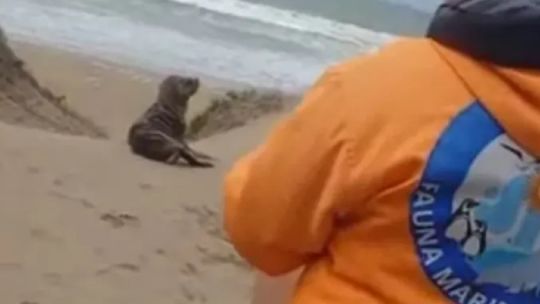
Así rescataron a un cachorrito de lobo marino de un pelo en los médanos de Miramar
Un sorpresivo y emotivo procedimiento de preservación ambiental conmovió por completo a...
WindwhistlerOctober 13, 20260


Proyectan exportaciones récord del agro en 2027, pero advierten que aún faltan dólares para el año electoral
A un año de las elecciones presidenciales, la pregunta sobre si estarán...
WindwhistlerOctober 13, 20260
