
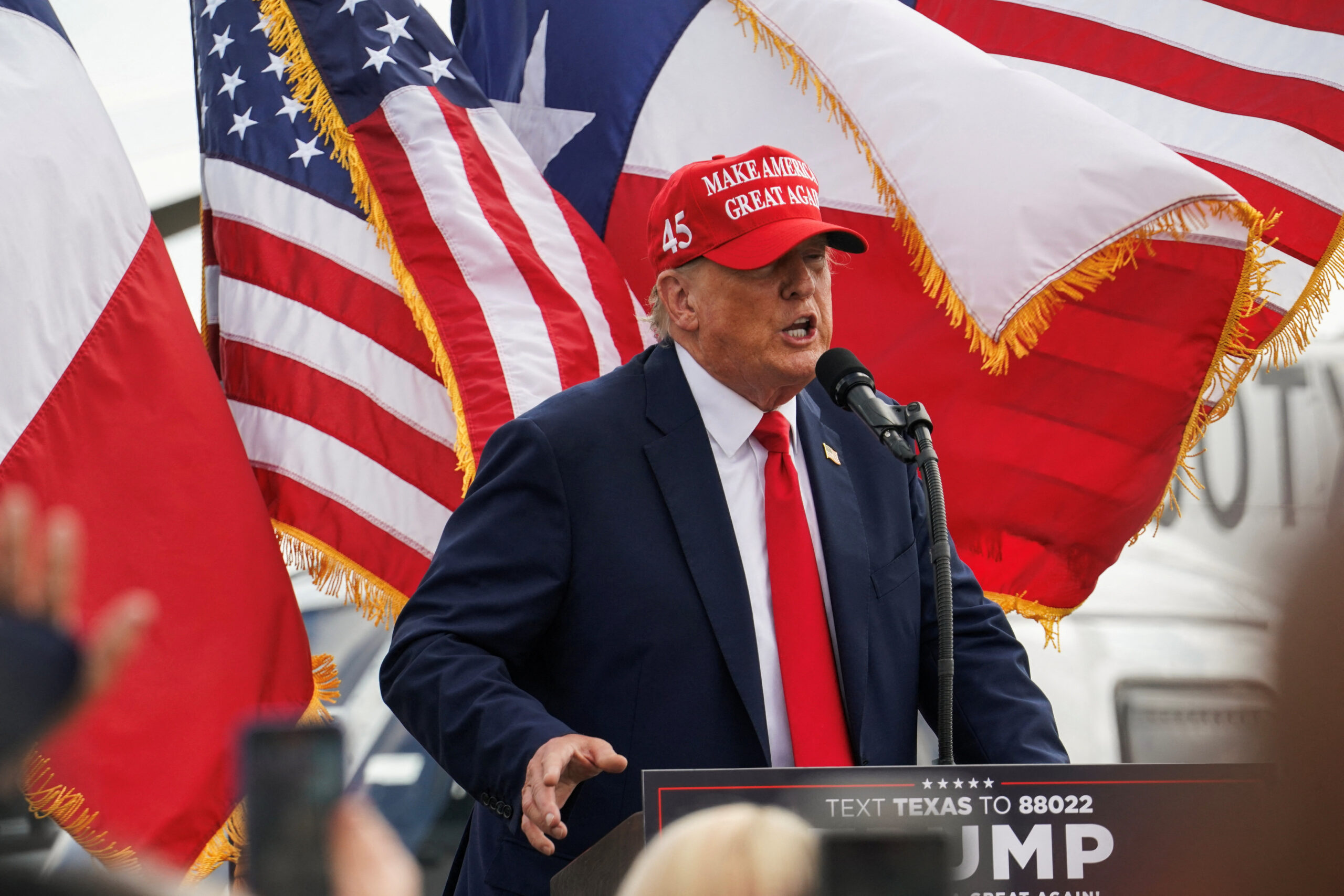

Speaking at a press conference on Saturday, United States President Donald Trump outlined the reasoning for why his military had captured Venezuelan President Nicolás Maduro: he claimed the country had “unilaterally seized and sold American oil,” that its criminals were coming to the U.S., and that it was “hosting foreign adversaries.” “All of these actions were in gross violation of the core principles of American foreign policy dating back more than two centuries […] it dated to the Monroe Doctrine,” he said. “And the Monroe Doctrine is a big deal, but we’ve superseded it by a lot. They now call it the Donroe Doctrine.” But what is the Monroe Doctrine — and why does Trump want to rename it after himself? What is the Monroe Doctrine? The Monroe Doctrine is the U.S. foreign policy position that foreign powers should not seek to expand their influence in, or colonize, the Americas — and that the U.S. can intervene to stop them if they do. It’s named after former U.S. President James Monroe. In an 1823 speech, he said that the U.S. would not interfere with European countries’ internal conflicts or their remaining colonies, but that any attempt to expand into the Americas or retake the newly independent nations would be treated as “dangerous to our peace and safety” and a “manifestation of an unfriendly disposition toward the United States.” Monroe’s comments established spheres of influence and a passive approach. President Theodore Roosevelt, however, adapted those ideas into a more aggressive “regional policeman” stance, saying that the U.S. would intervene in the region if its Western Hemisphere neighbors seemed to be courting a crisis that could destabilize the Americas. Poignantly, his 1904 stance — known as the Roosevelt Corollary — were triggered by concerns over Venezuela’s debts to Europe. Since then, the U.S. has used the Monroe Doctrine as a basis for pursuing interventionism in Latin America. This includes supporting bloody civil wars, coups, and dictatorships, with a view to consolidating Washington’s power in the Western Hemisphere. Inter-American relations, however, were “rebooted under more of a logic of cooperation and horizontality” following the end of the Cold War, said Alejandro Frenkel, international relations professor at the National University of San Martin. In 2013, then-President Barack Obama’s Secretary of State John Kerry said that the Monroe Doctrine was over. But that didn’t last. Is the Monroe Doctrine back? Yes, explicitly so. In November, the Trump administration published a 33-page National Security Strategy stating that it would adopt a “Trump Corollary” to the Monroe Doctrine. “After years of neglect, the United States will reassert and enforce the Monroe Doctrine to restore American preeminence in the Western Hemisphere and to protect our homeland and our access to key geographies throughout the region,” the document reads. This is not surprising. Frenkel noted that, during Trump’s first term, Secretary of State Rex Tillerson proposed reviving the Monroe Doctrine to counteract the influence of Russia and China in the Americas. According to Esteban Actis, professor of international relations at Argentina’s National University of Rosario, the return of the Monroe Doctrine and Trump’s bragging about reinstating it respond to his logic of “abandoning political correctness.” “He has a logic of showing his political strength, always showing that he has the power, and not hiding it.” How is Trump’s ‘Donroe Doctrine’ different? It’s unusual for a U.S. president to back the Monroe Doctrine so explicitly, according to Actis. “While the U.S. always held the Monroe Doctrine at certain moments in the 20th century, especially during the Cold War, it was never explicit, and that’s what’s changed with Trump. He explicitly vindicates it.” A significant faction of Trump’s senior officials and advisors who are linked to the MAGA movement, including Vice President JD Vance and Steve Bannon, are pushing for the U.S. to “abandon that idea of ideological wars and exporting democracy to the world and orient itself around its strategic national interests,” Frenkel said. Instead, they want the U.S. to prioritize its strategic interests. These figures are known as the “restrainers.” This explains why the Trump administration has wanted to reduce its involvement in the Ukraine war, for example. For those in the Vance and Bannon camp, looking out for U.S. interests means focusing on counteracting Chinese influence by consolidating control closer to home — in other words, over the Americas. Mass migration from Latin America to the United States, drug trafficking, and natural resources also play a role. “The world isn’t short of food, minerals, or oil,” Actis said. “The problem is accessing them versus supply being interrupted, for example, by controls on rare earth exports from China. The U.S. has a vision that it needs absolute control over its hemisphere as a matter of national security.” This means it no longer wants to rely on long supply chains from Asia or Europe — a decision that has brought Latin America roaring back to the geopolitical center stage. Frenkel identified the two major differences between the old-school Monroe Doctrine and Trump’s iteration of the policy. The first is that the United States is in a moment of retraction, rather than expansion, and second, that the main opponent whose influence they seek to avoid is now China, not Europe. Could the U.S. intervene in Greenland, Colombia, or Cuba? Since the strike on Maduro, Trump has made threatening statements about Colombia, Cuba, and Greenland. In comments to reporters on board Air Force One on Sunday, he called Colombia’s leftist President Gustavo Petro “a sick man who likes making cocaine and selling it to the United States,” adding, “He’s not going to be doing it for very long.” The remark was taken by many as a threat of intervention, although Petro’s presidential term ends this year, and he cannot stand for re-election in May’s elections. Trump also said that “Cuba looks like it is ready to fall.” Cuba, run by a one-party state that has been at loggerheads with the United States for decades, had a close relationship with Venezuela. Many of those killed in Saturday’s strike were Cuban nationals guarding Maduro. The U.S. president has also reiterated that he wants the Danish territory of Greenland. Frenkel says that this would be the test case, as there is “no villain or scenario of legitimacy” when it comes to Denmark, a democratic European country that is also a NATO member. “There’s no drug trafficking, no threat that the U.S. can construe, and Trump is still saying, ‘We need it.’ For Trump, democracy and human rights don’t lead him to action. It’s just that they sometimes strengthen the rationale.”
Conectividad regional, auge de escapadas y la pasión por el turismo deportivo del viajero argentino
El pulso del turismo emisivo en la Argentina atraviesa un momento de...
 WindwhistlerOctober 13, 20260
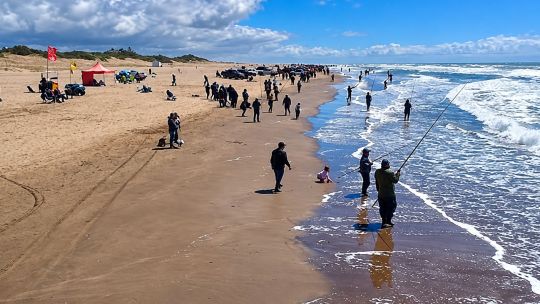
El último tiro cambió todo: pescó un pez elefante y ganó $ 20.000.000
Promediando el cierre de la semana pasada los pronósticos parecían tronchar la...
WindwhistlerOctober 13, 20260
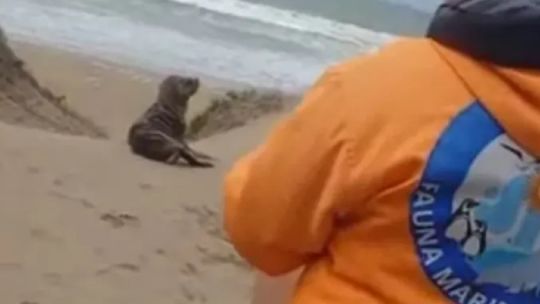
Así rescataron a un cachorrito de lobo marino de un pelo en los médanos de Miramar
Un sorpresivo y emotivo procedimiento de preservación ambiental conmovió por completo a...
WindwhistlerOctober 13, 20260


Proyectan exportaciones récord del agro en 2027, pero advierten que aún faltan dólares para el año electoral
A un año de las elecciones presidenciales, la pregunta sobre si estarán...
WindwhistlerOctober 13, 20260
