
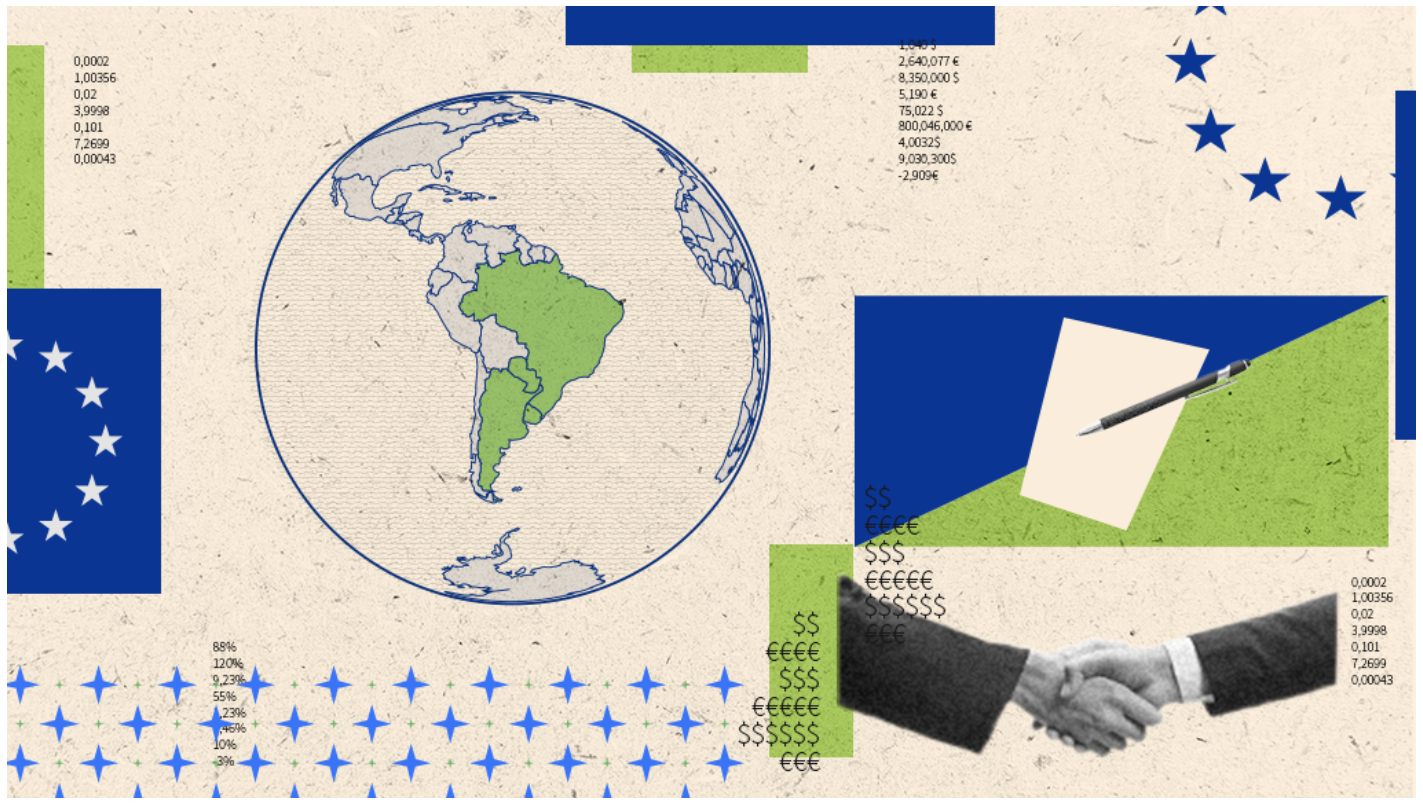
What benefits and challenges does the Mercosur-EU deal bring for Argentina?
 Martina JaureguyJanuary 9, 20264 Mins read
The Mercosur-EU trade agreement is closer to becoming a reality after over 25 years of negotiations, following the approval by a majority of the European Union (EU) member states. The deal — which will be signed on Monday, and must then be approved by the European Parliament to enter into force — will be key for Argentina’s exports. One Argentine official described it to the Herald as a “route map to modernization.” However, critics fear imports from Europe could harm national industry. The trade accord will allow Argentina and the other Mercosur members — Brazil, Paraguay and Uruguay — to expand their export markets, especially for the crucial agricultural sector. It will also grant easier access to manufactured goods and technology from Europe, which are less developed in South America, except for certain industries, like Brazil’s automobile sector. “For Mercosur, this is far more than a trade deal between blocs: it’s a strategic long-term decision,” said Fulvio Pompeo, secretary of international relations for Buenos Aires City Government. “It allows the countries of the region to position themselves as key partners in the global economy, associated with one of the world’s most important economic areas, with clear rules, quality standards, and shared commitments.” European countries that specialize in manufacturing, like Germany, have backed the deal, while others with strong agricultural sectors, like France, have opposed it, arguing that cheap goods from South America will hurt local farmers. While Brazil has been the country leading the negotiations, Argentina opposed it at times. In the past, Peronist governments argued that Europe’s conditions meant the deal was not balanced. During Alberto Fernández’s tenure, in December 2023, former Argentine Foreign Minister and current lawmaker Santiago Cafiero said that if the EU’s conditions prevailed, the agreement would limit Argentina’s exports and broaden the productive, financial and technological breach between the two regions. Despite being critical of Mercosur’s efficiency, current Argentine President Javier Milei has backed the deal. “The timeframe for economic opportunity is always short, and it cannot be subordinated to the eternity of bureaucracy and politics,” he said during the last Mercosur summit, in December. “MORE GOOD NEWS,” he posted on X after the agreement was greenlit in Brussels, forwarding a message from Argentina’s Foreign Minister Pablo Quirno about the approval. ‘Preferential position’ “The most important thing is that we will have flexible rules in sanitary, environmental and social terms. Signing this agreement guarantees a preferential position for us,” said Gustavo Idígoras, president of the Argentine Oil Industry Chamber (Ciara) and director of the board of the Cereal Exporters Center (CEC), speaking with the Herald. Idígoras argued the European agricultural industry is in “a process of reduction or extinction in upcoming years,” and added that the deal would therefore encourage investment in South American agriculture. “Europe’s food industry needs to see the Mercosur as the recipient of their investment and development of their production.” Andrea Sosa, a dual PhD in Social Sciences and Rural Studies who works in Argentina’s CONICET research institute analyzing food systems, told the Herald that the deal is positive from the perspective of the Mercosur states’ governments because they “need to generate foreign currency earnings,” hence why Brazil was so adamant about the deal’s approval. “It will open up more markets and allow an ‘invasion’ of products from Argentina and the Mercosur in European markets, which could create more exports and more foreign currency income,” Sosa said. “This is exactly why some EU countries are rejecting it.” She warned the agreement could raise prices at supermarkets, butchers and greengrocers in Argentina, because the possibility of selling to lucrative European markets could push prices up locally as Argentine and European customers compete for products. “The markets will obviously always sell to the highest bidder,” she said. Ricardo Carciofi, lead researcher on economic development at CIPPEC think tank, expected the deal to have the opposite effect on consumer prices. “We can expect an expansion of the import basket and greater competition on the offer side,” he said. “As commercial channels are consolidated, the pressure we’d see would be downward.” Pompeo, the capital’s international relations secretary, agreed. He said that the deal promoted competition and stability, adding that “closed economies generate less offer and higher prices.” Impact on industry Critics have argued that the deal will harm Argentine manufacturing, as it will be easier and cheaper to buy those goods from Europe instead of producing them. At the same time, the agreement will boost the agricultural sector, deepening a dynamic in which the country mostly exports primary goods and depends on first-world countries for manufacturing products, not allowing local industries to grow. Argentina has traditionally been a country with a strong agricultural sector and, despite past attempts at developing a manufacturing industry, it has never blossomed. Unrestricted imports have also severely harmed national industries in the past. “It means that the European Union will sell us manufactured goods and we will sell them primary products,” said Eric Calcagno, former Argentine ambassador to France and ex lawmaker, in an interview with Radio Gráfica in December. “It is a colonial relationship.” Calcagno believes that the deal is in line with Milei’s policy of “destroying Argentine industrial development and sustainable and family agriculture.” “Unlimited imports of foreign products with an overvalued exchange rate: that is an incentive for imports and a punishment for exports,” Calcagno said. Time to compete However, Idígoras told the Herald that the deal will not have a negative impact on Argentine manufacturing industries because import duties on products coming from Europe as part of the deal “will take 10 years to be lowered.” This will give the local industry time to compete with the EU countries, which have high production and commercialization costs, he said. “The only sector that could have been affected was the automotive industry, but there have been agreements with Europe in this sense, so there should not be any negative impact,” he said. The deal could also benefit Argentina’s knowledge economy and exports of services, since the country already has a strong presence in everything from creative industries and IT to healthcare, according to Carciofi. In this sense, he said, “interesting prospects are opening up for the relationship between the two regions.”


Conectividad regional, auge de escapadas y la pasión por el turismo deportivo del viajero argentino
El pulso del turismo emisivo en la Argentina atraviesa un momento de...
 WindwhistlerOctober 13, 20260
El último tiro cambió todo: pescó un pez elefante y ganó $ 20.000.000
Promediando el cierre de la semana pasada los pronósticos parecían tronchar la...
WindwhistlerOctober 13, 20260

Así rescataron a un cachorrito de lobo marino de un pelo en los médanos de Miramar
Un sorpresivo y emotivo procedimiento de preservación ambiental conmovió por completo a...
WindwhistlerOctober 13, 20260


Proyectan exportaciones récord del agro en 2027, pero advierten que aún faltan dólares para el año electoral
A un año de las elecciones presidenciales, la pregunta sobre si estarán...
WindwhistlerOctober 13, 20260
