
Argentina posted fiscal surplus of 1.4% of GDP in 2025
 Carlos LamiralJanuary 17, 20263 Mins read
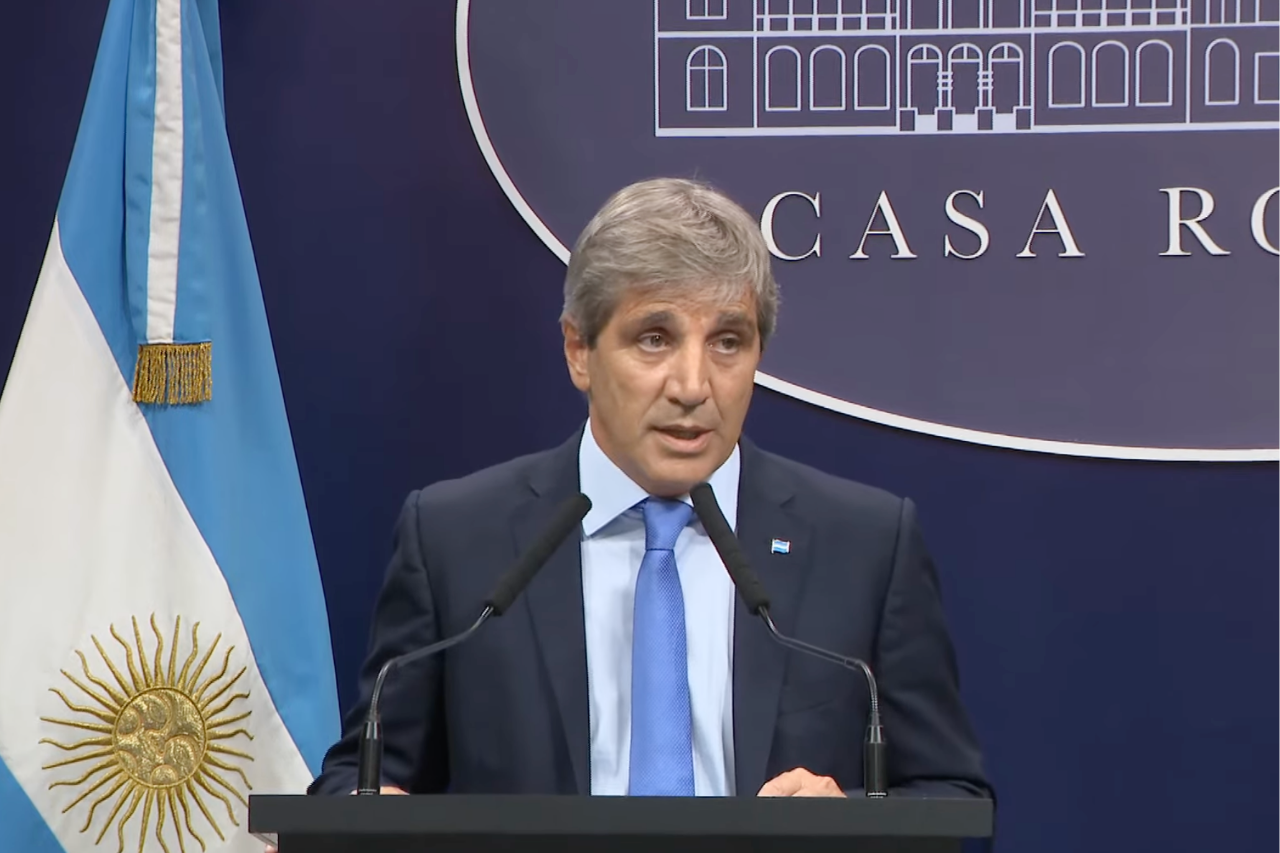
Economy Minister Luis Caputo announced on Friday that 2025 closed with a primary fiscal surplus of AR$11.7 trillion, equivalent to 1.4% of GDP, while the overall financial balance showed a surplus of AR$1.45 trillion, or 0.2% of GDP. Caputo said that this marked “the first time since 2008 that two consecutive years of cash-based financial surplus have been achieved.” “The year 2025 ended with a primary surplus of 11.76 trillion pesos and a financial surplus of 1.45 trillion pesos, equivalent to approximately 1.4% and 0.2% of GDP, respectively,” Caputo said on the social network X. SEGUNDO AÑO CONSECUTIVO DE SUPERÁVIT FISCAL PRIMARIO Y FINANCIERO ✅ El año 2025 culminó con un superávit primario de $11.769.219 millones y un superávit financiero de $1.453.819 millones, equivalentes aproximadamente a 1,4% y 0,2% del PIB, respectivamente. ✅ En línea con la…— totocaputo (@LuisCaputoAR) January 16, 2026 He noted that for the month of December, the national public sector had posted a primary deficit of AR$2.87 trillion and a financial deficit of AR$3.29 trillion, “in line with the seasonality of primary spending during the month.” Even so, he continued, “this is the first time that two consecutive years of cash-based financial surplus have been achieved since 2008, and the first in the historical series that begins in 1993 to reach this result while fully meeting all public debt service obligations of the National Public Sector.” IMF targets According to the IMF staff report released last July, following the first review of the program, Argentina’s nominal target was set at AR$10.4 trillion. The numbers show that the country surpassed that figure by over AR$1.3 trillion pesos. This is the figure the IMF will consider in its next review, scheduled for February. The indicative target in GDP terms had been set at 1.6%. From that perspective, the result fell short by 0.2 percentage points. Despite this difference, it is expected that the Fund will deem the target has been met. In fact, the Herald’s sister publication Ámbito learned that Finance Ministry officials had been working with an internal target of 1.3% of GDP, equivalent to the nominal target of 10.4 trillion pesos relative to current GDP. Due to inflation of 31.5%, nominal GDP will be higher than projected in midyear. Social spending increased Caputo noted that “primary spending in 2025 was 27% lower than in 2023 in real terms,” but said this had been done “while protecting spending on social programs without intermediaries aimed at the most vulnerable sectors.” He detailed that “social spending on the Universal Child Allowance (AUH) and the Food Card rose 43% in real terms when comparing December 2025 with December 2023, covering 92% of the basic food basket, compared with 55% in December 2023.” In that regard, the economy minister said that “the fiscal surplus was achieved after a tax reduction that has already exceeded 2.5% of GDP since 2024, including the elimination of the PAIS tax, the reduction or elimination of export and import duties on numerous tariff lines, cuts to internal taxes, and the elimination of the real estate transfer tax.” He also noted that “in December 2025 there was a further reduction in export duties — two percentage points for the soy, wheat, and barley complexes, and one percentage point for corn, sorghum, and sunflower.” Fiscal anchor reaffirmed The economy minister insisted that “the fiscal anchor has been a fundamental pillar of the economic program since the first month in office, and is enshrined in the 2026 Budget. Order in public accounts and economic growth will allow the government to continue returning resources to the private sector through tax cuts, which since 2024 have already exceeded 2.5% of GDP.” The Argentine Institute for Fiscal Analysis (IARAF, by its Spanish acronym) said that “compared with 2024, the primary surplus fell by 0.43 percentage points of GDP and the overall fiscal surplus declined by 0.13 percentage points of GDP.” In 2024, these figures had stood at 1.8% of GDP and 0.3% of GDP, respectively. The report clarified that “interest payments recorded above the line — excluding capitalized interest recorded below the line — amounted to 1.2% of GDP.” “Compared with 2024, the revenue dynamics influenced by tax cuts and the real increase in spending on pensions and benefits led to a relative deterioration,” IARAF said. Originally published on Ámbito
CONMOCIÓN: murió Rosa del Valle Rasgido
 notienredSeptember 13, 20260

Claudio Barrelier reveló por qué mató a Agostina Vega: Obsesión por la
notienredSeptember 13, 20260

Asesinaron a Alfredo Wiebel y se dieron a la fuga
notienredSeptember 13, 20260



Clima en Ciudad de Buenos Aires: sábado 12 de septiembre
Sábado en la Ciudad de Buenos Aires con una temperatura máxima de...
 WindwhistlerSeptember 13, 20260
