
Davos Forum says insufficient public services are Argentinas main risk
 Buenos Aires HeraldJanuary 21, 20262 Mins read
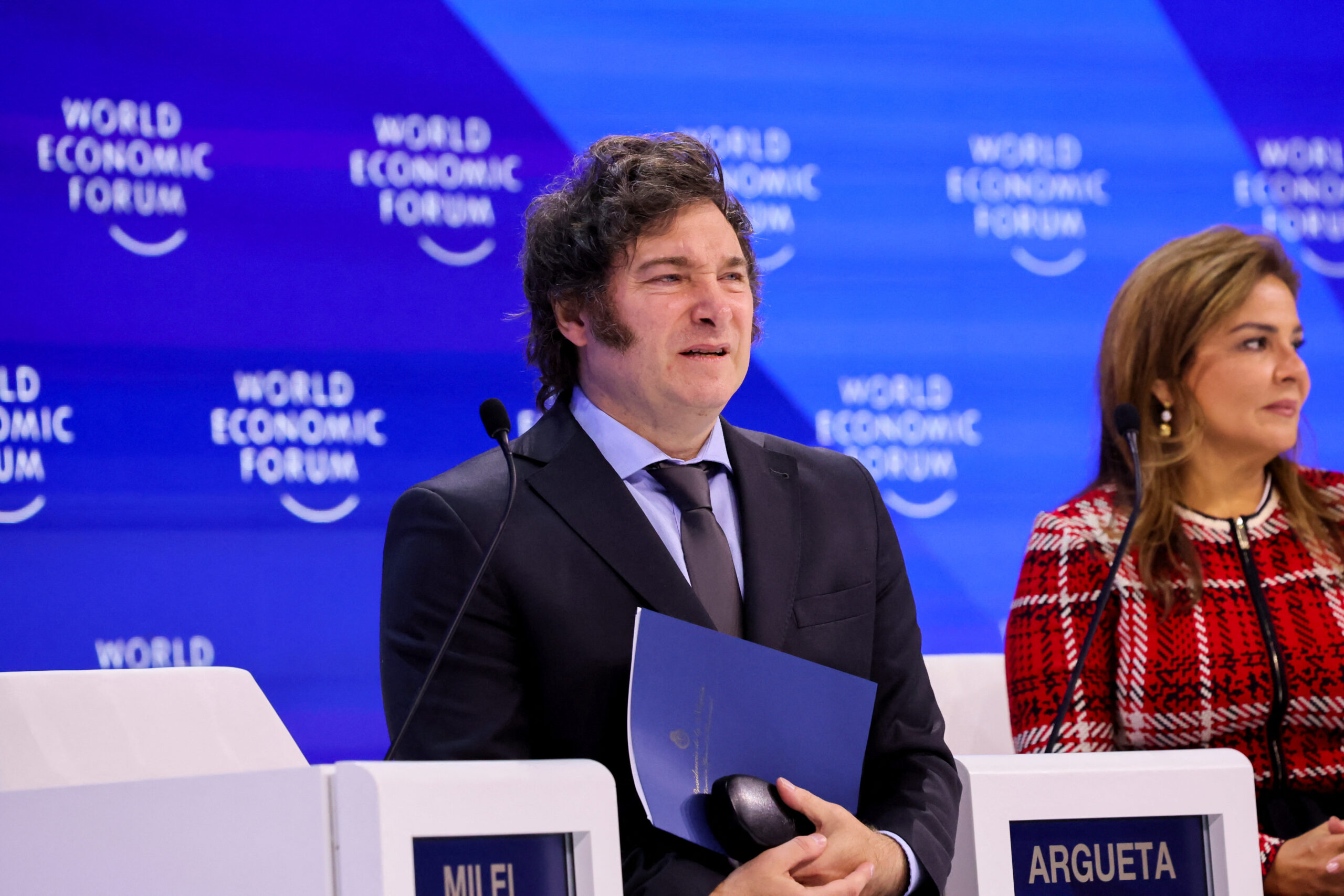
Business leaders surveyed by the World Economic Forum (WEF), usually referred to as the “Davos Forum,” concluded that the most severe risk to Argentina is “insufficient public services and social protections.” The assertion, published last week in the Forum’s Global Risks Report 2026, is based on a survey of 11,000 business leaders from 116 economies. The revelation is significant insofar as it targets one of President Javier Milei’s main policies. Milei, who is scheduled to speak in Davos on Wednesday, took office after campaigning on a so-called “chainsaw plan.” This plan was implemented once he took office in the form of deep austerity measures that heavily reduced government expenditures, such as pensions and public works. The brief identified an additional four “risks” to Argentina: lack of economic opportunity or unemployment, economic downturn (e.g., recession, stagnation), inequality (wealth, income), and social polarization. The WEF is an international advocacy non-governmental organization and think tank founded in 1971 and based in Switzerland. The foundation is mostly funded by its 1,000-member multinational companies. It is widely known for its annual meeting at the end of January in Davos. Milei’s speech in Davos last year made headlines as he lashed out against feminists, members of the LGBTQIA+ community, and human rights defenders around the world. In a half-hour diatribe to world leaders and businesspeople, he claimed that “gender ideology” — a pejorative anti-trans term he uses as a broad brush for anything LGBTQIA+ or “woke” — was tantamount to child abuse and pedophilia. He also claimed that “hordes” of immigrants “abuse, rape, and kill European citizens” and that recognizing femicide means valuing women’s lives more than men’s. Warnings of deepfakes’ influence on elections The report also included Argentina in a list of countries that saw the proliferation of deepfakes – images generated with artificial intelligence, aimed to impersonate a real person – during elections. “The weaponization of deepfakes can undermine trust in democratic institutions, contributing to more political polarization, and can lead to the incitement of political violence or social upheaval,” the report said. “Recent elections in the United States, Ireland, the Netherlands, Pakistan, Japan, India and Argentina have all had to contend with such fabricated content on social media, depicting fictional events or discrediting political candidates, blurring the line between fact and fiction,” the report said. Last year, right-wing PRO party leader and former Argentine President Mauricio Macri (2015-2019) denounced a deepfake AI video that spread on social media. The footage falsely depicted him encouraging the public to vote for presidential spokesman Manuel Adorni in the Buenos Aires City legislative elections.Macri took to his own social media channels to condemn the video, calling the matter “an attempt at electoral fraud” conducted by ruling party La Libertad Avanza.
CONMOCIÓN: murió Rosa del Valle Rasgido
 notienredSeptember 13, 20260

Claudio Barrelier reveló por qué mató a Agostina Vega: Obsesión por la
notienredSeptember 13, 20260
Asesinaron a Alfredo Wiebel y se dieron a la fuga
notienredSeptember 13, 20260



Clima en Ciudad de Buenos Aires: sábado 12 de septiembre
Sábado en la Ciudad de Buenos Aires con una temperatura máxima de...
 WindwhistlerSeptember 13, 20260
