
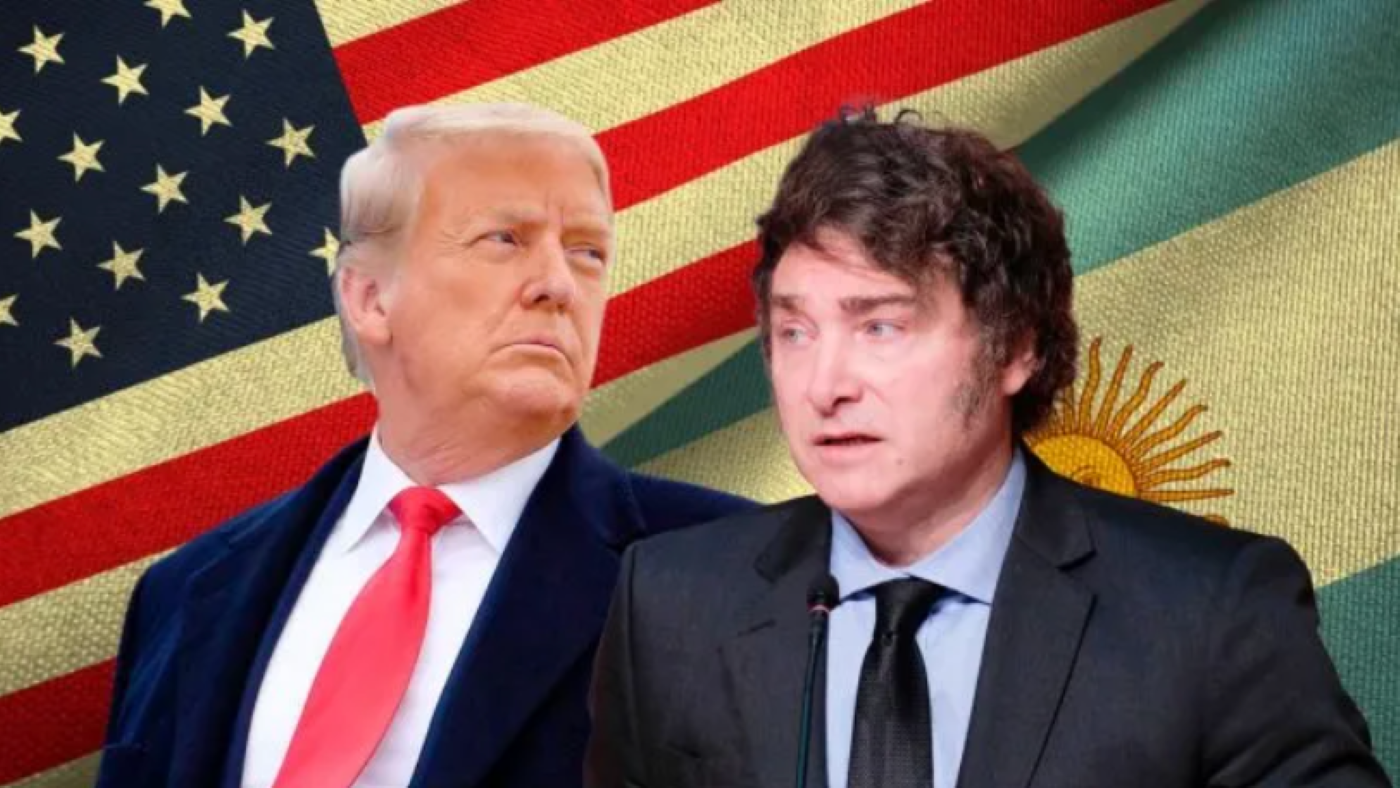

Argentina is once again at the table of history. The table is smaller than it looks, the guests are loud, and the centerpiece is a man who has spent a good part of the past decade trying to convince the world he deserves a Nobel Peace Prize while escalating confrontation in everything from his rhetoric to his approach to immigration enforcement. Donald Trumps newly announced Board of Peace sounds, at first glance, like a diplomatic initiative. Who could oppose peace? But when one looks more closely at who convenes it, who joins it, and who stays away, the picture becomes far less reassuring. This is not a peace table populated by neutral mediators. It is a gathering of countries currently involved in conflicts, wars, occupations, or authoritarian crackdowns: the United States, fresh from a military intervention in Venezuela; Israel, still immersed in a devastating war in Gaza; and Russia, invited despite waging the largest land war in Europe since World War II. Add to that a mix of strongmen, fragile democracies, and governments eager for proximity to Washingtons favor. And there sits Argentina, signing enthusiastically. The self-proclaimed guardians of peace are, almost without exception, protagonists of conflict. This is less a peace council than a conflict powers club, one that assumes peace is best managed by those who break it most often. Trump’s path to resentment Trump did not discover peace late in life. He discovered resentment. For years, he has publicly lamented not receiving the Nobel Peace Prize, despite claiming credit for everything from Middle East diplomacy to preventing wars that never formally existed. His frustration became explicit when, after once again being passed over, he reportedly told Norwegian officials, whom he seems to mistake for the Nobel Committee, that he no longer felt obligated to think purely of peace. The Board of Peace feels like the institutionalization of that grievance. If the Nobel Committee will not validate him, Trump will build his own committee. If established international institutions will not center him, he will create new ones where he sits permanently at the head. This is ego diplomacy: peace not as a collective project, but as a personal legacy exercise. Argentinas president, Javier Milei, appears particularly receptive to this logic. Milei arrived in Davos not merely as a participant but as a devotee, echoing Trumps rhetoric about civilizational decline, socialism, and moral rebirth. Argentina did not join cautiously. It joined eagerly as a founding member, reportedly willing to commit up to one billion dollars to an initiative whose concrete mechanisms remain vague. That money, incidentally, would be borrowed in a country where we are reminded daily that no hay plata. Peace, apparently, is now subscription-based. Defenders of the move argue that this signals Argentinas reintegration into the world after years of isolation. But the question is unavoidable: which world? For decades, Argentina was part of imperfect but essential international institutions: the United Nations, the World Health Organization, UNESCO, and the Inter-American system. These bodies did not prevent all wars, but they contributed to something measurable and undeniable: longer life expectancy, reductions in extreme poverty, global vaccination campaigns, shared scientific standards, and conflict de-escalation mechanisms that saved lives quietly and without branding. Trump and Milei now present these institutions as obsolete, bureaucratic, or ideologically captured. Their solution is not reform, but replacement. Off-brand versions. Smaller, louder, leader-centric alternatives that dispense with norms and procedures in favor of loyalty and spectacle. This pattern is hardly new. When long-standing institutions do not bend to personal will, populist leaders do not adapt; they exit and recreate. Brexit did it. Orbn does it. Maduro dissolved parliament. Trump perfects it. Milei imitates the method: exit first, explain later. Milei’s yearning to belong Argentinas foreign policy under Milei is being reshaped less around national interest than around belonging. Milei wants to belong to something larger than Argentina: the West, freedom, and moral clarity. In that search, he mirrors perhaps unknowingly the very leader the West itself is beginning to leave behind. Trump, despite his wealth, spent much of his life excluded from the traditional American elite. Politics gave him entry. Power gave him attention. But acceptance, the deeper kind, remained elusive. Now, facing age and legacy, he seeks something indelible: territorial expansion, historical monuments, or global institutions bearing his imprint. What links Trump and Milei is not ideology, faith, or even policy, but the impulse to turn a personal search for belonging into statecraft. In that move, foreign policy becomes narrative-building: institutions are recast as enemies, alliances as proof of moral clarity, and power as a substitute for legitimacy. Argentina is not merely joining an alliance; it is buying into a story about how history worksone in which belonging is achieved not through institutions that outlast leaders, but through proximity to those who dominate the moment. Absent friends The emerging alliance has an unspoken composition: mostly developing or semi-peripheral countries, eager for attention, funding, or protection. Absent are most of Western Europe, Canada (hesitant), and traditional multilateral actors. This is not a global consensus. It is something closer to a Third World Alliance for Peacethird world not because of poverty, but because of asymmetry: countries seeking relevance through proximity to power. Argentina should pause. Peace is not built by those who constantly need applause. It is built by institutions that survive leaders, by rules that constrain power, and by humility about what force can and cannot achieve. The international system is flawed, slow, and frustrating, but it has raised more people out of misery than any personalized alternative ever has. Replacing it with clubs, councils, and subscriptions is not innovation. It is regression dressed as disruption. Argentina has every right to redefine its foreign policy. But it should do so with historical memory intact. We have seen where personalist diplomacy leads. We have lived through leaders who believed themselves destined to save civilization. It rarely ends in peace.



CONMOCIÓN: murió Rosa del Valle Rasgido
 notienredSeptember 13, 20260

Claudio Barrelier reveló por qué mató a Agostina Vega: Obsesión por la
notienredSeptember 13, 20260

Asesinaron a Alfredo Wiebel y se dieron a la fuga
notienredSeptember 13, 20260



Clima en Ciudad de Buenos Aires: sábado 12 de septiembre
Sábado en la Ciudad de Buenos Aires con una temperatura máxima de...
 WindwhistlerSeptember 13, 20260
