
U.S. Supreme Court ruling casts doubts over trade agreement with Argentina
 Facundo IglesiaFebruary 24, 20262 Mins read
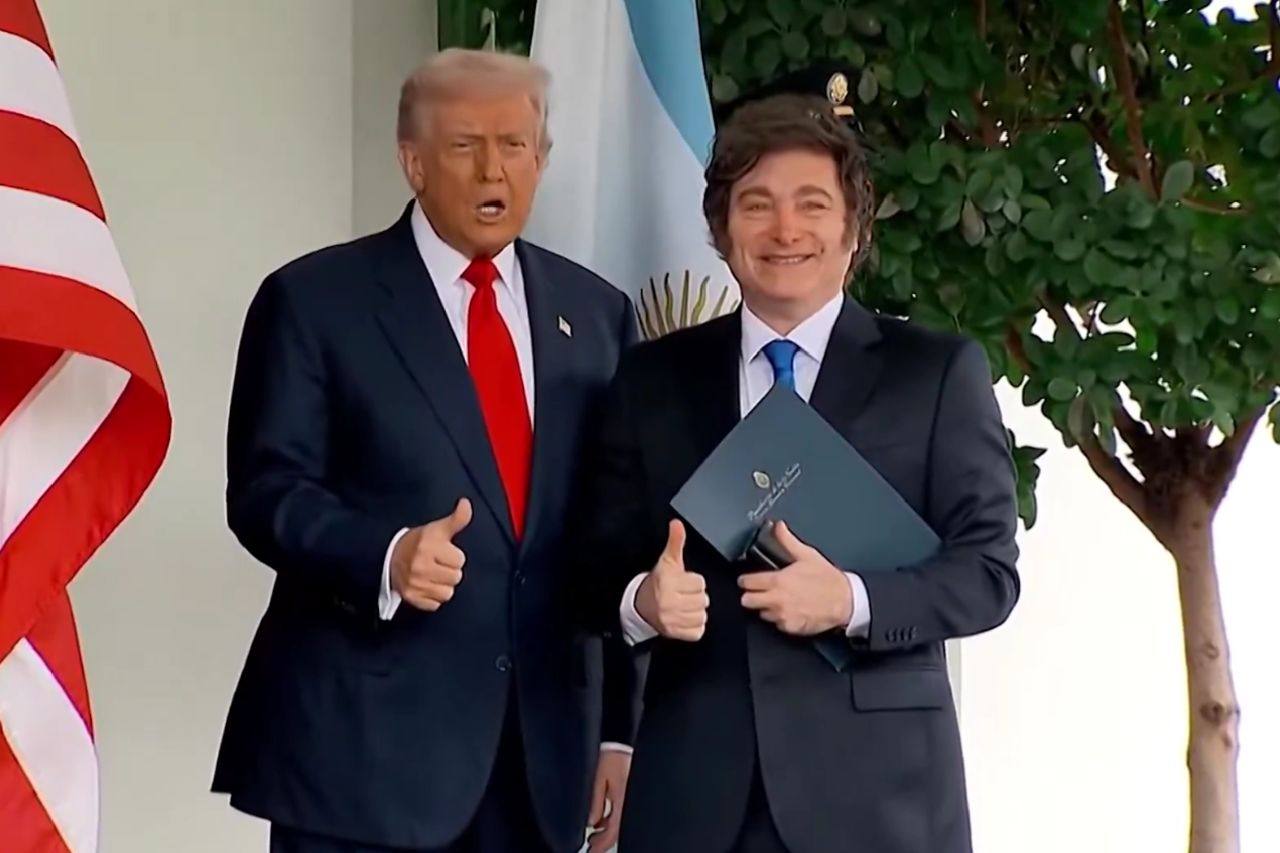
A U.S. Supreme Court ruling invalidating President Donald Trump’s global tariffs could undermine the agreement struck earlier this month between Washington and Buenos Aires, analysts said. On February 6, Argentina and the United States signed an agreement on reciprocal trade and investment, which eliminated a 10% tariff the White House had imposed on products coming from the South American country. However, a top court’s decision signed on Friday established that those duties were illegal, as the invoked International Emergency Economic Powers Act (IEEPA) authorizes the President to regulate imports, but not to impose tariffs. Trump responded by announcing a new 10% global tariff using a different law, which he then raised to 15%. A communiqué by the Chamber of Exporters of the Argentine Republic (CERA) said that these “new tariffs reduce the expected trade advantage for Argentine exporters.” “The agreement itself loses legal standing since the Trump administration’s commitment was to lower tariffs that have been eliminated by the Supreme Court,” Fernando Landa, head of the CERA, told the Herald. The head of the CERA added that another deal granting preferential access to 80,000 extra tons of Argentine beef this year would not be affected by the high court’s decision, “as it is independent” from the trade deal. That extra arrangement is based on the White House’s intention to provide “affordable beef” to U.S. consumers, as evidenced by the exemption of positions relating to beef from the new tariffs under Section 122, Landa told the Herald. Landa added that, since the new tariffs have some exceptions, a more thorough analysis would be required. “Exceptions continue to apply to gold and oil, which are the main exports, as well as beef, and there are also exceptions to duties on tea and mate,” said Landa. He added that, regarding other products, “we will have to see how Argentina’s competitive position evolves depending on how the agreements with the UK, EU, India, and the Association of Southeast Asian Nations (ASEAN) are redefined.” “In short, it is an uncertain and changing landscape,” said Landa. A spokesman for the United States Chamber of Commerce in Argentina (AmCham Argentina) told the Herald that the agreement “contains commitments that go beyond the tariff issue.” He added that the court ruling should not have a direct impact on that deal, “which is still pending legislative approval in Argentina and institutional notification before the US Congress.” Legislative approval is pending However, the spokesperson added, the U.S. government’s decision to impose new tariffs introduces “a new element to monitor.” “It should be noted that this surcharge provides for multiple exceptions—including energy, certain agricultural products, pharmaceuticals, critical minerals, aerospace goods, and other strategic sectors—which mitigates its overall scope,” the source added. A spokesperson for the Argentine Economy Ministry did not respond to a request for comment.


CONMOCIÓN: murió Rosa del Valle Rasgido
 notienredSeptember 13, 20260

Claudio Barrelier reveló por qué mató a Agostina Vega: Obsesión por la
notienredSeptember 13, 20260

Asesinaron a Alfredo Wiebel y se dieron a la fuga
notienredSeptember 13, 20260



Clima en Ciudad de Buenos Aires: sábado 12 de septiembre
Sábado en la Ciudad de Buenos Aires con una temperatura máxima de...
 WindwhistlerSeptember 13, 20260
