
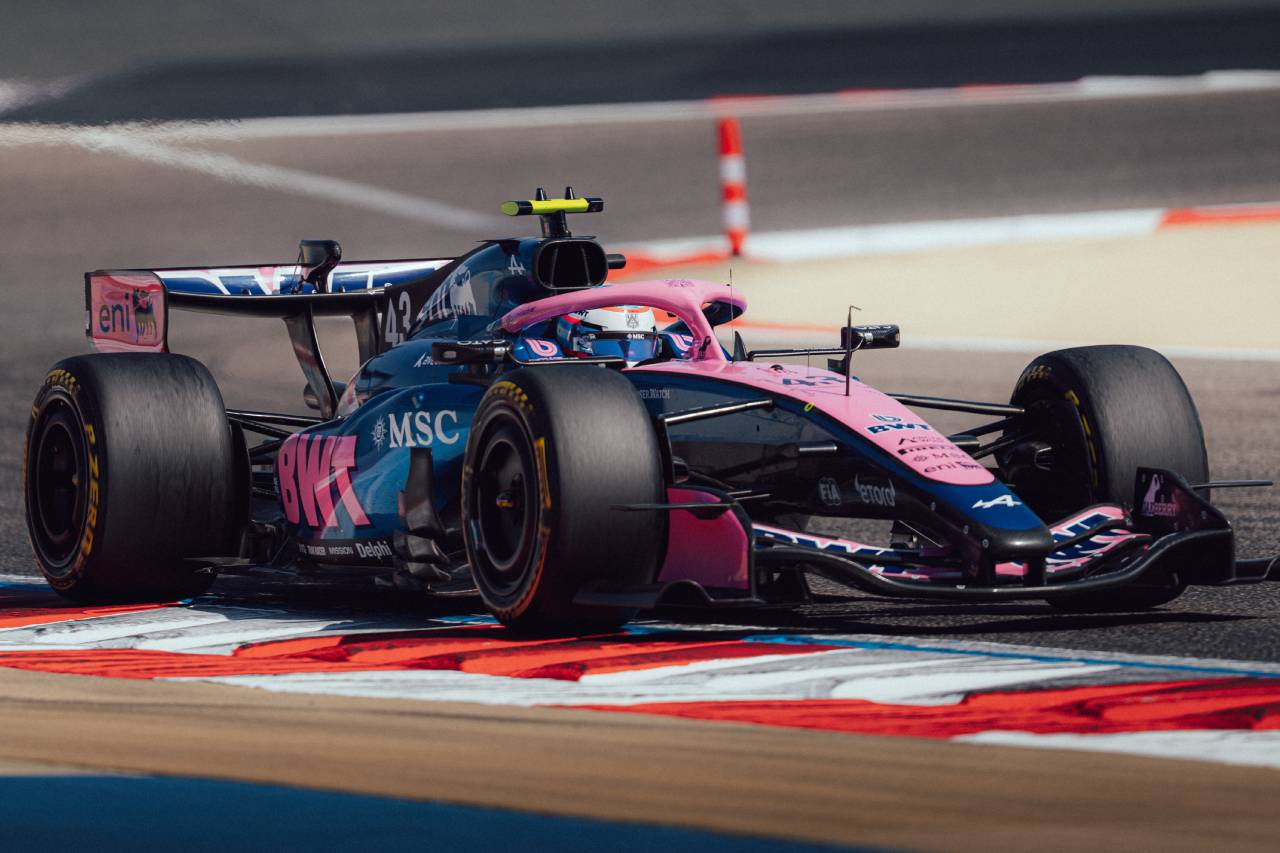
What does the 2026 F1 season have in store for Franco Colapinto?
 Fernando Romero NunezFebruary 24, 20264 Mins read
Argentine race driver Franco Colapinto is set to compete in his first full season in Formula 1 in 2026. The 22-year-old had previously featured in the last nine races in 2024, but then missed the first six in 2025. That means it’ll be the first time he’ll race the season opener, having also participated in the pre-season testing in Bahrain over two weeks in February. With the first race at Melbourne, Australia, set to green light on Sunday, March 8, what changes are coming to F1, and have they actually improved Colapinto’s odds for a solid 2026 season? Promising signs Sweeping changes are coming to Alpine F1 for the 2026 season. For the first time since Renault took ownership of the operation, the team will no longer produce its own engines. Instead, it’ll switch to a customer role with Mercedes-Benz after years of disappointment with the in-house-designed engines, one of the 2025 Alpine’s key weak points. While the Mercedes engine is expected to be the class of the field for 2026 — despite controversy over its rule compliance — becoming a customer brings issues with developing the car as a complete package and how it all fits together. Colapinto had his first experience with that at Bahrain, as his first outing with the car ended with him stranded on the track after just one and a half hours of running. His car was towed on a flatbed and returned to the garage, cutting the testing programme short. However, the Argentine driver eventually managed to rack up much more time on the track with the brand-new A526. He ended up racking up 352 laps across both testing sessions, or just over 1,900kms. “I’m pleased to finish my pre-season testing positively,” Colapinto told the Alpine media team. “At times, we have faced some challenges, and the team has done a great job, especially this week, to add a lot of laps to our tally and provide really interesting data for us to analyse.” His fastest lap was a 1:33.818 on day two of the second testing week, which was enough to have him land P6 in the day’s standings. It was also P11 in the global standings, 1,8 seconds off the fastest lap of the two weeks, a 1:31.992 by Ferrari’s Charles Leclerc. While there are doubts as to whether Alpine can challenge the top teams, it’ll undoubtedly find itself in a better position than it was in 2025, far from the struggles of new teams Cadillac and Audi, and others like Aston Martin-Honda. The Mercedes engine controversy Alpine seems to have switched to the Mercedes engine at the best possible time. Long held as the gold standard for the F1, the 2026 variant seemed to have a big edge over the competition at Bahrain. The 2026 power units are less complex than their predecessors, but are focused on a 50/50 split in power delivery between the combustion and electric engines. That means getting as much power as possible from the combustion side of the business is key. During the tests, it became public that Mercedes engineers had found a way to set the engine’s compression ratio — the difference between the maximum and minimum capacities of the cylinders — to 18:1 when operating, while complying with the 16:1 at room temperature required by the governing body, the FIA (Fédération Internationale de l’Automobile) FIA has since announced that it has developed a new test, which will allow it to test engines at 130°C. It was also announced that teams will vote before the Australian GP to decide whether the new results will be enforced, although they would only become the rule after the Hungarian GP, the 13th race of the season, which lands just before F1’s summer break. It remains to be seen whether the new test will knock Mercedes off the perch as the class of the field among engine providers. Even if it did, however, all teams powered by the German brand — namely, Mercedes GP, McLaren, Williams Racing, and Alpine — will have a decided upper hand in the first half of the season. A lacklustre formula? While things have looked good for Alpine and Colapinto, questions have arisen about what F1 has in store for fans in 2026. Several drivers, including four-time champion Max Verstappen of Red Bull Racing, have questioned the new regulations. During testing, the new cars failed to fully charge their batteries too often, resulting in a loss of power on straights and high-speed corners, requiring a whole new driving style. Two-time world champion Fernando Alonso has suggested that parts of the Bahrain track are now so slow that “the team chef can drive the car.” Indeed, telemetry data shows that Turn 12 is now 34km/h slower than last year. The FIA announced it’s evaluating a contingency plan that would imply a 20 to 30% cut in electric power deployment to ensure consistent delivery. The lack of power has experts fearing that overtaking mid-race could become very difficult. The DRS — the system that allowed a car to be one second or closer to the next to disengage the rear wing for extra speed — has been replaced by an overtake mode that requires additional battery power and may prove hard to use. Another issue could appear at the start of every race: practice launch runs at Bahrain have shown that cars struggle to bring their turbos up to speed from a standstill. During the test, some cars took as long as 16 seconds to get off the line. The launches in 2026 could be a hectic, hard-to-predict affair, which McLaren’s Oscar Piastri has labelled as a “recipe for disaster”. Cover Photo: TWJB Photography/BWT Alpine Formula One Team

Conectividad regional, auge de escapadas y la pasión por el turismo deportivo del viajero argentino
El pulso del turismo emisivo en la Argentina atraviesa un momento de...
 WindwhistlerOctober 13, 20260
El último tiro cambió todo: pescó un pez elefante y ganó $ 20.000.000
Promediando el cierre de la semana pasada los pronósticos parecían tronchar la...
WindwhistlerOctober 13, 20260

Así rescataron a un cachorrito de lobo marino de un pelo en los médanos de Miramar
Un sorpresivo y emotivo procedimiento de preservación ambiental conmovió por completo a...
WindwhistlerOctober 13, 20260



Proyectan exportaciones récord del agro en 2027, pero advierten que aún faltan dólares para el año electoral
A un año de las elecciones presidenciales, la pregunta sobre si estarán...
WindwhistlerOctober 13, 20260
