
What effects could the war in the Middle East have on the Argentine energy market?
 Buenos Aires HeraldMarch 3, 20267 Mins read
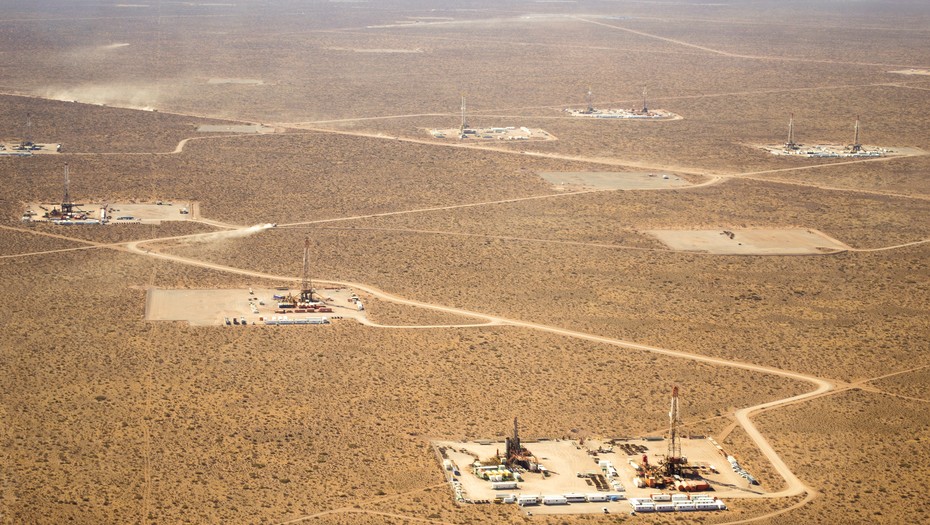
*This story by Matas Ortega was originally published in mbito The escalation of the conflict in the Middle East, following the combined United States and Israeli attack against the Iranian regime, has once again placed the oil market under maximum tension and raised questions about the evolution of crude oil prices in the coming months. The focus is on the potential impact on global supply and, especially, on the strategic role of the Strait of Hormuz. In this scenario, the evolution of international oil prices could have direct consequences for the Argentine economy, both in terms of energy exports and the cost of gas imports. Analysts, however, believe it is too early to draw definitive conclusions. The consultancy firm Aleph Energy said the new context of regional tension brings back to the forefront the structural risks of the global energy system, particularly in areas key to the hydrocarbon trade. According to its report, the oil market was already showing signs of strain in the weeks leading up to the conflict. During that period, the price of crude oil had risen by nearly US$10 per barrel, reaching over US$60, reflecting investor sensitivity to any indication of instability in the Middle East. This movement anticipated potential disruptions to global supply and increased volatility in international markets. With the start of military action, this climate of uncertainty deepened, especially given the region’s strategic role in the global energy supply. Wholesale gasoline prices rose approximately 4% in global markets early Monday. Diesel futures surged 12%. Julin Rojo, director of the Technical Department at the Argentine Energy Institute (IAE, in Spanish), told mbito that “any permanent impact is still uncertain.” “Nothing can be said about a change in the structural conditions of the market (price levels and quantities) that would permanently affect Argentina,” he added. “Therefore, the possible effects must be analyzed in the short term. Several factors come into play here: the duration of the conflict, the transition or continuity of the regime, and, in particular, the strategies of Russia (as a producer with the possibility of reacting) and of China as a consumer of Iranian oil.” Sources at one of Argentina’s leading oil companies stated that they are not currently considering raising fuel prices at the pump, given that a few days’ increase is not a reliable indicator for decision-making. “There may be fluctuations up and down; we’ll see when prices stabilize,” they explained. Meanwhile, one of the largest producers in the countrys main oil field, Vaca Muerta, declined to comment. Good or bad for Argentina? Regarding the impact on Argentina, it’s necessary to consider the pros and cons of a sharp rise in crude oil prices. Rojo believes that “a significant increase in the price of oil has a positive impact on production, especially for exportable surpluses. But the situation is not clear for the local market, which accounts for 70% of Argentine crude oil sales.” “In that case it will depend on the ability to pass on increases in the price per barrel to the pump: if theyre passed on, there could be upward pressure on the final price at the pump and therefore an impact on sales (assuming the increases are significant),” he explained. All eyes turn to Vaca Muerta when oil and gas prices rise (or fall) sharply. In the energy market, some see the price hike as a boon since, for the field to be profitable, the price per barrel must be above US$50. However, others believe that international instability could deter investment from emerging economies like Argentina. In fact, a Citi report indicates that, due to its low dollar reserves, the country is among those most at risk from global tensions. From a macroeconomic perspective, the relevant effect for Argentina is seen in the terms of trade. The country faces this price shock with a significantly higher supply elasticity than in previous episodes, such as the one experienced prior to the Russian invasion of Ukraine in 2022. The sustained growth of unconventional production in Vaca Muerta means that the impact is not limited to improved prices, but is amplified by higher export volumes, said Gustavo Araujo, Head of Research at Criteria. He added: In quantitative terms, a sustained increase in crude oil prices has direct effects on Argentinas energy trade balance, export tax revenue, and foreign exchange earnings. At the microeconomic level, companies like Vista Energy, YPF, and Pampa Energa capture the effect through higher export revenues, expanded operating margins, and strengthened investment capacity. Finally, he considered that the key to analysis lies in the persistence of the new price level. If the conflict sustainably alters the geopolitical risk premium incorporated into the oil market, Argentina could consolidate a structural improvement on its external front. If, on the other hand, it is a transitory movement, the impact will be limited to a temporary improvement in results and expectations. Gustavo Delbon, Risk, Structuring and Capital Markets Manager at RICSA Alyc, said that “we are concerned because the duration of the conflict is unclear, and the longer it lasts, the more negative effects it will have on the global economy and its consequent effects on Argentina.” “If the conflict is resolved quickly, prices should stabilize in the coming weeks. If it lasts more than four weeks, it could have significant effects,” he said. The focus should be particularly on Liquefied Natural Gas (LNG). Import prices heading into winter could impact the trade balance and, consequently, inflation. However, the positive side would be the exports. Daniel Dreizzen, director of Aleph Energy, commented that “with the rise in international oil prices, exports increase. For every dollar the price increases, Argentina’s trade balance improves by US$125 million. Therefore, if the US$10 increase continues, we’re talking about an additional of more than US$1.2 billion. As for gas, the effect on LNG is minimal because Argentina is importing less.” “If prices hold, in the long run it’s good because the goal is to export oil and gas. But we have to see if it’s sustainable, which I don’t think it is. Because stability could make the price fall below what it was before the war, and that would be bad,” he estimated. Regarding the price at the pump, the specialist estimated that with a fixed dollar there could be a pass-through to prices, but stressed that this “is a political decision.”. According to Nicols Kohn , Head of Wealth Management Research at Balanz, the new escalation in the Middle East reintroduces a risk factor with a real capacity to alter relative prices, inflation expectations and global valuations. The specialist explains that for the markets, the sequence is well-known: higher oil prices imply higher inflation expectations, higher real interest rates, a stronger dollar, and compressed multiples in risk assets. The sensitive point is not just the price per barrel, but its persistence. A brief increase can impulse sector rotation in favor of energy, defense, and hedging assets like gold. A prolonged move, on the other hand, reopens the debate about the trajectory of U.S. inflation and could lead to a recalibration of valuations in equities, emerging market debt, and corporate credit. Still, he clarifies that “this last scenario does not seem the most likely and the market reaction today suggests a rather limited impact, although the scenario remains very fluid at the moment.” Adam Hetts, global head of Multi-Asset at Janus Henderson, said that oil prices are likely to rise, but to manageable levels. He added, While oil has traded mainly in the US$60-US$70 range over the past 12 months, prices have already broken above $70 and are expected to continue rising. These moves are significant, but not yet particularly worrying in the broader context of investment implications. A continued rise to US$80 would be consistent with the June 2025 conflict, and US$90 with the April 2024 conflict, when global markets were able to largely ignore price increases as the conflicts were resolved relatively quickly. The key role of the Strait of Hormuz One of the main areas of concern is the possibility of disruptions to transit through the Strait of Hormuz. Approximately one-third of the world’s oil traffic and nearly one-fifth of global gas trade pass through this waterway. Any partial blockage, logistical delay, or increase in transportation costs has an immediate impact on international prices. The consulting firm Aleph Energy warns that, in these types of contexts, markets tend to overreact to uncertainty, generating abrupt price increases that don’t necessarily reflect a real shortage of supply, but rather expectations and speculative movements. This is what happened on Monday. Another key factor is Iran’s role in the global energy market. According to Aleph Energy’s analysis, the country ranks among the world’s leading producers, with an output of nearly four million barrels per day A significant portion of that volume is directed towards Asian markets, making the region a critical hub for global energy trade. In parallel, the liquefied natural gas market could also be affected if the uncertainty in shipping routes continues. Short and long term effects For Argentina, the evolution of international oil prices could have mixed effects on the economy. According to the analysis, if the price of crude oil remains high, the country could improve its energy trade balance in 2026 thanks to export growth. Before the outbreak of the conflict, the US$10 per barrel increase had already raised Argentina’s projected energy surplus by approximately US$1.3 billion. This move brought the estimated energy surplus to nearly US$10 billion. If prices continue to rise, this surplus could increase by a similar amount. The impact would not be uniform across all segments of the energy sector. A sustained increase in the international price of gas would imply higher import costs for Argentina, especially during peak demand months. However, in the long term, a scenario of high prices could also strengthen projects linked to LNG, which depend on a firmer international market to be competitive. Aleph Energy’s analysis concludes that the global energy market is going through a period marked by volatility. In the short term, uncertainty and speculative movements linked to geopolitics predominate. Commodity analysts share a common view that the trend will be bearish in the medium term, but with volatility as the new normal. Financial players like JP Morgan are forecasting Brent crude at US$60 per barrel. Even Goldman Sachs believes that after an initial rise, the price will fall below that level in the last quarter of the year. In the medium term, however, the conflict could accelerate changes in supply strategies, trade routes, and energy investment decisions at a global level. For Argentina, the impact will depend mainly on how the price of crude oil and gas evolves in the coming months, in a scenario where the conflict in the Middle East once again demonstrates the weight that geopolitical factors have on the energy market.

CONMOCIÓN: murió Rosa del Valle Rasgido
 notienredSeptember 13, 20260

Claudio Barrelier reveló por qué mató a Agostina Vega: Obsesión por la
notienredSeptember 13, 20260

Asesinaron a Alfredo Wiebel y se dieron a la fuga
notienredSeptember 13, 20260



Clima en Ciudad de Buenos Aires: sábado 12 de septiembre
Sábado en la Ciudad de Buenos Aires con una temperatura máxima de...
 WindwhistlerSeptember 13, 20260
