
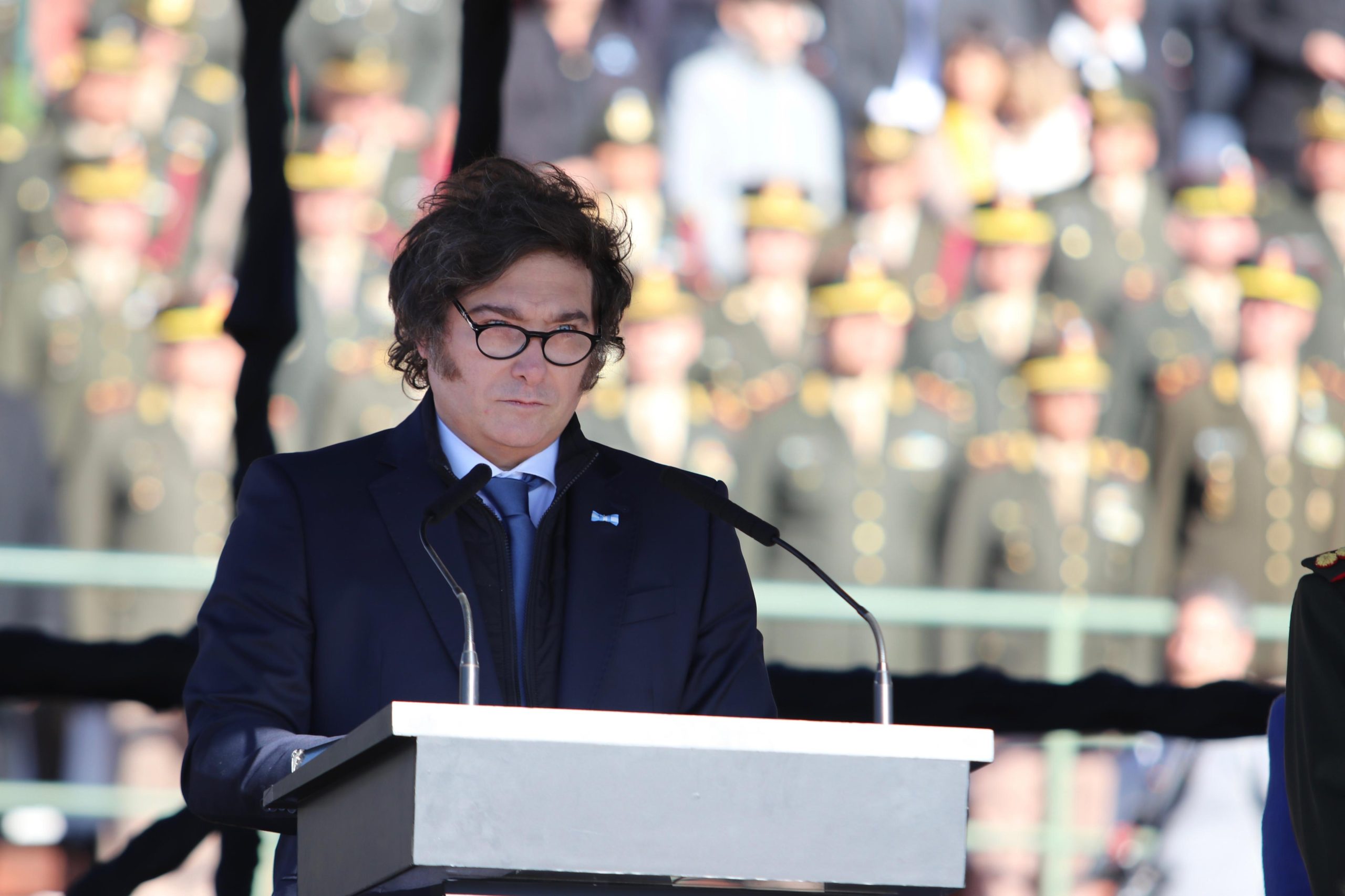
Milei acknowledges sectors will disappear amid struggles of Argentine industry
 Buenos Aires HeraldMarch 10, 20261 Mins read
President Javier Milei acknowledged that the economic reforms his government is carrying out will inevitably cause certain economic sectors to “disappear.” His comments amid a nationwide struggle for the industrial sector, with factories closing due to the government’s decision to deregulate the economy and allow a surge in imports. “If you are shocking the economy with structural reforms all the time, you cannot expect certain sectors not to disappear,” he said in an interview on Sunday with news outlet LN+. The president, who added that sectors that “do not adapt will do badly,” also made an attempt to showcase his policies’ benefits, saying that the situation did have an “upside: cheaper prices.” According to a recent report by consultancy Audemus based on United Nations data, over the last two years, Argentina has recorded the world’s second-worst industrial decline. Between 2023 and 2025 Argentina’s manufacturing sector fell by 7.9%, surpassed only by Hungary. The report added that, since Milei took office, Argentina’s manufacturing sector has struggled amid import liberalization and weak domestic demand. So far, during the libertarian economist’s administration, more than 2,400 industrial companies have closed and 73,000 manufacturing jobs have been lost, according to official data — 5% of the country’s total industrial companies. According to the national statistics institute, the INDEC, factories are operating at just 53.8% of installed capacity. Fate During the interview, Milei referred to the closure of tire manufacturer Fate, which will leave 920 people out of work. “I understand the enormous pain of those 920 employees who are losing their jobs. I share their pain. I’ve been unemployed myself, and I know the suffering it is,” he said. However, he assured that “new jobs will be created in other sectors of the economy.” Using Fate as an example, he noted that the tires produced by the company cost around US$300, three times more than in some neighboring countries. “It’s true that this company is closing and these jobs are being lost, but now you have US$300 more to spend in [other sectors of] the economy,” he stated.


CONMOCIÓN: murió Rosa del Valle Rasgido
 notienredSeptember 13, 20260

Claudio Barrelier reveló por qué mató a Agostina Vega: Obsesión por la
notienredSeptember 13, 20260

Asesinaron a Alfredo Wiebel y se dieron a la fuga
notienredSeptember 13, 20260



Clima en Ciudad de Buenos Aires: sábado 12 de septiembre
Sábado en la Ciudad de Buenos Aires con una temperatura máxima de...
 WindwhistlerSeptember 13, 20260
