
Identification of desaparecidos at La Perla sparks bittersweet relief for relatives
 Buenos Aires HeraldMarch 20, 20263 Mins read
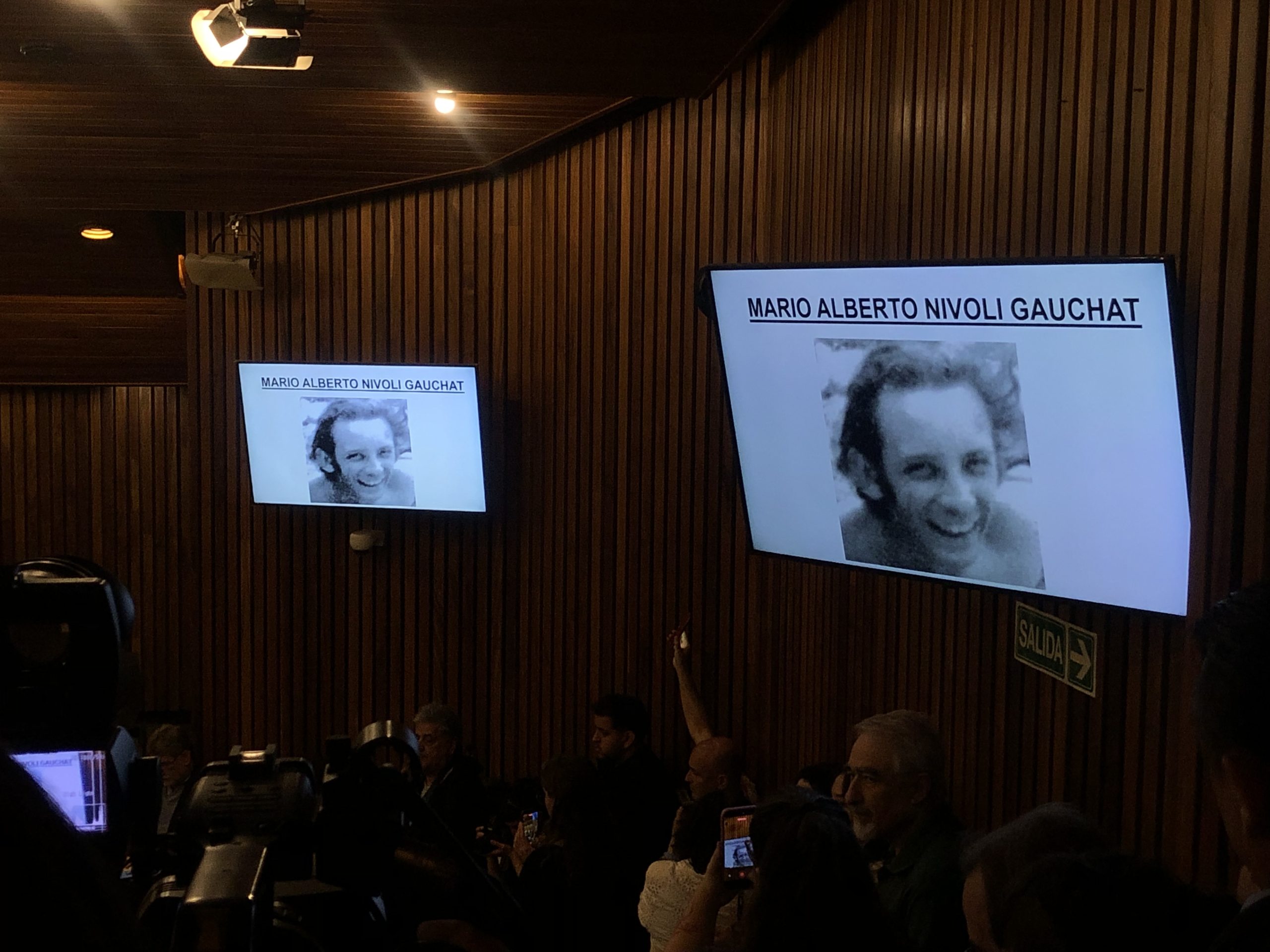
The names and pictures shifted across four TV screens inside the packed conference room at Córdoba’s main federal justice building. When Judge Hugo Vaca Narvaja read out each of the persons’ names, the crowd shouted, “Present!” The scene played out in a press conference on Wednesday as Córdoba’s judiciary released the identities of 11 of the 12 remains of desaparecidos identified in La Perla concentration camp, with family members and human rights activists in attendance. One of the families chose not to disclose their relative’s name. The names were Carlos Alberto D’Ambra, José Nicolás Brizuela, Raúl Oscar Ceballos Canton, Mario Alberto Nivoli, Alejandro Monjeau, Ramiro Sergio Bustillo, Adriana Carranza, Cecilia Carranza, Oscar Omar Reyes, Eduardo Valverde, Sergio Julio Tissera, and Elsa Mónica O’Kelly. This work was made possible thanks to the collaboration of the Province of Córdoba, the City of Córdoba, the Argentine Forensic Anthropology Team (EAAF), the University of Río Cuarto, and the Judiciary. A 1979 satellite image shot analyzed by geologist Guillermo Sagripanti confirmed testimonies by a lieutenant colonel and a rural worker, who said that bodies had been removed from an area called Loma del Torito (Little Bull’s Hill). “When we interviewed [Lieutenant Colonel Bruno] Laborda at the time, he told us that the cleanup had been very systematic and carried out using heavy machinery,” forensic anthropologist Anahí Ginarte told the Herald. “So I asked him, ‘Why should I look for anything if it was so systematic?’ and he replied, ‘When you clean your house, you clean every nook and cranny—there’s bound to be something there.’” Archaeological excavation work at Loma del Torito will resume once the rains have ended, and laboratory analysis will continue throughout the year. A room of mixed emotions The IDs kick-started different reactions among the relatives. “This brings a sense of relief — a bittersweet relief, if you will, but relief nonetheless — to be able to remove him, to remove his remains from that place of horror and bring him close to us,” said the sister of Fernando Monjeau, a door-to-door salesman of silverware and Peronist University Youth (JUP) – Montoneros activist whose remains were identified. “We all knew our relatives might be there. Finally, thankfully, we have confirmation. It’s painful and sad, too. But it’s a relief, as our colleague over there said. It’s a relief to know that we can now lay her to rest alongside her brother at San Vicente Cemetery,” said a relative of Elsa Mónica O’Kelly. Hipólito Atilio Valverde, son of Eduardo Jorge Valverde, said people sometimes ask him if this will “heal the wounds.” “No,” he answered. “I want that blood to be visible, and I want future generations to see it.” Speaking with the Herald after the conference, Valverde added that “the fact is that those wounds are there, that our blood has been shed, and that’s not something we want to hide or heal.” “We want people to see how badly we were hurt and that it happened in Argentina. State terrorism affected every single Argentine man and woman — the damage that’s been done has to be seen, and it has to lead to remembrance, truth, and justice,” he said. Graciela Geuna was a prisoner in La Perla together with her husband, Jorge Cazorla, who was murdered shortly after their capture. Cazorla’s remains were not among those identified, but in Loma del Torito, researchers found a medal that she had given her husband. “Hiding the bodies is tantamount to torturing their families. So the violence isn’t just directed at those bodies—it’s directed at our bodies,” Geuna said in a conference.
CONMOCIÓN: murió Rosa del Valle Rasgido
 notienredSeptember 13, 20260
Claudio Barrelier reveló por qué mató a Agostina Vega: Obsesión por la
notienredSeptember 13, 20260
Asesinaron a Alfredo Wiebel y se dieron a la fuga
notienredSeptember 13, 20260


Clima en Ciudad de Buenos Aires: sábado 12 de septiembre
Sábado en la Ciudad de Buenos Aires con una temperatura máxima de...
 WindwhistlerSeptember 13, 20260
