
Chinas new generation hovers between memory and hyperculture
 Ignacio Ortiz VilaApril 8, 20265 Mins read
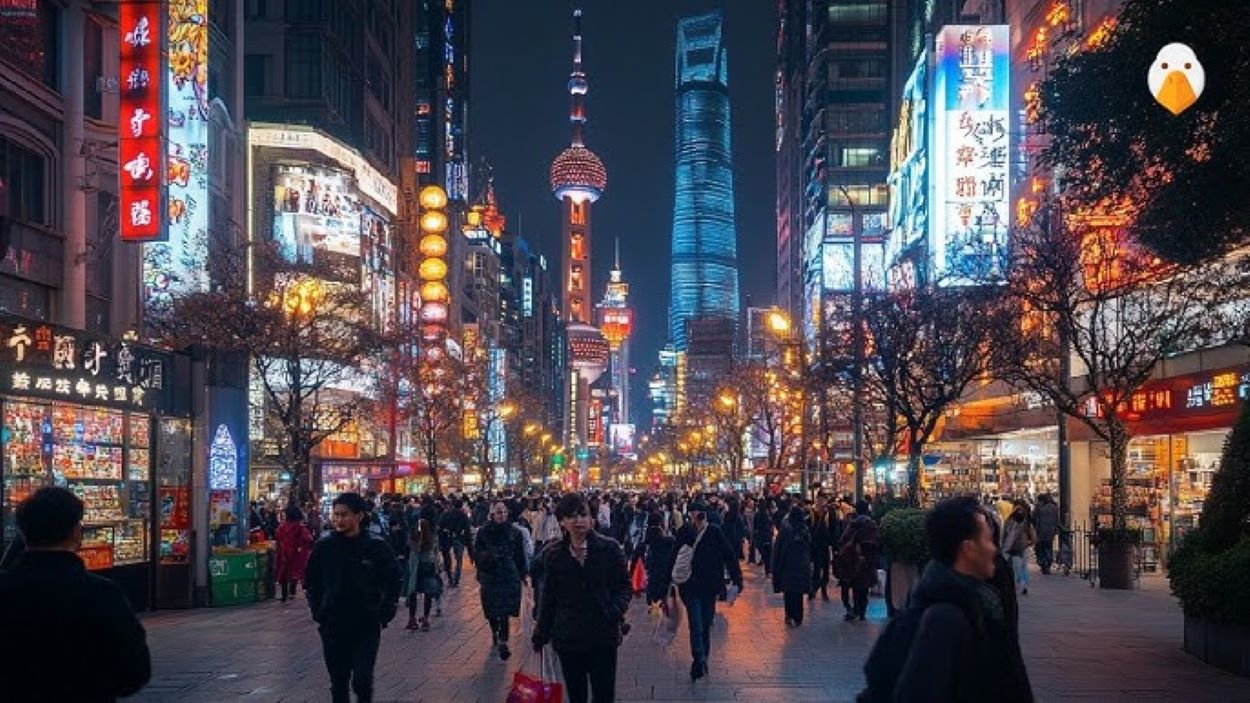
This column was co-written by Ignacio Ortiz Vila and Ana Kuo China’s new generation is often described in superficial terms: more global, more digital, more individualistic. But that shorthand misses the deeper transformation underway. What is taking shape is not a drift toward westernization but a distinctly Chinese reconfiguration of identity, consumption, and everyday life under conditions of technological saturation and social acceleration. This scenario leads to an easy mistake, which is to read younger Chinese consumers as mere imitators of global trends. What emerges is more complex: a generation unmistakably Chinese in the infrastructures that organize daily life, yet more selective, portable, and self-curated in the way it consumes, presents itself, and imagines the future. Local platforms almost automatically structure experience. Global brands appear more strategically, often in categories linked to visibility, status, or quality. The result is not cultural dilution but a new form of hybrid confidence. No longer a frontier, the country’s digital ecosystem has become the architecture of everyday existence. Messaging, payments, short video, ride-hailing, delivery, and e-commerce are so deeply embedded in urban life that they are experienced less as innovations than as part of the surrounding environment. Young consumers move through this ecosystem with remarkable fluency. Raised with material affluence, long formal schooling, and high digital exposure, many navigate rapid change with ease while retaining a strong sense of national belonging. The digital realm is no longer separate from life; it is the medium through which life is organized. And that shift changes the meaning of consumption itself. Buying is no longer simply about ownership but about saving time, reducing friction, stabilizing mood, and building identity through a thousand portable decisions. A day in the life of Liu, a shadow puppeteer in Shangai (part of Paula Zuccotti’s “Everything We Touch”) Between memory and hyperculture This is where the work of Paula Zuccotti becomes especially illuminating. The Argentine-born artist and visual anthropologist, known for her project Everything We Touch, has built a body of work around a deceptively simple question: what do the objects people carry and use in a single day reveal about how they live? That question has become especially revealing in Shangai. Few cities condense China’s economic rise, social acceleration, and cultural transformation as vividly as this metropolis, where older worlds of craft and memory coexist with the speed, consumerism, and global circulation of urban modernity. In two of Zuccotti’s Shanghai portraits — one centered on a shadow puppeteer, the other on a young designer — everyday objects become evidence of a broader cultural shift. The puppeteer’s possessions evoke a slower world of craft, inheritance, and symbolic continuity, rooted in transmission and repetition. A day in the life of Nini, an artist and designer in Shangai (part of Paula Zuccotti’s “Everything We Touch”) The designer’s belongings — gadgets, beauty products, branded items, portable working tools, and markers of self-fashioning — suggest a life shaped by movement, selection, and constant exposure to circulating trends. Taken together, the contrast between these two figures allows Zuccotti to render, in material form, the changing texture of contemporary Chinese life. The shift is not merely generational. It is a transition from rooted cultural transmission to what Byung-Chul Han would call hyperculture: a world in which meanings circulate quickly, identities are assembled, and the locals survive by being recombined rather than preserved. In a survey we conducted with young Chinese respondents for this article, we echoed that transformation in concrete form. One respondent combined CDs, vinyl, watercolor supplies, a hot water thermos, Chinese fashion brands, an iPhone, Taobao, and anti-stress toys. Another described the iPhone as both a quality benchmark and, to some extent, a vanity object, while insisting that for most purchases, practicality mattered more than brand. A teenage student in Beijing relied on Huawei for price reasons, used Didi and Taobao with ease, preferred video to reading, and still described Lunar New Year rituals and family superstition as normal parts of life. A young international relations student mixed official-store Apple purchases with Chinese snacks, French perfume, campus efficiency, and a cinnabar bracelet worn for protection. What emerges is not the disappearance of tradition but its reformatting. The old symbolic order has not vanished; it has been folded into a faster life. Hot water in a thermos, traditional medicine, family rituals, and protective symbols coexist with short-video platforms, e-commerce, and global brands. Just as tellingly, younger consumers increasingly embrace guochao (国潮) aesthetics and traditional Chinese styles not as nostalgia but as contemporary self-expression. They are not less Chinese, but Chinese in a different register: post-traditional, though not post-memory. The more revealing shift may lie in the function of consumption itself. Outside China, youth consumption is often reduced to luxury aspiration or nationalist purchasing. According to our research and the interviews conducted, a more intimate logic comes into view. Bubble tea, skincare, perfume, cameras, snacks, and other small comfort objects function not merely as markers of taste but as tools of emotional regulation. Consumption here is not simply about display; it is also about managing fatigue, preserving small pleasures, and creating islands of equilibrium in an environment defined by speed and pressure. This phenomenon helps explain the appeal of mystery boxes, plush figures, and other “companion” commodities whose value is emotional as much as material. That also helps explain why convenience has become so central. In a context of intense competition, educational pressure, and uncertainty about mobility, consumption becomes more careful and remains expressive. It shifts toward efficiency, emotional usefulness, and what many young consumers call xīn jiàbǐ, (心价比) — not just cost-effectiveness, but a satisfying emotional value-to-price ratio. That is why our respondents often described fast food as practical, campus life as time-saving, and vacations less as spectacle than as decompression. The family question may be where the change becomes deepest. In our interviews, attachment to China remained strong, but marriage and children no longer appeared as automatic milestones. What emerged instead was negotiation: respect for family, but more autonomy over timing, form, and even whether those milestones should happen at all. Alongside that shift is the rise of lighter, activity-based forms of association formed through digital platforms — what is often called 搭子文化, or “activity partner culture” — in which companionship is organized around shared pursuits rather than lifelong bonds. If the old model linked adulthood to marriage, parenthood, and stable household formation, the new one appears more individualized, modular, and contingent. This is why “westernization” is too blunt a word. The younger generations are not simply importing foreign lifestyles, but rather reorganizing modern Chinese life from within. They are making consumption less ideological and more personal, less collective and more portable, less tied to inherited scripts and more to curated combinations of convenience, emotion, and identity. In today’s China, the self is increasingly assembled through objects, apps, habits, and choices. But the cultural grammar beneath that self remains unmistakably Chinese. What is changing is not the disappearance of identity, but the form in which identity is lived: less inherited, more edited; less fixed, more modular; and, precisely for that reason, one of the most revealing windows into China now taking shape.


Conectividad regional, auge de escapadas y la pasión por el turismo deportivo del viajero argentino
El pulso del turismo emisivo en la Argentina atraviesa un momento de...
 WindwhistlerOctober 13, 20260

El último tiro cambió todo: pescó un pez elefante y ganó $ 20.000.000
Promediando el cierre de la semana pasada los pronósticos parecían tronchar la...
WindwhistlerOctober 13, 20260

Así rescataron a un cachorrito de lobo marino de un pelo en los médanos de Miramar
Un sorpresivo y emotivo procedimiento de preservación ambiental conmovió por completo a...
WindwhistlerOctober 13, 20260



Proyectan exportaciones récord del agro en 2027, pero advierten que aún faltan dólares para el año electoral
A un año de las elecciones presidenciales, la pregunta sobre si estarán...
WindwhistlerOctober 13, 20260
