
Leaked documents allege Argentine outlets paid to push pro-Russia content
 Buenos Aires HeraldApril 10, 20268 Mins read
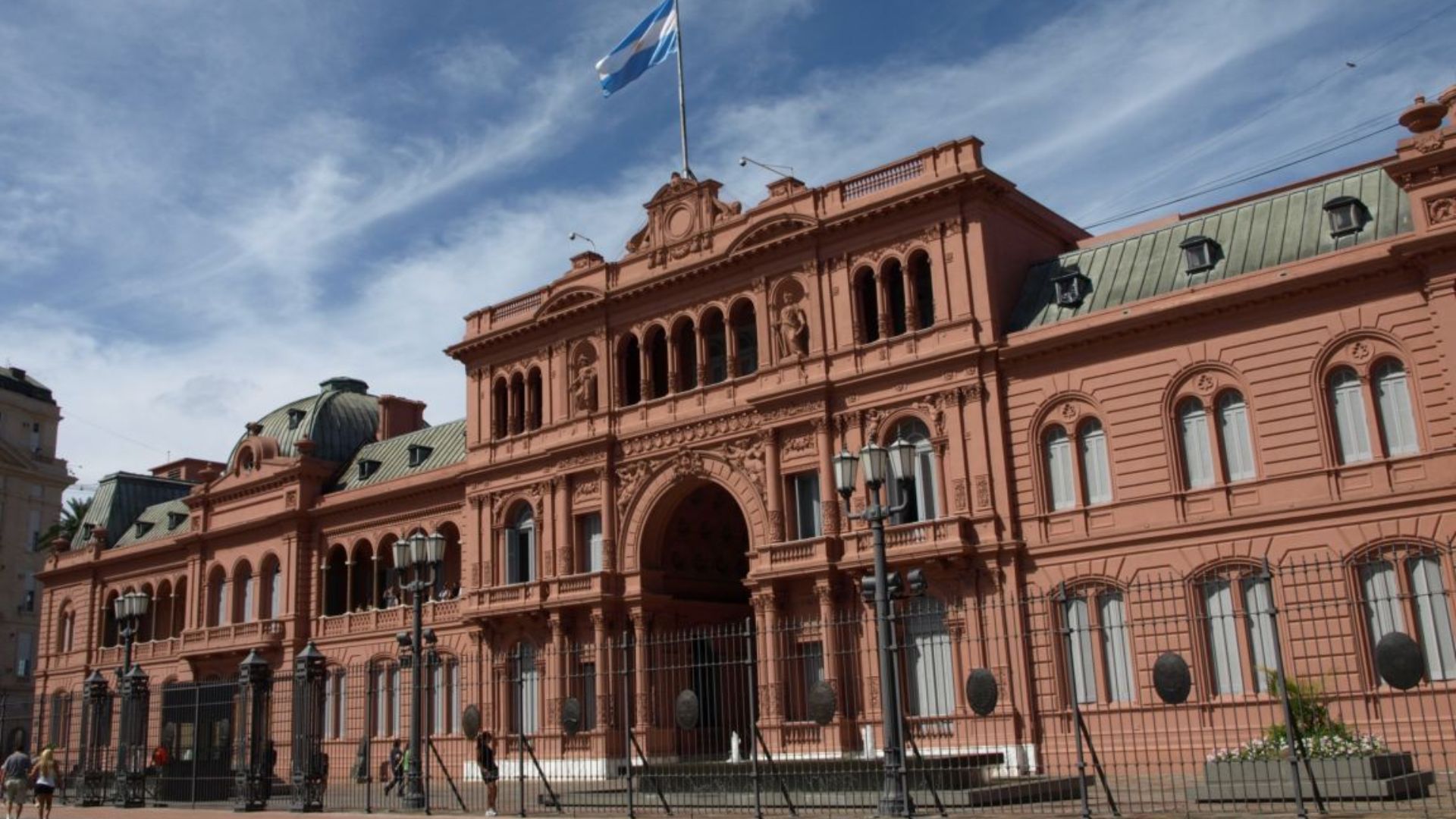
A group of journalistic organizations has published a report describing an alleged campaign to influence media outlets across Africa and Latin America based on a trove of 76 documents purportedly linked to Russia’s Foreign Intelligence Service. Among the outlets named in the documents are Argentine media organizations that were allegedly paid to publish content aligned with Russian interests. In total, around 20 outlets are said to have been paid US$283,000 for at least 250 articles. The report, however, stated explicitly that the documents which were not published in their entirety did not say whether the money went “to the outlets, the journalists, or to third parties.” “It is also possible that the amounts were overblown. Our reporting could not verify whether payments were made or to whom,” the authors said in the section devoted to Argentina. The Russian Embassy in Argentina issued a statement on social media saying that the publication amounted to “a forgotten story about an alleged Russian disinformation campaign, artificially inflated in June 2025.” “No facts or evidence are provided to support these insinuations,” read the communiqu. The report prompted the Argentine government to revoke the press credentials at Casa Rosada and the lower house for journalists from some of the named outlets. Government officials called the decision a “preventive” measure pending clarification of their role in the accusations contained in the documents. The measure drew criticism from journalists, press unions, and media organizations, who argued that accusations without a judicial ruling are not enough to justify restrictions on access to public information. The origin of the documents The documents were first received by The Continent, a South Africa-based media outlet published by the nonprofit organization All Protocol Observed. Over the next five months, The Continent assembled an investigative group that included Dossier Center and iStories (Russia), All Eyes on Wagner and Forbidden Stories (France), openDemocracy (United Kingdom and Latin America), and two independent Russian-speaking journalists. Reporting on the Argentine chapter was done by journalists Diana Cariboni, Sofa lvarez Jurado, and Santiago O’Donnell; the latter is the director of Argentine outlet Filtraleaks. What the outlets that published the documents say The documents describe an entity referred to as “the Company.” The report states that, in 2024, this entity supposedly conducted political influence operations across more than 30 countries in Africa and South America. According to All Eyes on Wagner/INPACT, there are three links allegedly tying “the Company” to the Wagner Group, the Russian paramilitary organization founded in 2014 by businessman Yevgeny Prigozhin. The first is a physical address. Lease invoices included in the leaked documents allegedly place the Companys headquarters at a St. Petersburg address that is said to be the same as an entity called Africa Politology. In 2023, the U.S. Treasury Department had already identified the latter as an arm of the Wagner Group. The second is related to the personnel. According to Russian databases and previous publications by Dossier Center, the three identified leaders of the network Sergey Vasilyevich Mashkevich, described as its global director; Sergei Sergeyevich Klyukin, head of its analytical department; and Artem Vitalievich Gorniy, in charge of the back office in Russia are said to have had a documented history within Africa Politology. The third is financial. According to All Eyes on Wagner/INPACT, records obtained independently by Dossier Center would indicate that Gorniy made cash deposits into the accounts of StratConsult, the company registered by Klyukin in 2024. All Eyes on Wagner/INPACT did not publish those records, nor does it specify their format or origin. The only financial document reproduced in the report is a January 2024 rental invoice in Gorniy’s name, indicating that the network is located at a St. Petersburg office. Forbidden Stories said it had obtained additional documents outside the original set of 76 leaked to The Continent, which allegedly include the contract signed between the two companies on 20 December 2023 and the preparatory questionnaire from the meeting between the SVR and Mashkevich. Forbidden Stories does not specify the format or origin of those additional documents. A third entity, StratConsult LLC, was allegedly registered by Klyukin in March 2024. All Eyes on Wagner/INPACT claim that some of the network’s consultants are linked to it, but most operate as independent contractors. The Continent identifies Klyukin as a supposed former Wagner Group operative with a background in Sudan but does not specify which leaked document supports that claim, nor does it present external sources to corroborate it. The SVR did not respond to any of the report authors requests for comment. The operation in Argentina According to openDemocracy, between June and October 2024, “the Company” is said to have budgeted approximately US$283,000 to place at least 250 articles across more than 20 Argentine digital outlets. As evidence, the report publishes screenshots of spreadsheets in Russian, part of the 76 leaked documents, listing outlet names, topics, dollar amounts, and article URLs. The investigative journalists themselves flag three limitations of this evidence: the documents do not indicate whether payments were made or to whom; some articles appear twice in the spreadsheets, something the report suggests may reflect attempts to overstate the scale of the operations. Some amounts may have also been overblown, a practice Forbidden Stories attributes to what it describes as “endemic corruption” within the Russian propaganda system. OpenDemocracy alleged that expense records showed an additional US$343,000 allocated to items such as intelligence gathering and field coordination. These records were neither shown nor described in detail in the report. The journalists behind the Argentine chapter identify Alexey Evgenievich Shilov as the operations coordinator in Argentina. The sole source for that claim is an internal profile of Shilov included in the 76 leaked documents. According to openDemocracy, this profile seemingly claims that he “organized and carried out a socio-political operation to discredit the pro-Ukrainian policy of Argentina’s leadership.” None of the outlets involved in the report offered external sources to corroborate that role independently. The leaders of the Buenos Aires operation were identified by openDemocracy and Forbidden Stories as Lev Konstantinovich Andriashvili and his wife, Irina Yakovenko, both Russian nationals living in the city. The source for this identification is not the leaked documents but rather a public statement cited by Forbidden Stories from June 2025 in which presidential spokesman Manuel Adorni announced the Argentine government had dismantled an alleged Russian spy network. According to a report by the Argentine Journalism Forum (FOPEA, for its Spanish initials), cited by openDemocracy, both of them left Argentina for St. Petersburg shortly after the government disclosed their names, though they returned in October of that year. At the time the report was published, both were still living in Buenos Aires. In a written response to openDemocracy, Andriashvili denied any involvement: “We have never contacted media outlets, journalists, or political figures in Argentina. And we have no connection to the organization mentioned in your description. No evidence has been presented to support these accusations, simply because it does not exist.” According to openDemocracy, the campaign was allegedly structured around three objectives: discouraging Argentine support for Ukraine, undermining Milei’s public standing, and amplifying tensions between Argentina and Chile. The evidence presented for each of those objectives comes from the leaked documents themselves. In the case of the first allegation, the report published screenshots of an internal document describing a campaign titled “Argentina does not need a foreign war.” Included in this initiative was the painting of 89 murals in Buenos Aires and the placement of banners in streets and at a Copa Libertadores match. Forbidden Stories also reproduced an image of a stadium banner and photographs of murals, drawing on information contained in the documents themselves. The outlets and the payments: what the evidence shows The outlets named in the documents vary in audience, resources, and editorial line. They include Diario Con Vos, El Destape, Diario Registrado, Realpolitik, Dos Bases, Big Bang News, Poltica Argentina, En Orsai, A24, La Patriada Web, El Ciudadano Web, Tiempo Argentino, El Grito del Sur, Seccin Ciudad, Infocielo, Infobae, El Cronista, Agenda Urbana, Data Clave, Ciudadano Agro, Contraste MDP, and En la Mira del Poder. As noted above, the documents do not indicate who was paid or whether payments were even made. In the report, the different journalist groups warned that the amounts may have been overblown and that some of the articles appear twice in the spreadsheets. Also named are C5N.com, mbito, and Diario Registrado, all owned by Grupo Indalo, the same holding that owns the Buenos Aires Herald. The three outlets launched internal audits to review the flagged articles. The fees listed in the documents range from US$350 to US$3,100 per article. Forbidden Stories was able to independently verify that the authors bylining some of the articles did not exist: the universities listed in their biographies denied any connection to them, and the pictures on their profiles were either stock images, AI-generated faces, or identifiable photographs of Russian nationals. That verification of fabricated identities, together with public corporate registries confirming the existence of the named companies, is the evidence included in the report that is most strongly supported by sources independent of the leaked documents. The journalists in charge of the report contacted all outlets named in the documents and spoke with representatives of 15 of them. All denied any connection to Russian money or campaigns. Most said they had received the articles via third parties either press agencies, consultants, or other intermediaries. Several of them acknowledged that the pieces had been published without a rigorous editorial process. Two sources told openDemocracy they had received payments to publish some of the articles. The reports authors, however, said they were unable to identify who made the payments or independently verify whether the intermediaries had any connection to the Russian network. Forbidden Stories stated that “the Company” left Argentina in November 2025 with very little to show: Argentina joined the Ramstein support format for Ukraine in June 2024, Milei’s party strengthened its position in the 2025 midterm elections, and tensions with Chile did not materialize. The Russian Embassy in Buenos Aires published a statement on social media expressing regret over what it called “ideological posturing” and attributing the publication to “a desire to cloud bilateral relations.” As early as June 2025, the embassy had described the involvement of the two Russian nationals as “malicious defamation” and said it had never maintained “contact with them.” Press credential revocations draws criticism Following the publication of the documents, Javier Milei used social media to lambast journalists and media outlets. In one post, Milei named the Buenos Aires Herald, though the Herald does not appear in any of the leaked documents and has no connection to the alleged Russian operation. On Monday, 7 April, the government barred accredited journalists from several of the named outlets from entering the Casa Rosada. Federal Police and Casa Militar officers checked names and photographs at the entrance to Balcarce 50 and turned away the reporters who ahd been signaled. Government spokespeople described the measure as “preventive, pending clarification of the facts.” When asked which outlets were affected, responded, “All those that are involved,” without providing a list. Not all outlets named in the documents, however, were excluded from the Casa Rosada or the lower house. The measure was criticized by press organizations. The Buenos Aires Press Workers’ Union (SiPreBA, for its Spanish initials) called it “direct censorship against critical journalism” and demanded that the journalists affected by the ban be allowed to “work normally.” In a statement on social media, the union described the restriction as part of what it called the grave attacks and systematic harassment the government carries out against the press, with the aim of damaging freedom of expression and disciplining journalism in its role of overseeing government acts.” The union maintained that accredited journalists have both the right and duty to cover government activities and that, without a judicial ruling, no accusation can be used to block that access. The Association of Argentine Media Organizations (ADEPA, for its Spanish initials) issued a statement on 7 April addressing the alleged spy campaign and the journalist ban. The organization expressed concern over “the existence of an alleged espionage and disinformation campaign of foreign origin,” as well as the restriction of access for accredited journalists at the Casa Rosada, the lower house, and the economy ministry. The possible existence of ongoing investigations should not result in limitations on access to public information,” they said.
Conectividad regional, auge de escapadas y la pasión por el turismo deportivo del viajero argentino
El pulso del turismo emisivo en la Argentina atraviesa un momento de...
 WindwhistlerOctober 13, 20260
El último tiro cambió todo: pescó un pez elefante y ganó $ 20.000.000
Promediando el cierre de la semana pasada los pronósticos parecían tronchar la...
WindwhistlerOctober 13, 20260
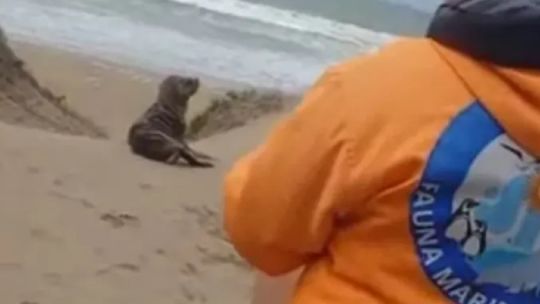
Así rescataron a un cachorrito de lobo marino de un pelo en los médanos de Miramar
Un sorpresivo y emotivo procedimiento de preservación ambiental conmovió por completo a...
WindwhistlerOctober 13, 20260



Proyectan exportaciones récord del agro en 2027, pero advierten que aún faltan dólares para el año electoral
A un año de las elecciones presidenciales, la pregunta sobre si estarán...
WindwhistlerOctober 13, 20260
