
Why traveling on public transport in Buenos Aires has become hell
 Martina JaureguyApril 10, 20265 Mins read
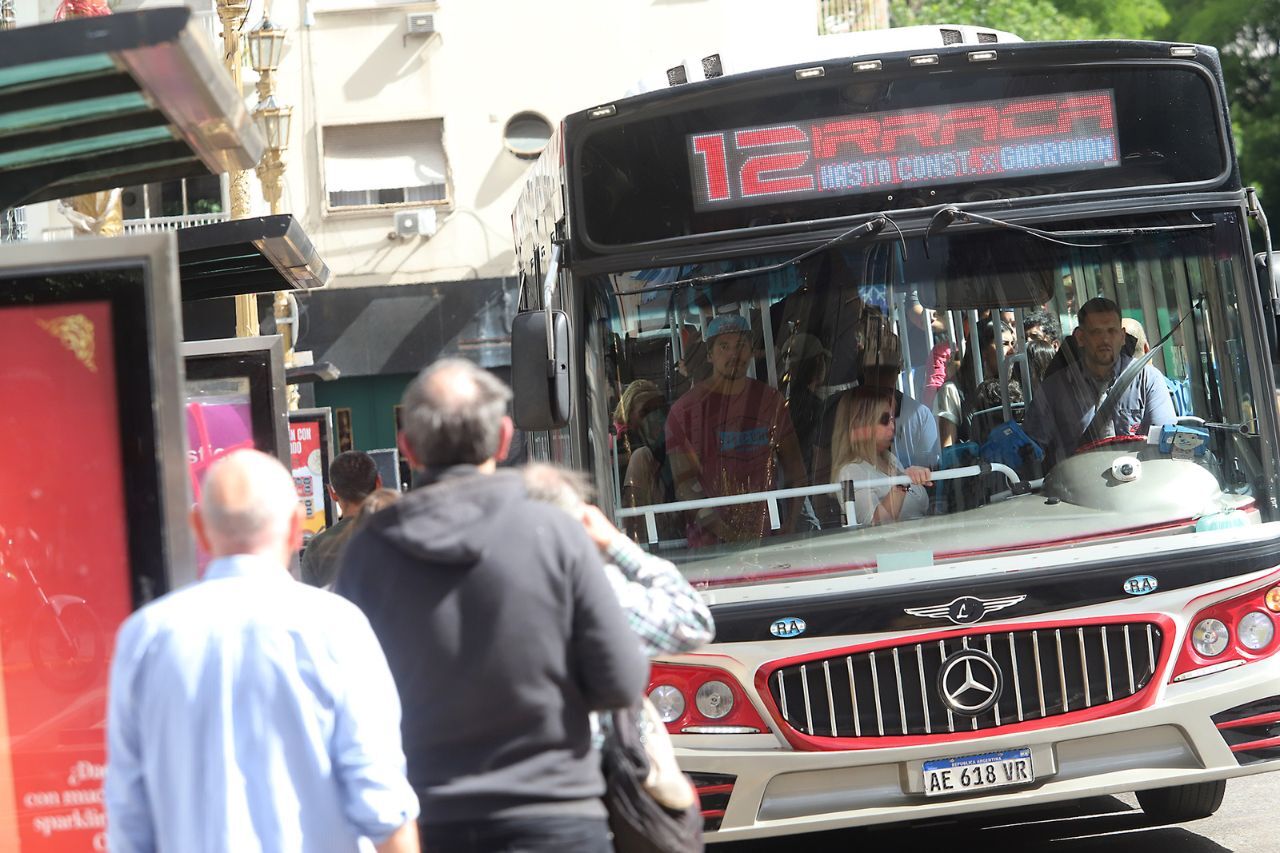
Trying to get from point A to point B in Buenos Aires seems like an impossible task lately. To take a bus you might have to stand in endless queues for up to an hour, depending on the time of the day and the line. However, waiting for one might be unavoidable, as trains are often canceled due to technical issues and subway stations are often closed. The situation has noticeably worsened in recent weeks, but it has been in decline for some years. The problems with public transport not only affect the three million residents of Buenos Aires City, but also millions who work, study or have to do activities there but live in the cities surrounding it, an area known as the conurbano. These suburbs together with the capital city are known as the Buenos Aires Metropolitan Area or AMBA. It is estimated that 3.5 million people come in and out of Buenos Aires City every day, and 10 million people use buses in the AMBA. Why is this public transport crisis happening? At the Herald we explain what’s going on. Buses This week, bus companies decided to reduce their service frequency by 30% due to the rise in fuel prices in March, following the war in the Middle East. Bus owners demanded a “palliative” solution from the government, in the form of increasing the subsidies they receive from the state for each ticket sold. The protest led to unusually long lines at key transport centers, such as those outside train stations throughout the AMBA and the bus docks known as Metrobus, which run along the main avenues in Buenos Aires. Passengers had to resort to pushing into buses in an attempt to get in and reach their homes or jobs, with many failing to do so due to the amount of people already in them. On Thursday, authorities from the transport secretariat met with representatives from the companies, but they did not reach an agreement. They will meet again on Tuesday. In the meantime, the government sanctioned those bus lines that had reduced their service frequency. “Up until 2019, public transport in the Buenos Aires Metropolitan Area was regular, albeit with room for improvement. Some bus lines were good when compared to other countries from the region,” Federico Poore, a consultant on urban issues with a master’s degree in Urban Economics, told the Herald. “Many tourists celebrated the bus frequency and the night services. This was obviously affected during the pandemic, but it became worse after that,” Poore said. The expert added that there has been “a steep decline in the past two years”, since the Milei administration took office, due to conflicts regarding ticket prices, after the national government decided to transfer the responsibility for awarding subsidies to the provinces and BA city. “You can see it everyday. While public transport used to be regular, now it is bad.” Trains Almost all train lines in the AMBA region are state owned, and have been going through a defunding process during the current administration. This has led to operational issues in recent years, such as slower or more spaced out services, delays and cancellations; but also technical failures, potentially due to lack of maintenance. In November, a train from the Sarmiento line — which connects the capital with the western conurbano — went off the rails, injuring around 20 passengers. On Tuesday, an electrical panel at the Constitución station caught on fire, leading to a temporary suspension of the Roca train line, which connects Buenos Aires with the southern conurbano. And those living to the north of the capital haven’t fared much better, as the main Mitre train line to Tigre was closed during January and February due to renovations, which meant users had to seek alternative commute options. Poore stated that trains have been the public transport most affected by funding cuts. “The trains that were bought in 2014 have not been adequately maintained or repaired, those that break are not replaced, and that leads to a train service that is much worse than the one we had 10 years ago.” You may also be interested in: Train commutes in Buenos Aires have become a blood sport Subways Using the Buenos Aires city subway in the early mornings has always been a wild experience, but even more so in recent weeks, with the bus frequency reduction. The subway system is owned by the BA city but, unlike the trains, it is operated by a private company, called Emova. In recent years, subway frequency has become more spaced out, and the service more expensive. The ticket went from AR$80 in December 2023 — when Milei took office — to AR$1414 (around a dollar) in April 2026, an increase of 1600%. The accumulated inflation during that time was 209%. Emova and the city government have said the huge increase is due to the need to lower subsidies, bringing the ticket price closer to what is needed to cover real operating costs. The Buenos Aires City government has also been carrying out “integral renovations” of several subway stations. Many of them showed severe deterioration after being left without maintenance for years, mainly showing signs of humidity and leaks. The renovations included paint jobs, new lights and signal equipment. Several stations were closed during the works. While the goal was to give users a better experience, the long delays to finish the renovations caused issues as travelers had to walk to the nearest station or take the bus or a taxi to get to their destinations. The most notorious of these renovations was the one carried out in the ever-busy Plaza Italia station from the D line, which was closed for six months. The initial estimated time for the works was three months, but was delayed. After it reopened, users shared photos of white panels covering what looked like unfinished or unplastered walls. Jorge Macri, chicaneas con que vas a construir la línea F. Pero no podés hacer una estación como la gente. Mirá como dejaste Plaza Italia. pic.twitter.com/2zIa666C1e— Santoro El toro 🇦🇷 (@LJS_caba) March 2, 2026 Some stations, like Medrano from the B line, are currently being renovated but have not been closed, so passengers have to walk around unplastered walls and hanging electric cords. Poore said that the maintenance issues also affect subways, which have been “badly administrated” in recent years. According to the expert, the BA government “abandoned its promise of having a frequency of three minutes or less in all lines.” “The E line has a frequency of 10-11 minutes on average, which is closer to the frequency of a suburban train, more than a subway,” Poore pointed out. Anger and micro-violence Using public transport, in short, has become chaotic. Yelling between fellow passengers on bus lines or inside the train and subway carts — mostly between those pushing to get in and those being crushed inside — are an everyday occurrence. “The service delays and interruptions lead to serious problems for public transportation users. They don’t trust the system,” Poore said. As an example, he mentioned that screens that had been installed to show when the next bus would arrive are mostly no longer operational, so people “have no idea” when they will be able to take the bus. Due to the more spaced out services and general chaos, people are losing their punctuality bonus at their jobs, have to look for other ways to get to their destination, and their commutes are much longer than they should, with some taking several hours to return home. “This creates anger amongst passengers, and even micro-violence,” Poore lamented. Cover photo: Mariano Fuchila/Ámbito

Conectividad regional, auge de escapadas y la pasión por el turismo deportivo del viajero argentino
El pulso del turismo emisivo en la Argentina atraviesa un momento de...
 WindwhistlerOctober 13, 20260
El último tiro cambió todo: pescó un pez elefante y ganó $ 20.000.000
Promediando el cierre de la semana pasada los pronósticos parecían tronchar la...
WindwhistlerOctober 13, 20260

Así rescataron a un cachorrito de lobo marino de un pelo en los médanos de Miramar
Un sorpresivo y emotivo procedimiento de preservación ambiental conmovió por completo a...
WindwhistlerOctober 13, 20260



Proyectan exportaciones récord del agro en 2027, pero advierten que aún faltan dólares para el año electoral
A un año de las elecciones presidenciales, la pregunta sobre si estarán...
WindwhistlerOctober 13, 20260
