
Milei celebrates record consumption, but private analysts tell a different story
 Facundo IglesiaApril 12, 20262 Mins read
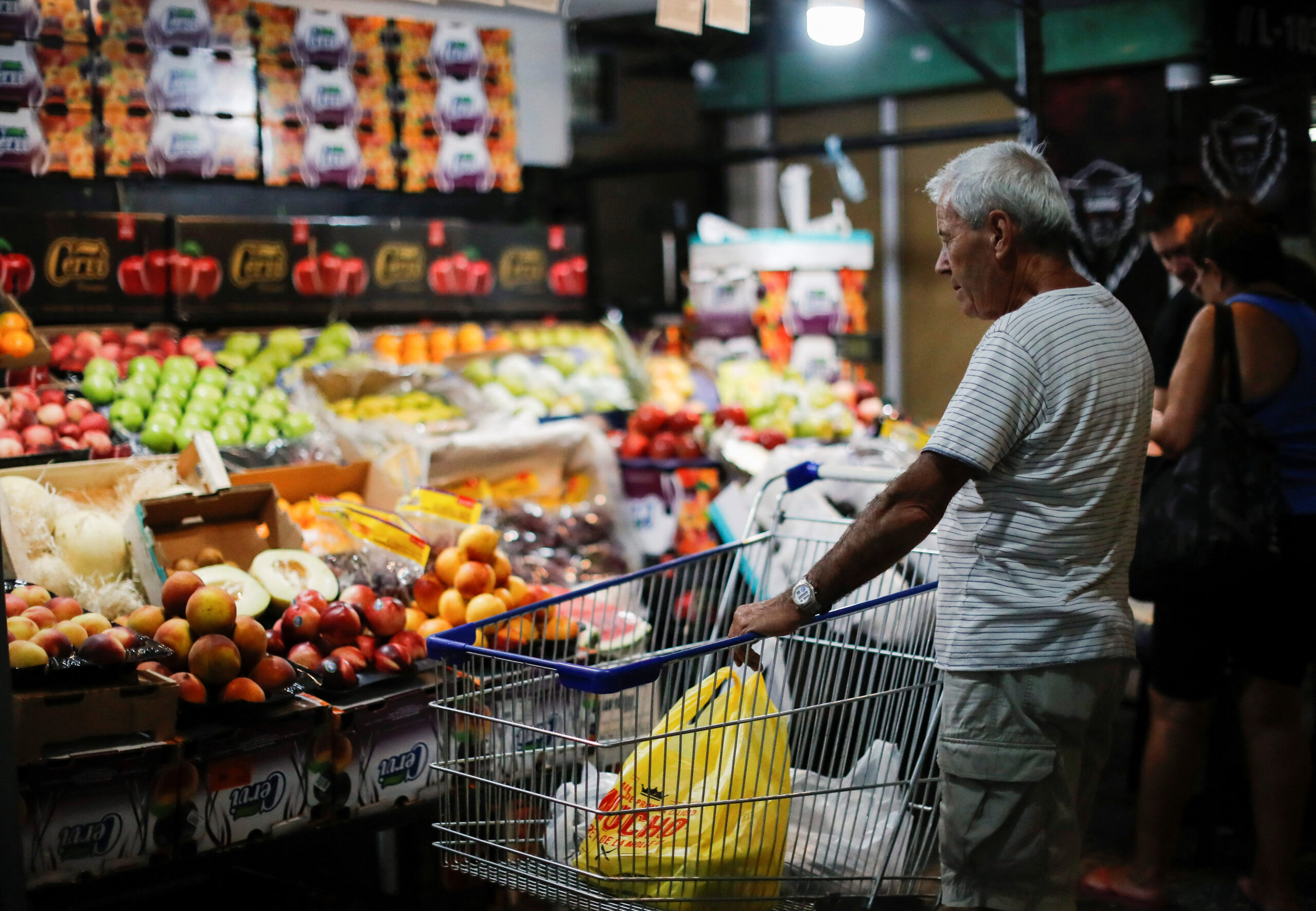
Government officials celebrated after the official statistics institute, the INDEC, published figures showing that private consumption increased by 7.9% interannually in 2025. However, some private consulting firms are telling a different story. Scentia concluded that February 2026 saw a 3.4% year-over-year drop in mass consumption, and that it fell by 2.1% in the first two months of the year. “We believe that part of the explanation for this situation can be found in the inflation seen in recent months, which has eroded consumers’ purchasing power,” stated a report released two weeks ago. However, at different moments since 2025, President Javier Milei, Economy Minister Luis Caputo, and Deregulation Minister Federico Sturzenegger have said that “consumption is at an all-time high.” According to Sonia Balza, Ph.D in Economic Development and member of the Workers’ Innovation Center (CITRA), this apparent contradiction does not mean that the INDEC is forging statistics, but that the government’s interpretation of the figures does not align with reality. “Consumption did not increase — service fees and transportation did,” Balza said. “Therefore, households increased their expenditures.” “What we are seeing is a drop in the consumption of mass-market goods and an increase in household spending, but not because people are spending more,” she said. “Rather, because they’ve shifted their spending, and there’s greater pressure from services that you simply can’t avoid paying for.” “In Argentina, one type of expenditure was substituted by another,” she said, adding that there was a “redistribution.” Private consumption, measured by INDEC, is “a macroeconomic aggregate derived from the national accounts.” Meanwhile, she added, private consulting firms do a “more straightforward and direct reconstruction of retail sales based on receipts.” Losing as little as possible According to Pablo Semán, a sociologist who investigates working-class culture, nowadays “families’ projects consist of, in the best case scenario, losing as little as possible.” He added that strategies vary according to people’s social classes — while middle sectors buy more off-brand goods or reduce social outings, lower ones “stopped eating four times a day, and started doing two.” “People are losing things all the time — free time, the ability to get around due to the cost of transportation, and the deterioration of safety conditions caused by the economic downturn, as well as social ties,” Semán told the Herald. “A telling example is that birthday celebrations are becoming increasingly scaled down,” he added. At press time, Milei posted on X what seemed to be an admission that the situation is not as rosy as he painted it to be. He said that data shows that Argentina is better off than in 2023, but then he nuanced his statement. “Does this mean that everyone is better off? No. And it would be intellectually dishonest to claim otherwise,” he said. “That is precisely why we must persevere: to stabilize the economy and, with it, the lives of all Argentines. That is why we ask for patience. We are on the right track.”



Conectividad regional, auge de escapadas y la pasión por el turismo deportivo del viajero argentino
El pulso del turismo emisivo en la Argentina atraviesa un momento de...
 WindwhistlerOctober 13, 20260
El último tiro cambió todo: pescó un pez elefante y ganó $ 20.000.000
Promediando el cierre de la semana pasada los pronósticos parecían tronchar la...
WindwhistlerOctober 13, 20260

Así rescataron a un cachorrito de lobo marino de un pelo en los médanos de Miramar
Un sorpresivo y emotivo procedimiento de preservación ambiental conmovió por completo a...
WindwhistlerOctober 13, 20260


Proyectan exportaciones récord del agro en 2027, pero advierten que aún faltan dólares para el año electoral
A un año de las elecciones presidenciales, la pregunta sobre si estarán...
WindwhistlerOctober 13, 20260
