
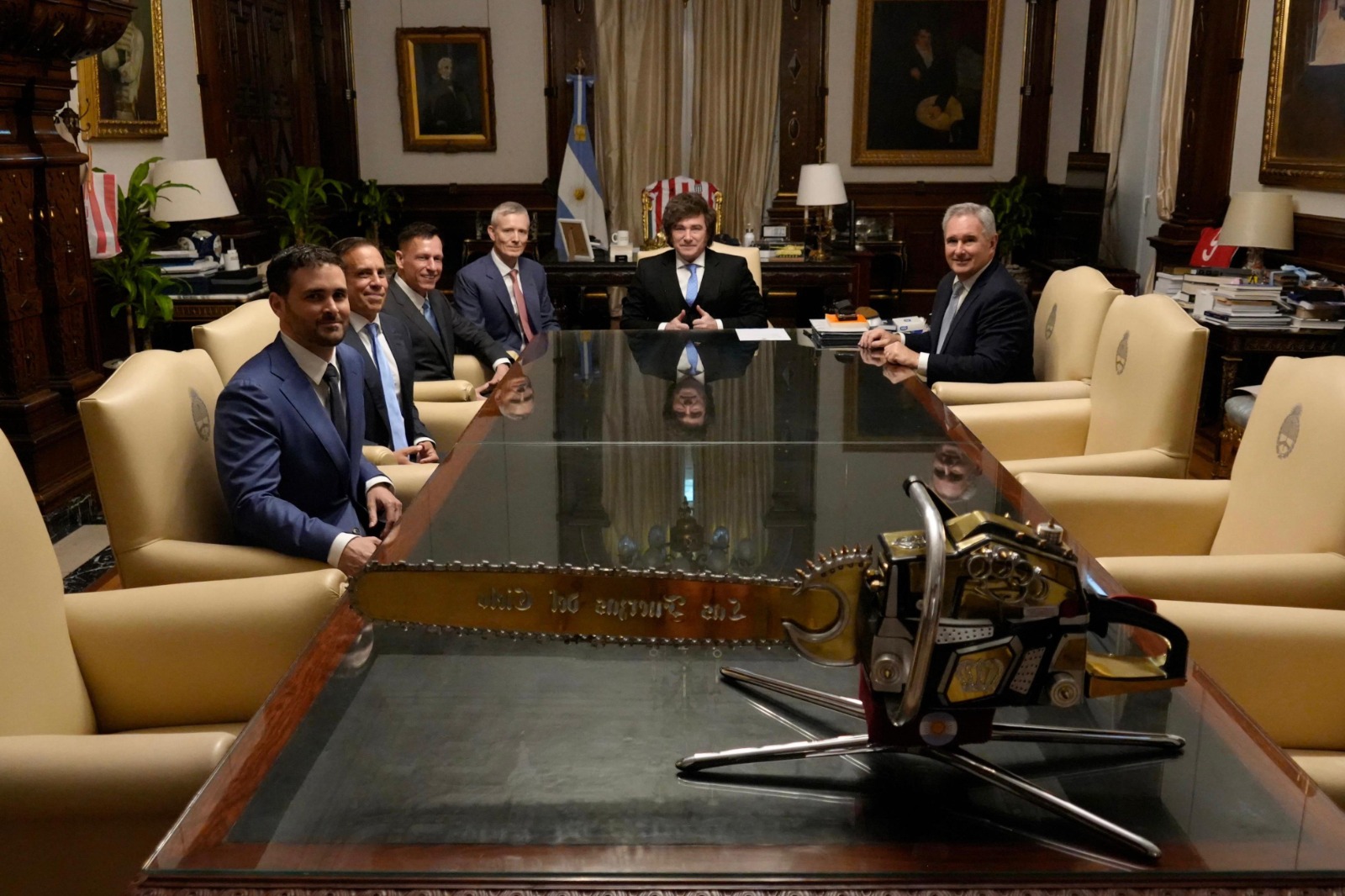
Peter Thiel meets with Javier Milei in Buenos Aires
 Buenos Aires HeraldApril 23, 20262 Mins read
German-U.S. far-right entrepreneur Peter Thiel met with Argentine President Javier Milei in the presidential palace on Thursday. Thiel’s reasons for visiting Argentina are kept under wraps. The President’s Office only released a photograph of the meeting with a brief description. Thiel, the 58-year-old founder of online payments processor PayPal and AI company Palantir, is reportedly planning to stay in the country for two months. He is mostly in a US$12 million house he bought in Barrio Parque, an affluent suburb in Buenos Aires City, local media reported. Thiel and his husband, Matt Danzeisen, saw Milei in Casa Rosada at 2 p.m., together with the country’s Foreign Minister, Pablo Quirno. In an interview with the Neura streaming channel, Milei said the meeting was “wonderful.” According to the president, Thiel asked how the government would sustain the austerity measures. “Politics is key, together with the cultural battle,” Milei allegedly answered Thiel. The businessman arrived in Argentina last week. He went to see the Boca-River football match on Sunday at the Monumental stadium. According to media outlets, Thiel had met with presidential advisor Santiago Caputo days before. National deputy Juan Marino requested information on Thiel’s visit to the Foreign Ministry, including his meetings with government officials, and whether the implementation or purchase of Palantir’s AI security and defense tools was discussed. Thiel and Milei The meeting happened just as journalists were protesting outside Casa Rosada, against the government’s decision to deny entry to all members of the press accredited in the presidential palace. Thiel, who has been a staunch conservative even long before Silicon Valley shifted to the right with Donald Trump’s second term, has also said that Swedish activist Greta Thunberg and those who want to regulate AI are the “antichrist.” The ideology he champions is called the “Dark Enlightenment” — a proposed alliance between autocrats and AI accelerationists to manage societies as if they were corporations. Palantir, Thiel’s AI company, holds contracts with the Pentagon and made headlines on Saturday, when it published a 22-point manifesto entitled “The Technological Republic,” which posits that Silicon Valley “has an affirmative obligation to participate in the defense of the nation.” The manifesto, which is adapted from a book with the same title, also says that “the question is not whether AI weapons will be built; it is who will build them and for what purpose” and “if a U.S. Marine asks for a better rifle, we should build it.” The text adds that some cultures “remain dysfunctional and regressive” and that “we must resist the shallow temptation of a vacant and hollow pluralism.” U.K. newspaper The Guardian said the manifesto was described as “the ramblings of a supervillain.” Palantir’s customer base includes federal agencies, state and local governments, international organizations, and private companies. Rights organizations have claimed Palantir’s technology is used for mass surveillance and profiling. More recently, Palantir’s Maven AI system provided real-time intelligence for U.S. military operations against Iran. The technology has been claimed to shorten the “chain of death”—that is, the process from target identification to legal approval and the launch of an attack. Recently, the Pentagon refused to answer U.S. media outlet Futurism’s question about whether AI played any role in deciding the airstrikes that destroyed an elementary school and claimed the lives of 168 people, mostly girls.



CONMOCIÓN: murió Rosa del Valle Rasgido
 notienredSeptember 13, 20260

Claudio Barrelier reveló por qué mató a Agostina Vega: Obsesión por la
notienredSeptember 13, 20260

Asesinaron a Alfredo Wiebel y se dieron a la fuga
notienredSeptember 13, 20260



Clima en Ciudad de Buenos Aires: sábado 12 de septiembre
Sábado en la Ciudad de Buenos Aires con una temperatura máxima de...
 WindwhistlerSeptember 13, 20260
