
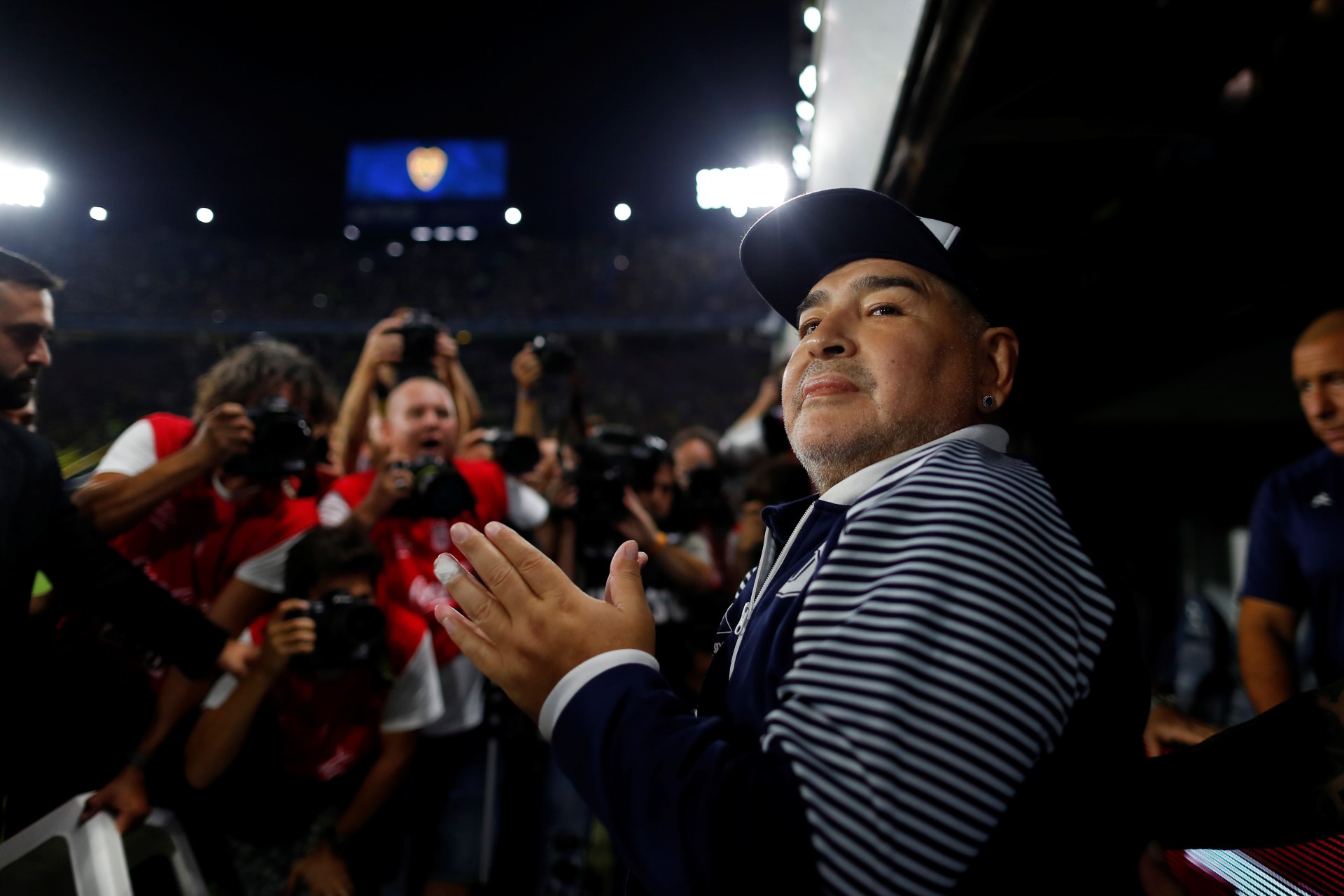
Maradona death trial: No defibrillator, no ventilator, and no oxygen in the room, says first responder
 Fernando Romero NunezApril 24, 20263 Mins read
Day four in the trial over the death of Argentine football superstar Diego Maradona started on Thursday, with the testimony of several law enforcement and medical witnesses. The key witness was Juan Carlos Pinto, the doctor who signed Maradona’s death certificate. Pinto, who works as an ambulance paramedic, said he received a call involving a high-risk patient in the gated community where Maradona lived. Upon arrival, he met with a doctor, a fellow resident of the private neighborhood where Maradona had rented a house, who had been called by the neighborhood security team after they were alerted that the former star needed attention. According to Pinto, the doctor told him there was “nothing to do”. In the room, he found two people, a man and a woman, doing CPR on the former star. Pinto said Maradona “didn’t have a pulse” when he got to the house and “looked like a balloon.” “The patient was dead,” he said. “He was severely edematous, with a very swollen face, swollen limbs, and a distended abdomen. He also had cadaveric livor, which are patches of skin that become rigid between 2 and 5 hours after death and were already fixed.” He insisted Maradona never showed any “signs of reaction” during CPR and highlighted that there was “no defibrillator, no ventilator, and no oxygen tanks” in the house. “There was nothing to indicate that the patient was receiving home care, nothing at all,” he remarked. Pinto said the family requested he continue performing CPR on Maradona. He admitted that despite agreeing to do it, he didn’t, as the former star was “already dead” and instead cleaned up his body behind closed doors. You may also be interested in: The trial over the death of Diego Maradona starts again. Here’s all you need to know ‘Just like any other room’ The judges also heard testimony from policeman Lucas Farías, who was the first officer to arrive at the house where Maradona died. According to Farías, he was sent over by his boss after reports of a medical emergency at the gated community. “When I arrived, they handed me the death certificate and told me he had passed,” he said, adding that Maradona “wasn’t responding” and that he was “covered up with a blanket and extremely swollen.” Farías insisted the room where Maradona lived was “a regular room, just like in any regular house” and that it didn’t look “like a place where a person is receiving medical attention .” “There was a plate with a sandwich on the desk, sporting clothes everywhere, a bottle of water,” Farías described. “A regular room, just like the one at my house.” After that, the prosecution showed a 17-minute video recorded by the forensic police on the day of the death. Forensic police director Cristian Méndez said after the video was shown that it was filmed to “understand the circumstances of the incident,” and agreed with Farías that there were “a few bottles of water and some medication, but nothing else” in the room. Luque strikes back After Pinto, Maradona’s main medical advisor, Leopoldo Luque, asked to testify for the third straight hearing, this time to respond to the testimony given during the last hearing by Maradona’s second daughter Giannina, on Tuesday. He rejected “the idea of any manipulation intended to benefit anyone other than Maradona” and said that the audio messages of him speaking poorly of Maradona’s family were “made in a context of extreme frustration and tension.” Maradona died from an acute pulmonary edema in 2020. The trial centers around the circumstances of his death and the attention he received from his doctors and nurses. Eight people stand accused of failing to administer proper medical care to Maradona, chiefly Luque as his main medical advisor, as well as his psychiatrist, Agustina Cosachov, and psychologist, Carlos Díaz. This will be the second time the proceeding goes ahead, after the first court case was declared a mistrial in May 2025.

CONMOCIÓN: murió Rosa del Valle Rasgido
 notienredSeptember 13, 20260
Claudio Barrelier reveló por qué mató a Agostina Vega: Obsesión por la
notienredSeptember 13, 20260
Asesinaron a Alfredo Wiebel y se dieron a la fuga
notienredSeptember 13, 20260


Clima en Ciudad de Buenos Aires: sábado 12 de septiembre
Sábado en la Ciudad de Buenos Aires con una temperatura máxima de...
 WindwhistlerSeptember 13, 20260
