
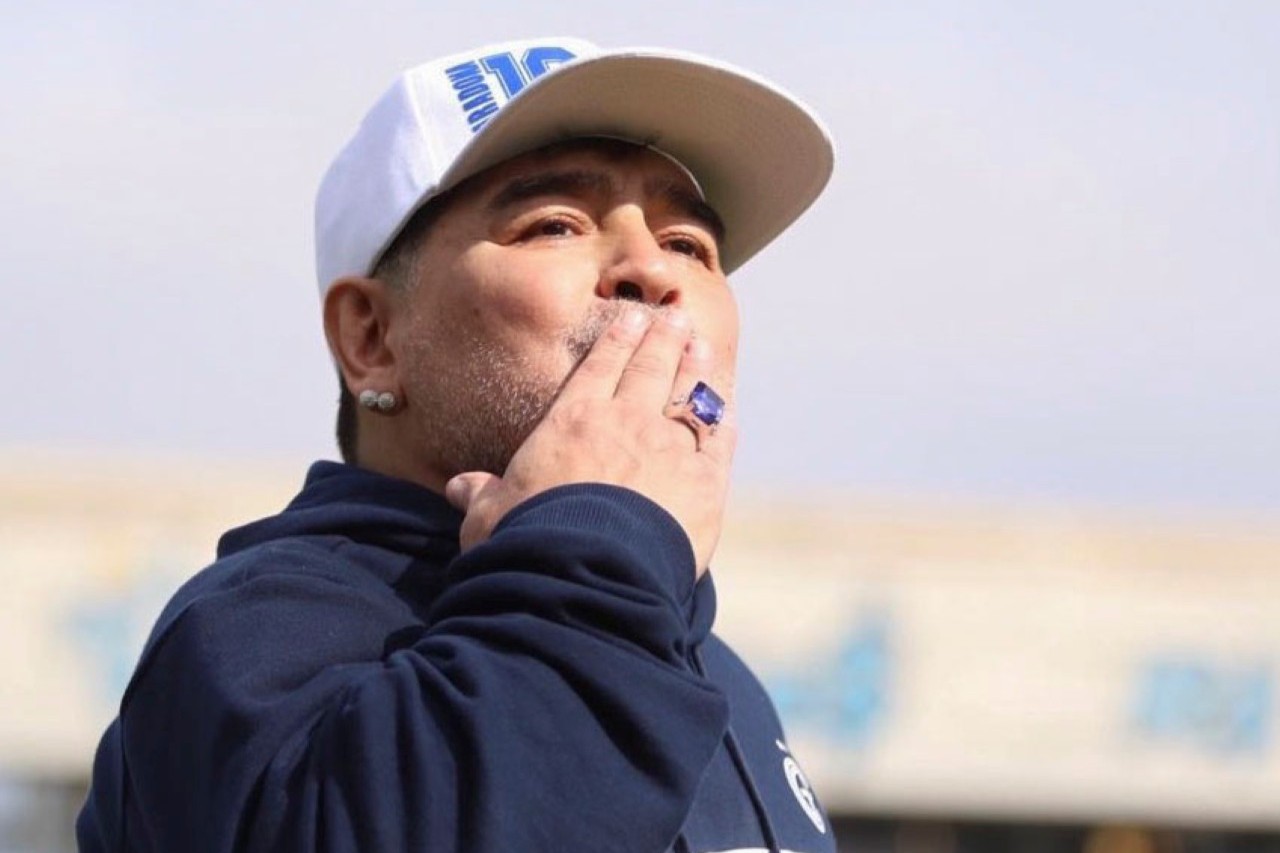
Maradona death trial: forensic experts clash with defense argument
 Fernando Romero NunezMay 6, 20264 Mins read
The trial into the death of Argentine football great Diego Maradona entered its seventh day on Tuesday, with testimony from three forensic experts. Federico Corasaniti, head of the San Isidro Mortuary Division, was the first to take the stand, through a video call. He stated that Maradona’s swollen abdomen — something that shocked the audience when the prosecutor showed an image of the bloated stomach at the start of the original trial — was not a consequence of his death, but rather a problem that had surfaced while he was still alive, something that contradicted the defense team’s argument. “If you pressed your fingers against the skin of the abdomen, it left an indentation; this is a sign of subcutaneous edema, which cannot possibly occur in a dead person,” he said, adding that one of the first signs that appears in corpses is dehydration, so this fluid was “produced while the person was still alive.” He also noted that Maradona’s corpse presented ascites, the accumulation of fluid in the peritoneal cavity, reaching over 3 liters. “This doesn’t happen suddenly. It’s practically impossible. It had been developing for quite some time,” he said. A long agony Corasaniti added that the forensic team found “firm clots,” which form when blood starts to pool inside the heart chambers, indicating “a prolonged period of agony.” According to the forensic pathologist, that means at least 12 hours. After him, forensic pathologist Silvana de Piero, who examined Maradona’s organs, gave her testimony. She said the former star’s liver, kidneys, heart and lungs exhibited damage. De Piero detailed that Maradona’s heart had “several conditions”, including a myocardial fibrosis, “a process which develops over time.” “His lungs were in distress,” he added. “They were filled with fluid. Air was getting in but couldn’t get out, so the alveoli began to rupture, causing him to suffocate. This happens over a period of days.” The last witness of the day was forensic toxicologist Ezequiel Ventossi, who said the analysis of Maradona’s blood samples showed no detectable levels of illicit drugs. Thursday’s hearing On the previous hearing, on Thursday, Maradona’s former partner Verónica Ojeda, neighbor and doctor Colin Campbell, the star’s psychologist Carlos Díaz and his lead medical advisor Leopoldo Luque took to the stand. Ojeda said the house was “not suitable for home care,” and stated that despite the medical team assuring “there would be all the equipment necessary”, in reality “there wasn’t even a blood pressure monitor.” She testified that she saw Maradona on November 18, a week before he passed, and that he was already “swollen and looked sick”. He was also “aggressive, angry, and hurling insults,” she added. Ojeda insisted the medical team “manipulated the family so [they’d] never be united” and called them “a cult, a bunch of rotten people who wanted to get things out of Diego.” First to the scene Campbell — the medic who was a neighbor in the gated community where the Argentine star had rented a house just days before his death — spoke about how he found Maradona, as he was the first doctor called to the scene. He said security staff told him Maradona “wasn’t feeling well” and asked if he could check on him while the ambulance arrived. He stated he found a female nurse was performing CPR on the former star as a male nurse gave mouth-to-mouth resuscitation, adding Maradona was “pale, cold, covered in a cold sweat, and had severe swelling and edema.” The caregivers told him Maradona had gotten up to get breakfast, and that was the last they saw of him. According to Campbell, the room was “very messy, neglected, and dirty,” and he was told there were “no medical supplies” in it. He said he found Maradona with “no pulse” and “no heartbeat.” When the ambulance doctor arrived, they found “no electrical activity with the defibrillator,” and “couldn’t access his airways because of the stiffness in his jaw.” The psychologist Maradona’s psychologist Carlos Díaz, agreed to testify on the condition he’d only be taking questions from his defense. He said he only met Maradona less than a month before he passed, on October 26, through another patient of his who was the driver of the former star’s lawyer, Matías Morla. Díaz said Maradona “reminded him of [his] alcoholic father,” but that he “really wanted to change” and “was committed to it.” He added that they both agreed on a plan of full alcohol abstinence and visits twice a week. He said he saw Maradona on November 12 and found him “strong, alert, engaged, and eager to do well,” but that less than a week later, Maradona “threw [him] out of the house,” calling it “a turning point.” The last to testify was Maradona’s lead medical advisor Leopoldo Luque, who once again offered his view on the hearing’s testimonies, arguing that Ojeda “never told anyone she had seen Maradona swollen” and that it’s “not true they manipulated the family.”

CONMOCIÓN: murió Rosa del Valle Rasgido
 notienredSeptember 13, 20260
Claudio Barrelier reveló por qué mató a Agostina Vega: Obsesión por la
notienredSeptember 13, 20260
Asesinaron a Alfredo Wiebel y se dieron a la fuga
notienredSeptember 13, 20260


Clima en Ciudad de Buenos Aires: sábado 12 de septiembre
Sábado en la Ciudad de Buenos Aires con una temperatura máxima de...
 WindwhistlerSeptember 13, 20260
