
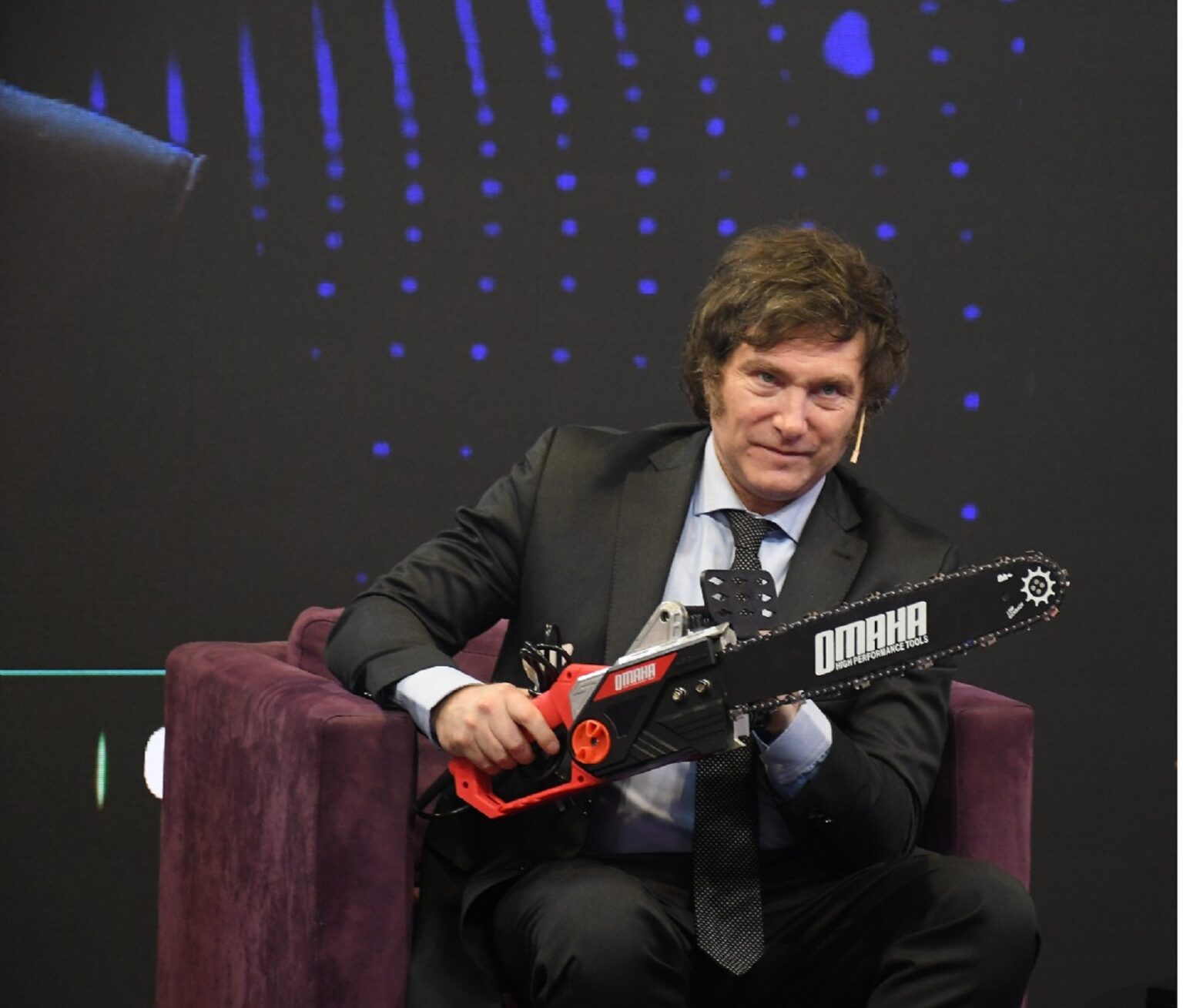

President Javier Milei’s government has brought inflation down sharply from 211% a year in 2023 to 31% in 2025 and locked in two consecutive years of fiscal surplus, something Argentina hadn’t seen since the first Kirchner administration nearly two decades ago. Yet his popularity has been sliding for months. The drop isn’t down due to corruption cases involving members of his cabinet alone. It also reflects the toll of the deep fiscal cuts Milei has imposed, and continues to impose, on the Argentine economy. The famed “chainsaw” is more than a strategy for shrinking public spending to keep inflation in check. It carries political consequences, too and they are starting to wear thin. What kind of economy did Milei inherit? The consultancy firm Epyca noted in a recent report that Argentina ran a fiscal deficit every year from 2009 to 2023, except for a slight surplus in 2010. “As we have seen in recent Argentine history, an economy that systematically spends more than it collects piles up debt or prints pesos, which puts pressure on the exchange rate and inflation and undermines its capacity to grow,” the analysts wrote. “Overusing this tool removes the option of using it when the economic cycle most calls for it: if the fiscal deficit becomes chronic, then the economy itself comes to depend on it.” As a result, “today it is all the more necessary to sustain a surplus to make up for the imbalance built up over that decade and a half of overusing the tool.” Where has Milei cut hardest? Hernn Herrera, head of economics at the Instituto Argentina Grande (IAG) think tank, told the Herald that when Milei took office, public works spending stood at 1.6% of GDP making it “the main multiplier in the economy.” “Since he took office, it has averaged 0.4% a year,” Herrera said. Almost a quarter of the total spending cut comes from the drop in public works investment, making it the single biggest piece of Milei’s austerity push. The trend deepened this year: capital expenditures in the first quarter of 2026 were down 86% from the same period in 2023. Epyca added that the chainsaw has also fallen on national public-sector wages, which have lost 37% in real terms since 2023. Universities and scientists have also taken massive cuts. University faculty have lost 33.7% of their purchasing power since Milei took office in late 2023. The science and technology budget has been slashed by 95% in real terms; funding for fellowships is down 39%; the National Council for Scientific and Technical Research (CONICET) lost 14% of its researchers between 2023 and 2026; and the National Meteorological Service recorded 140 layoffs. The Health Ministry took its share, too, with staff in the HIV unit down 40% and in vaccination programs down 31% over the course of 2025. The cuts have continued into 2026: public-sector wages fell 6.1% in the first quarter, and university faculty salaries dropped 7% over the same period. Spending on PAMI the public agency that provides health and social services to retirees and on social security fell 41.6% in real terms in the first quarter of this year. Social programs were down 29.8% in real terms, and transfers to the provinces collapsed 50.9% over the same stretch. Is there any precedent for this kind of cut? The austerity program rolled out by Milei’s government has no precedent in Argentina’s current democratic period, Herrera told the Herald. “It’s true that Menemism in the 1990s adjusted industry and local production in a similar way, but no one remembers cuts this violent.” Is this kind of adjustment sustainable? The question of whether a fiscal squeeze of this scale is politically sustainable has dogged Milei’s administration from day one. With his approval ratings sliding and his third year in office under way, it is being asked again. According to Herrera, if more cuts beget more cuts and pile up alongside falling consumption, output and employment, public discontent will only grow. “I think a permanent adjustment is unsustainable over time, because society won’t go along with it,” he said. “If you have to break everything to fix the macro, at what point are you actually fixing the macro?” Epyca acknowledged that “it’s worth recognizing when a government focuses on balancing the public accounts, rather than brushing off the consequences as leaders of past administrations did,” but said Milei’s surplus “is real in an accounting sense and artificial in an economic one.” The consultancy argued that the surplus “is being held in place by squeezing state capacities that aren’t easily rebuilt” and is reinforcing a dynamic that “makes it ever harder to reach the very goal it claims to pursue: an economy that grows, creates jobs and collects enough for the state to function without the chainsaw.”

CONMOCIÓN: murió Rosa del Valle Rasgido
 notienredSeptember 13, 20260

Claudio Barrelier reveló por qué mató a Agostina Vega: Obsesión por la
notienredSeptember 13, 20260

Asesinaron a Alfredo Wiebel y se dieron a la fuga
notienredSeptember 13, 20260


Clima en Ciudad de Buenos Aires: sábado 12 de septiembre
Sábado en la Ciudad de Buenos Aires con una temperatura máxima de...
 WindwhistlerSeptember 13, 20260
