
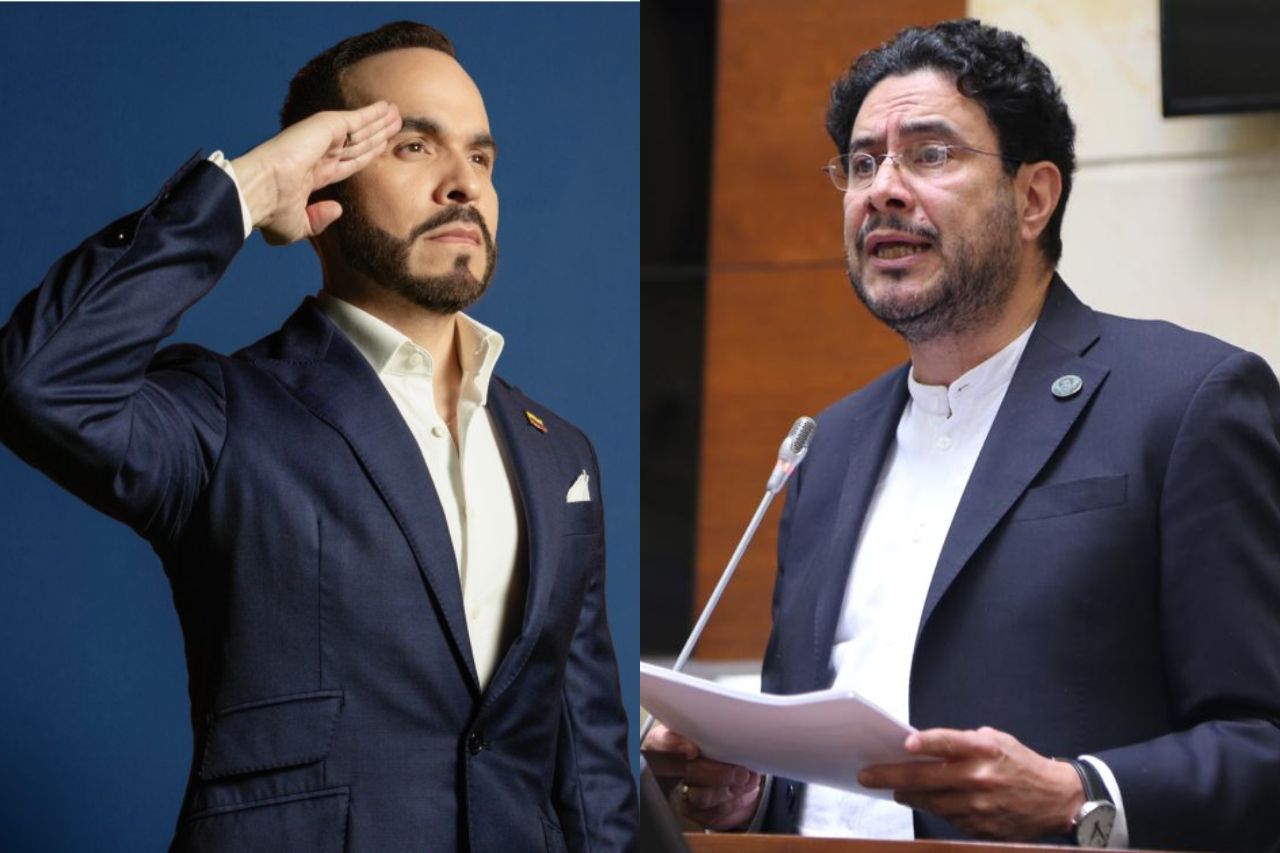
Colombia elections: far-right De la Espriella and left-wing Cepeda to compete in runoff
 Martina JaureguyJune 2, 20263 Mins read
Far-right candidate Aberlardo de la Espriella took the lead in the first round of Colombia’s presidential election on Sunday, and will face left-wing Iván Cepeda in a runoff on June 21. According to preliminary results, De la Espriella won nearly 44% of the vote, while Cepeda — the ruling party’s candidate, as Colombia has barred presidential reelection since 2015 — finished second with 41%, despite entering the race as the frontrunner in most opinion polls. Given none of the candidates reached the required minimum of 50% to win in the general election, Colombia’s next president will be decided in 20 days. While polls had suggested that traditional right-wing candidate Paloma Valencia would be locked in a tight race with De la Espriella for second place, she ultimately finished a distant third with just 7% of the vote. The result underscored the extent to which the electorate coalesced around the two candidates at opposite ends of the ideological spectrum. Following the announcement of the results, Valencia and former President Álvaro Uribe, who had backed her candidacy, threw their support behind De la Espriella and said their party, Centro Democrático (Democratic Center), would campaign for him in the runoff. With the endorsement of Colombia’s main right-wing political force, De la Espriella appears well positioned heading into the runoff and is likely to enter the final stretch of the race as the favorite. Who is Abelardo de la Espriella? De la Espriella, a lawyer and businessman running for the Defensores de la Patria (Defenders of the Homeland) party, is a political outsider with no prior experience in elected office. He has branded himself as El Tigre (“The Tiger”), a nickname that has become central to his campaign image. Among his main campaign promises is scrapping the peace strategy pursued by left-wing President Gustavo Petro to address Colombia’s decades-long conflict with armed groups. Petro’s approach has prioritized negotiations aimed at reducing violence and encouraging the demobilization of guerrilla and criminal organizations. In contrast, De la Espriella has proposed completely ending dialogue with the guerrillas and even bombing the armed groups’ camp sites. He also wants to take a tougher stance against drug trafficking and is against abortion and euthanasia. “The only peace I believe in is the one enforced through the republic’s laws and the use of force,” De la Espriella said in an interview with France 24 in May. “Any criminal who does not surrender will be taken out, in accordance with the law. And if they do surrender, they will be sent to one of the 10 mega-prisons we plan to build so they can repay their debt to Colombian society.” “Petro, you miserable criminal, and you, Cepeda, heir to the FARC, will not steal democracy. You are on your way out,” De la Espriella said on Sunday night after learning the results, speaking from behind bulletproof glass. “Cepeda, we will defeat you.” FARC or the Revolutionary Armed Forces of Colombia were Latin America’s largest armed group, active between 1964 and 2016, when they were dismantled. Some of its members created a political party called Comunes (Commons), and dissidents who did not agree with the peace process continued operating. Who is Iván Cepeda? Cepeda, a philosopher and current senator, is seeking to carry forward the political legacy of President Petro. He played a key role in designing the government’s “Total Peace” strategy, an effort to reduce violence through negotiations with guerrilla and other armed groups. His proposals include implementing a universal basic income for vulnerable sectors and advancing wealth redistribution policies. With De la Espriella emerging as the frontrunner, Cepeda now faces the challenge of broadening his appeal beyond the left and winning over centrist voters ahead of the runoff. On Sunday night, Cepeda questioned the accuracy of the vote count, alleging that votes cast for his party had been incorrectly tallied and that the issue affected around 855,000 votes. Cepeda added that there was “information and indications” of “atypical voting patterns” and that his campaign was seeking to verify how many votes may have been affected, but he did not present evidence to substantiate the allegations. He said his party would refrain from formally recognizing the results until the concerns it had raised about the vote count were addressed.



Conectividad regional, auge de escapadas y la pasión por el turismo deportivo del viajero argentino
El pulso del turismo emisivo en la Argentina atraviesa un momento de...
 WindwhistlerOctober 13, 20260

El último tiro cambió todo: pescó un pez elefante y ganó $ 20.000.000
Promediando el cierre de la semana pasada los pronósticos parecían tronchar la...
WindwhistlerOctober 13, 20260

Así rescataron a un cachorrito de lobo marino de un pelo en los médanos de Miramar
Un sorpresivo y emotivo procedimiento de preservación ambiental conmovió por completo a...
WindwhistlerOctober 13, 20260



Proyectan exportaciones récord del agro en 2027, pero advierten que aún faltan dólares para el año electoral
A un año de las elecciones presidenciales, la pregunta sobre si estarán...
WindwhistlerOctober 13, 20260
