

Milei is banking on credit to drive economic recovery. The market is skeptical
 Juan Marcos PollioJuly 14, 20263 Mins read
While Javier Milei’s government expects energy, mining, and agriculture to remain the main engines of the economy, it is also betting that a new expansion of credit will generate the long-awaited spillover effect and boost economic recovery. Though it has not been stated explicitly, the economic team hopes to replicate the consumer lending boom that took off in late 2024 and continued through much of 2025, which came to a halt following the failed unwinding of the LEFI (Letras Fiscales de Liquidez, or Fiscal Liquidity Bills) instruments and heightened pre-election volatility. A few days ago, Deputy Economy Minister Jos Luis Daza said the government is working on “many alternatives” with that objective in mind. The challenge is that high levels of loan delinquency, rising unemployment and informality, together with the lack of a full recovery in wageswhich, although they have improved in recent months, remain below their level prior to Milei taking officeare working against that goal. A recent report by consultancy firm 1816 estimated that household loan delinquency climbed to 12.7% in May. That translates into 5.8 million Argentines with overdue debt, a record high. Analytica director Claudio Caprarulo arrived at a similar estimate: 27% of the 19.8 million Argentines with outstanding credit are currently delinquent, amounting to 5.3 million people. Caprarulo told the Herald that while household delinquency increased in May, “the number of delinquent individuals did not.” He also noted that the pace at which bank customers are falling behind on their payments has been slowing. Economist and former Central Bank director Jorge Carrera argued that it is not yet possible to be “completely certain” that the debt delinquency process has come to an end. “The reasons behind this remain fully in place. It has more to do with the decline in economic activity and household income than with interest rates, which haven’t fallen that much either,” he told the Herald. He said the current level of debt delinquency “is high and concerning,” adding that the number of people struggling to repay their debts “may actually be larger than the statistics suggest.” “In some cases, because these borrowers are established clients, banks prefer to reclassify them, giving them another opportunity or offering some form of refinancing,” he explained. Luciano Patruco, an economist at Eco Go, argued that debt delinquency is unlikely to decline simply because credit expands, noting that credit growth stalled seven months ago. He added, however, that one mitigating factor is “the financing plans that some banks have been promoting, particularly Banco Nacin.” Market projections circulating among banks and reviewed by the Herald estimate that overall private-sector debt delinquency peaked in June. Estimates range between 7.8% and 8%, compared with 7.2% in May. From that point onward, debt delinquency is expected to decline gradually to between 6.3% and 6.5% by December. While that would represent an improvement, it would still remain too high to support a strong revival in lending. Conditions needed for a recovery Caprarulo said that if formal-sector wages continue to outpace inflation, as they did in April, the peak in debt delinquency may already be near. “That doesn’t mean we shouldn’t be thinking about how to restore access to credit for the 5.3 million Argentines who have effectively been shut out of any possibility of obtaining financing,” he stressed. He believes credit could recover over the coming months, although the rebound would likely be “more marginal.” Patruco said that, in addition to slowing inflationwhich in May fell to its lowest level since Augustanother positive factor is the government’s “more flexible stance when it comes to approving wage agreements.” For example, public-sector workersone of the groups hardest hit by Milei’s chainsaw-style spending cutssecured a 3.8% wage increase for the third quarter, well above projected inflation for the period. As a result, Patruco argued that if wages continue to rise and delinquency declines, “more borrowers would regain access to credit, creating a virtuous cycle of growth through credit expansion.” Carrera painted a more challenging picture for the recovery of the lending market. “It’s very constrained because many of those who need credit are in a very difficult situation,” he said. He added that “banks are effectively being forced to become much more cautious when extending credit, because no one wants debt delinquency rates to keep rising.” He also noted that not only do real wages need to improve, but so does disposable income. “Compared with one or two years ago, real wages no longer translate into the same purchasing power. Utility bills now account for a much larger share of household budgets, leaving people with less disposable income. That means a much more substantial improvement is needed.” On top of that, informality and unemployment would also need to stop rising, since formal workers are the ones most likely to qualify for “reasonable” credit. Finally, Carrera pointed to another complicating factor: the high delinquency rate among younger borrowers. According to 1816, nearly 40% of all delinquent borrowers are under the age of 35. “These are the people who have their entire financial lives ahead of them. Once you’ve been marked by delinquency, banks are much more reluctant to lend to youand that stain doesn’t simply disappear,” Carrera concluded.



Conectividad regional, auge de escapadas y la pasión por el turismo deportivo del viajero argentino
El pulso del turismo emisivo en la Argentina atraviesa un momento de...
 WindwhistlerOctober 13, 20260
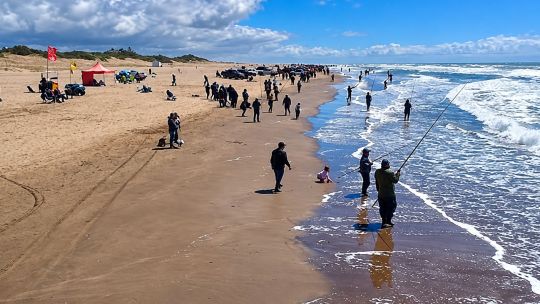
El último tiro cambió todo: pescó un pez elefante y ganó $ 20.000.000
Promediando el cierre de la semana pasada los pronósticos parecían tronchar la...
WindwhistlerOctober 13, 20260

Así rescataron a un cachorrito de lobo marino de un pelo en los médanos de Miramar
Un sorpresivo y emotivo procedimiento de preservación ambiental conmovió por completo a...
WindwhistlerOctober 13, 20260



Proyectan exportaciones récord del agro en 2027, pero advierten que aún faltan dólares para el año electoral
A un año de las elecciones presidenciales, la pregunta sobre si estarán...
WindwhistlerOctober 13, 20260
