
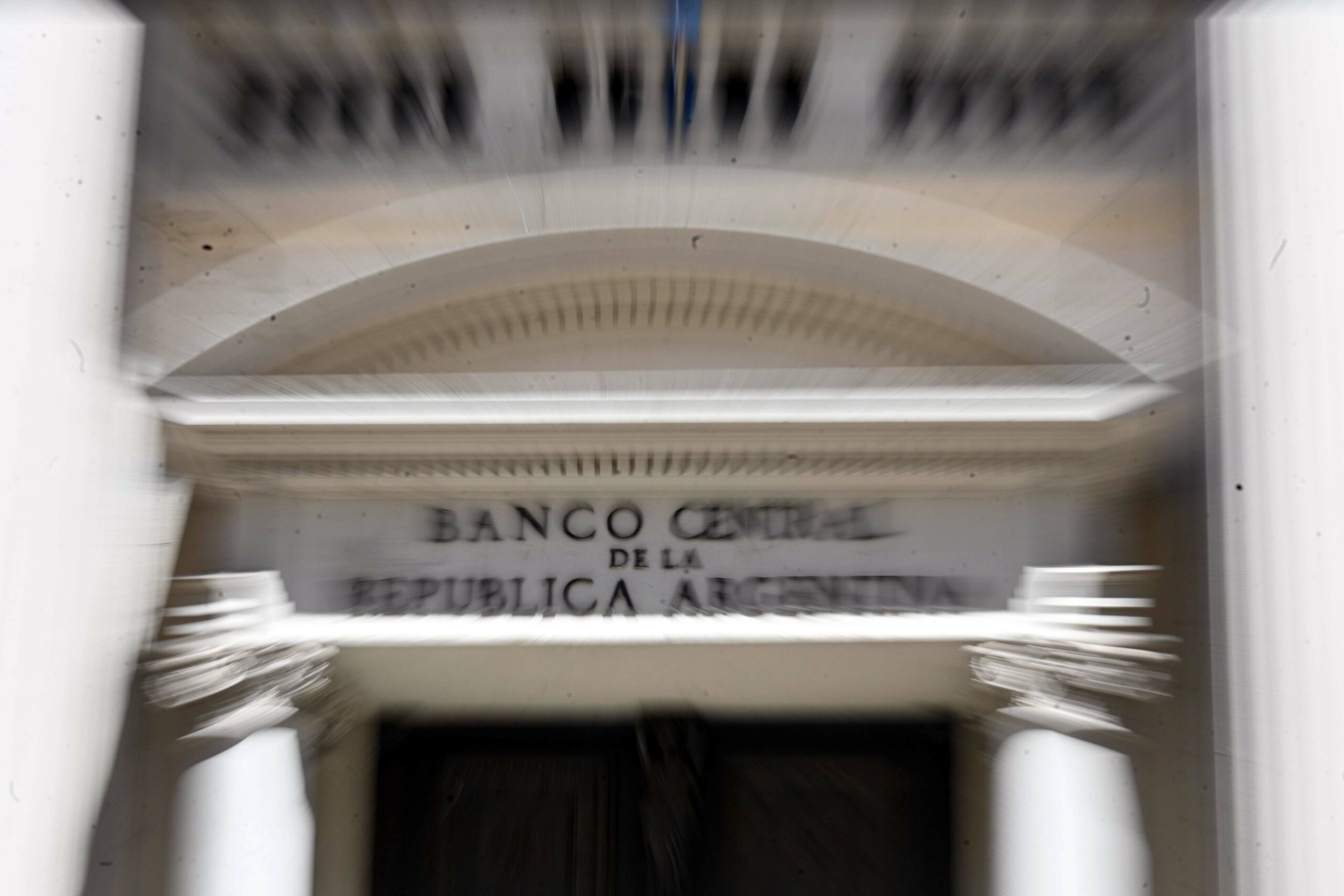
Central Bank reform is heading to Congress. Is the Peruvian model the goal?
 Juan Marcos PollioAugust 2, 20266 Mins read
President Javier Milei announced on Thursday the details of his plan to reform the Charter of the Argentine Central Bank (in Spanish, BCRA), one of the cornerstones of his economic agenda for the coming months. He made the announcement on national television, a platform he has used in the past to make economic announcements, such as the presentation of the 2026 budget proposal. In his address, Milei explained the details of his five-point plan, which seeks to redefine the current role of the monetary authority. First, the reform aims to establish a single mandate by stripping the BCRA of its current competing objectives: financial and monetary stability, full employment, social equity, and economic development. According to the president, the bank’s “sole responsibility” is preserving the value of the currency. To prevent future inflationary spikes, the reform will also strictly prohibit the Central Bank from financing government spending. The third point is meant as a safeguard for BCRA’s leadership against arbitrary political dismissal, meant to bolster institutional governance. Fourth, the initiative restricts the distribution of dividends derived from the Central Bank’s earnings. Finally, the administration intends to eliminate non-transferable bills entirely. Milei explained that the initiative is part of a broader reform program that also includes the creation of a “fiscal anchor,” a mechanism that would trigger a government shutdown if Congress fails to restore balance to the public accounts. A pending debate Economist Carlos Pérez, from the center-right think tank Fundación Capital, told the Herald that any measure cutting off central bank financing to the public sector is “welcome because it is a key factor explaining the very high inflation that Argentina has always experienced.” When Milei took office in December 2023, the quasi-fiscal deficit — the interest paid by the Central Bank for issuing its own securities to absorb pesos from the market, which constituted the main source of money supply — stood at around 10% of GDP. Pérez described this decision as a “very helpful” tool in achieving the goal of bringing down Argentina’s inflation levels. He compared the situation of recent decades — marked by rising inflation — to what happened in the 1990s, when the peso was pegged to the U.S. dollar. The economic regime, known as convertibility, was implemented to control the hyperinflation Argentina experienced in the late 1980s. “Between 1992 and 2001— almost 10 years — inflation was less than 5% annually.” Analytica director Claudio Caprarulo added that anything that contributes to greater institutional strength, predictability, and aligned expectations regarding monetary policy “is important.” He also emphasized the importance of improving the agency’s institutional communication, as it has historically been reluctant to speak publicly with the press. An example of this occurred in May, when agency officials held a press conference to present the First-Quarter 2025 Monetary Policy Report (IPOM, in Spanish), promising to hold new press conferences each time a new IPOM is released. However, he emphasized that reform of the Central Bank must be agreed upon with the other political forces. “Just as Milei now wants to change it, Kirchnerism changed it previously, and another government may change it again in the near future.” Former BCRA Director Jorge Carrera told the Herald that the role of the BCRA and monetary policy are issues “that need to be discussed,” but he questioned Milei’s motives for addressing them at this time. “Since they lack the tools to solve the very complex problems of the current situation — such as the stagnation of 80% of the economy — the government’s strategy here is to generate these headlines that divert attention from the broader economic debate,” he argued. He stated that, in addition to discussing the issue of money supply, “we must also discuss the issue of (external) government debt” and its prior approval by Congress. “We’ve already seen that debt, in general, eventually leads to a crisis, which often results in an expansion of the money supply,” he said. During Alberto Fernández’s administration, a regulation was enacted stipulating that all external financing must first be approved by law. However, when it came time to renegotiate the agreement with the International Monetary Fund (IMF), the Milei administration exploited a legal loophole and enacted the new agreement by decree. Carrera noted that central banks with singular objectives have ceased to exist since the 2008 financial crisis. This is because the main lesson from that experience was coming to the conclusion that having the people responsible for financial stability and financial regulation outside the central bank was a “poor institutional strategy.” Similarly, Caprarulo noted that “in certain defined situations,” it makes sense for the central bank to issue currency. Furthermore, he added that monetary policy “should not be constrained to the point where it cannot react to a crisis or an external shock,” such as the COVID-19 pandemic. He added that “the government is seeking to send a signal primarily to external creditors, both private and multilateral organizations.” The proposal’s contradictions The director of Analytica emphasized that, given Argentina’s current situation, it is unrealistic to expect a monetary policy “that is completely detached” from the decisions made by the economy ministry. “It has to be aligned; otherwise, you’ve got a problem.” Argentina finds itself in a delicate situation, both due to its high inflation — which the market expects to return to 30% annually by 2026 — and its low level of reserves. According to estimates by Portfolio Personal Inversores, net reserves as of July 21 stood at just US$5 billion. The economy ministry and the BCRA agreed that improving both variables was a priority and that the best way to achieve this was by working together to avoid disruptions in economic policy planning. BCRA head Santiago Bausili even told the Herald in May that the monetary authority’s autonomy was not on the agenda at the moment. “The BCRA isn’t independent when it comes to coordinating the economic program; it’s fully aligned with the economy ministry. That’s much more important than trying to create a situation where someone resists financing the Treasury through money printing,” he stated at the time. However, Milei’s decision appears to be moving in the opposite direction, raising questions about what he will do if the legislation is approved. “Milei’s proposal is full of paradoxes,” argued Carrera, who described Bausili as “the least independent central banker one could imagine.” It is common knowledge that current Economy Minister Luis Caputo was Bausili’s partner for years at the consulting firm Anker until both were appointed by the libertarian government in late 2023. “That is a world away from the idea of an independent track record,” Carrera stated. Caprarulo made the same observation: “How is the government going to guarantee the BCRA’s independence if its president is clearly part of the economy minister’s team?” “Is this just a change in form, or will there actually be a change in how the government conceives of monetary policy?” asked Caprarulo, who wondered whether the central bank’s board of directors would see a change in membership if the bill were passed. This would not be limited to closeness — or influence — between the economy ministry and the BCRA. Milei has repeatedly confirmed that he explicitly intervened in the Central Bank’s monetary policy. One of the most significant cases was the phasing out of LEFI (liquidity treasury bills) debt instruments in mid-2025 — which triggered a currency run in the midst of the legislative elections. Milei himself confirmed that it was his idea. Toward a central bank like the Peruvian one? The economic team has emphasized that its goal is to emulate Peru’s economic model. This idea places special emphasis on the Peruvian Central Reserve Bank (BCRP), known for its autonomy. “Over the past 20 years, the president of Peru’s Central Bank has been Julio Velarde,” Carlos Pérez explained. On the other hand, Peru’s presidents since 2016 have remained in office for an average of approximately 1 year and 3 months. “Beyond the individual names, it’s related to respecting the necessary independence that the Central Bank must have,” Pérez stated. “The monetary and exchange rate regime transcends politics and operates beyond the current political climate.” Carrera stated that the Peruvian case “had the advantage of having someone who did their job very intelligently,” in reference to Velarde, in a context where “the political system had severe problems.” In any case, he clarified that one of the BCRP’s most important objectives is linked to financial stability — one of the goals Milei wants to remove from the charter. Caprarulo, on his part, emphasized that there are “political and social agreements that maintain [the BCRP’s autonomy] in place,” ensuring that it is not something that depends exclusively on how the Peruvian central bank is organized.

CONMOCIÓN: murió Rosa del Valle Rasgido
 notienredSeptember 13, 20260

Claudio Barrelier reveló por qué mató a Agostina Vega: Obsesión por la
notienredSeptember 13, 20260

Asesinaron a Alfredo Wiebel y se dieron a la fuga
notienredSeptember 13, 20260



Clima en Ciudad de Buenos Aires: sábado 12 de septiembre
Sábado en la Ciudad de Buenos Aires con una temperatura máxima de...
 WindwhistlerSeptember 13, 20260
