
Argentina falls 11 places in World Press Freedom Index
 Buenos Aires HeraldApril 30, 20263 Mins read
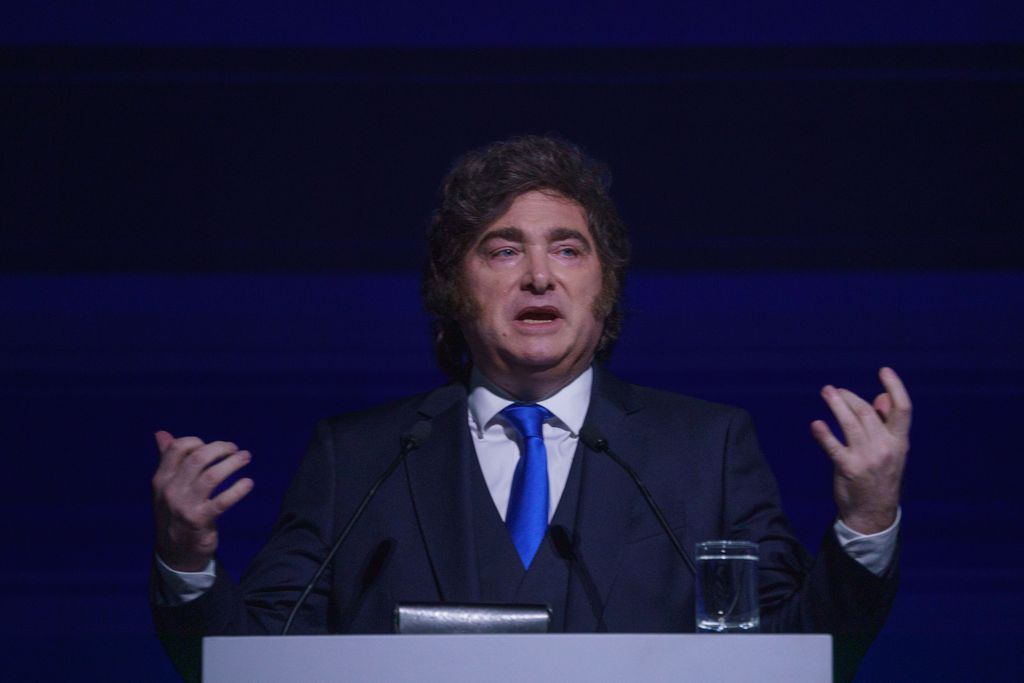
Press freedom in Argentina is worsening. According to the 2026 Reporters Without Borders’ World Press Freedom Index, the country is currently ranked 98 on a list of 180, an 11-place drop compared to 2025. This is the fourth consecutive year Argentina has fallen in the ranking, dropping 69 places since 2022. This new drop — last year it fell 21 places — came as a response to “the rise in institutional hostility toward the press and acts of violence against journalists covering protests.” “Insults, defamation, and threats from Javier Milei’s administration toward journalists and critical media outlets have been constant since he came to power. This is compounded by policies that worsen pre-existing trends, such as the strong concentration of media ownership and its opacity, as well as the precarization of the journalism profession,” the report said. The analysis pointed out that the vast majority of countries in the Americas have seen freedom of the press fall on account of the decline of their economic indicators, including the United States. It also points out that leaders like Donald Trump, Javier Milei, and Nayib Bukele are increasingly criminalizing journalism and exposing it to violence in the region. The United States (currently 64, a 7-place drop compared to 2025) is declining due to increased political violence. Attacks and economic constraints The report placed Milei’s rhetoric at the center of the issues of freedom of press in Argentina. “The far-right president, Javier Milei, elected in 2023, encourages aggression against journalists and attacks aimed at discrediting media outlets and reporters critical of his policies. His supporters widely replicate this behavior,” the brief stated. The document went on to say that although the right to information is guaranteed by law, the circulation of information is constrained by shortcomings in public policies and high levels of concentration. “Sensitive social, economic, and political issues are kept out of public debate, and the media agenda is highly concentrated in major cities, especially Buenos Aires,” the report said, adding that economic factors also play a role in the decline. “Media outlets face pressure from both the government and corporations, especially through public and private advertising. The closure of the main news agency, Télam, in 2024 dealt a heavy blow to the right to information.” In May 2024, the Milei administration announced that it would close all state news agency Télam’s correspondent offices in the country. The president had made the news agency a target since the beginning of his administration, calling it a “Kirchnerist propaganda agency” in an earlier address to Congress that same year. The latest cases The tension between the press and Milei is not limited only to the president’s personal acts but to government decisions as well. Case in point: the recent revocation of credentials from the more than 60 journalists who work daily in the Casa Rosada press room. The decision was taken after the Military House — an organism in charge of protecting the president’s safety that reports to Presidency Secretary Karina Milei — filed a criminal complaint accusing TN journalists Luciana Geuna and Ignacio Salerno of filming parts of Casa Rosada that were off-limits. Geuna denied that the videos were “clandestine.” “These are images that appear by the thousands on social media when kids go on visits, or even on Google Street View,” she said on Sunday during her program on the TN TV station. Milei also went on the offensive against the pair, describing them as “repulsive scum.” On Wednesday, the ongoing dispute between President Javier Milei and the press moved to the lower house, where he went to back his chief of staff Manuel Adorni. When he arrived at and left Congress, he insulted journalists, calling them “thieves” and accusing them of being “corrupt.” World panorama For the first time in the history of Reporters Without Borders’ World Press Freedom Index, more than half of the world’s countries are classified as being in a “difficult” or “very serious” situation. In the 25-year history of the ranking, the average score of the countries analyzed has never been so low. Increasingly restrictive legal frameworks — almost always justified by national security policies — have been eroding the right to information since 2001, even in democracies.

CONMOCIÓN: murió Rosa del Valle Rasgido
 notienredSeptember 13, 20260

Claudio Barrelier reveló por qué mató a Agostina Vega: Obsesión por la
notienredSeptember 13, 20260

Asesinaron a Alfredo Wiebel y se dieron a la fuga
notienredSeptember 13, 20260


Clima en Ciudad de Buenos Aires: sábado 12 de septiembre
Sábado en la Ciudad de Buenos Aires con una temperatura máxima de...
 WindwhistlerSeptember 13, 20260
