
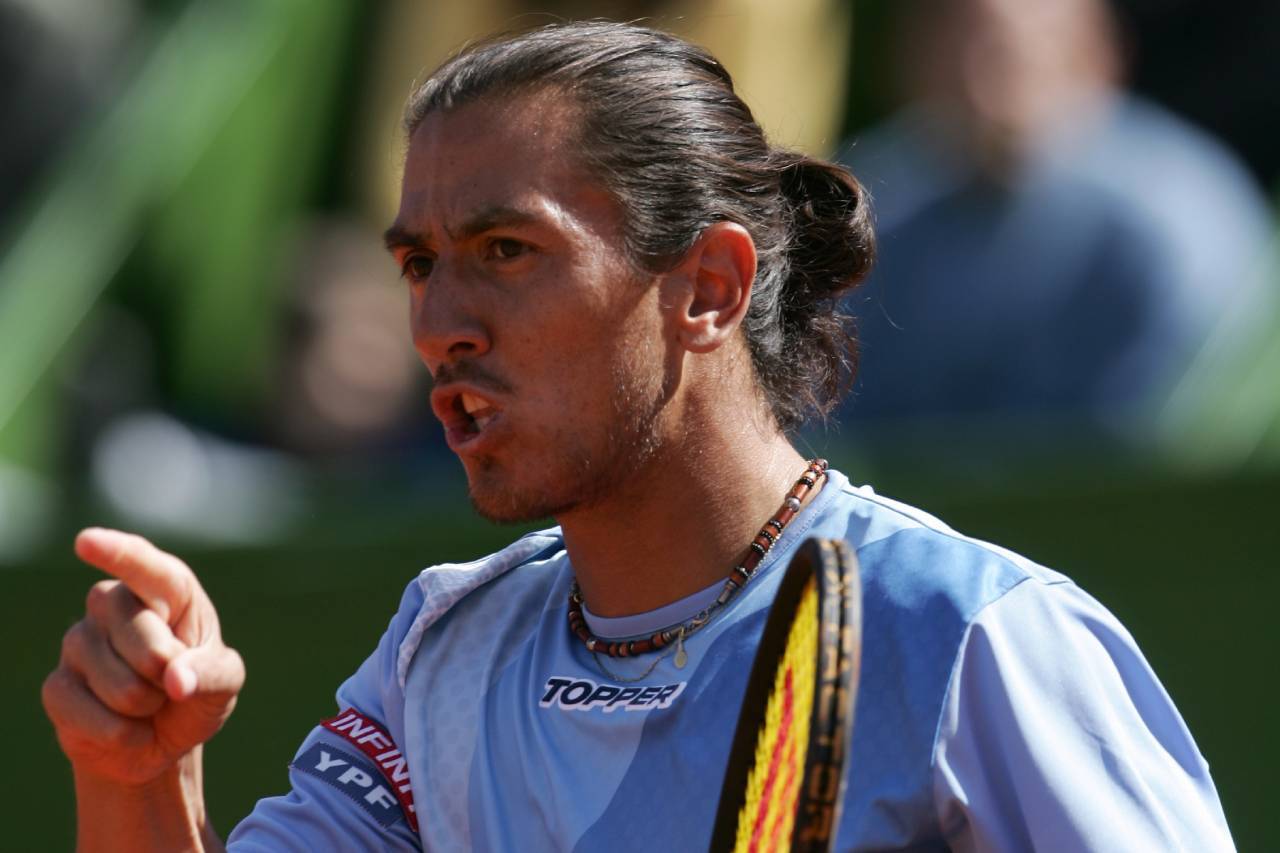
Guillermo Cañas, 25 years after first title: Like removing a rock from your shoe
 Fernando Romero NunezApril 30, 20264 Mins read
As the new millennium dawned, Argentine men’s tennis quietly entered a new golden age. A generation of young talents sought to lead the country back to the sport’s elite, as it had been during the days of Guillermo Vilas and José Luis Clerc in the late 70s. Among them, one of the early breakthroughs was Guillermo Cañas. With a hard-fighting, never-say-never style of his own, the star hailing from Tapiales in the western Buenos Aires Metropolitan Area went toe-to-toe with some of the biggest stars of the era. By the time he called it a career, he had lifted seven singles titles — including an Association of Tennis Professionals (ATP) Masters-level tournament — and reached as high as No. 8 in the men’s singles rankings. And yet, if you ask most fans, the majority will remember Cañas for just two 2007 matches, when he defeated the legendary Roger Federer in back-to-back tournaments. “It’s funny, sometimes it feels like all I ever did was beat Federer twice; that’s all fans remember. All my career boils down to that,” he told the Herald. First big steps With all of its highs and lows, Cañas’ career took a first big step in Casablanca, Morocco. After coming back from an injury that nearly derailed his career, he won his first ATP Tour-level title, an achievement that turned 25 years old this April. “I feel old hearing it,” Cañas said with a chuckle. He has lived in Miami since 2010 and runs his own tennis academy. Having suffered a wrist injury that saw him drop to the 227th spot in the rankings the previous season, Cañas was working on a comeback and had to go through the qualifiers to reach the Casablanca main draw. Once there, he was nearly unstoppable. He dropped just six games en route to the semifinals, including a 6-0, 6-2 battering of Andrea Gaudenzi, now president of the ATP. He didn’t face any pushovers either. In the semifinals, he beat two-time Roland Garros winner Sergi Bruguera and then a young Tommy Robredo in the final. “You always need things to break your way,” said Cañas. “You work to improve and you practice, but you always need that quota of luck and have things click. For me, it happened in Casablanca. Maybe I wish it had happened at a more ‘glamorous’ spot, but it was there, and I’m glad it did.” The win kick-started a terrific season for Guillermo Cañas, who climbed as high as No. 15 in the ATP rankings and was named Comeback Player of the Year by that association. He reached three other finals that season and advanced to the fourth round of a Grand Slam for the first time at Roland Garros. “It was like removing a rock from your shoe,” he said. “You go, ‘Ok, I did it.’ It gave me the peace of mind that, whatever came next, I already had one in the bank.” Cañas was very adamant that, even when playing well, achieving the goals he set up for himself in his career was always hard. Because of that, the win in Casablanca remains “a very special memory.” La Legión The title cemented the Tapiales native as one of the best players in that generation known as the Legión Argentina, a group that went on to achieve some of the brightest highlights in Argentine tennis history. However, Cañas doesn’t feel it gave him a status he didn’t already have. “I don’t think any of us ever felt ‘not part,’” he said, when discussing his place among the Legión. “Most of us grew up together. I’ve played [Mariano] Zabaleta, [Mariano] Puerta, or [Gastón] Gaudio since I was eight years old.” Cañas says he’s never really given much thought to where his achievements sit in the eyes of others or within the Legión Argentina. Instead, he focuses on how he feels about the career he was able to put together. “There were obviously more important players than me, so maybe I am in the group that’s right behind them, but it doesn’t really change what I think,” he said. “I was part of it all, and I’m very happy to have done it. Everything else is not a big deal for me.” Cañas’s finest hour came a little over a year after the win in Casablanca. Already settled into one of the ATP Tour’s most combative, skilled, and well-rounded players, he shocked four top ten players — Federer, Yevgeny Kafelnikov, Marat Safin, and Tommy Haas — on his way to the 2002 Canada Masters final, where he beat U.S. player Andy Roddick 6-4, 7-5. He remains one of only seven Argentine players ever to win a Masters-level tournament. But on days when tennis had yet to reach the ubiquitous following and coverage it would have during the Federer-Nadal days, the win got slightly lost. On August 8, 2005, Cañas was suspended for two years by the ATP after testing positive for hydrochlorothiazide, a diuretic substance that has no performance enhancement effects. Despite there being no trace of any other forbidden substance in the Argentine player’s sample, the ATP argued the diuretic could be used to mask it. Cañas took his case to the Court of Arbitration for Sport, where he was acquitted and allowed to return to full professional activity on September 11, 2006. However, he had lost all ranking points. Less than a year later, he achieved the two results he’s perhaps best known for, defeating Federer in two consecutive Masters tournaments: Indian Wells and Miami. The Swiss went on to wrap up his season with a 68-9 record. The only other players to beat him more than once other than Cañas that year were Rafael Nadal and David Nalbandian. Cañas isn’t too bothered with what could’ve been, saying that he doesn’t have “a single thought in [his] head about the things [he] couldn’t achieve.” Tennis was “a sporting career,” and while he’s happy to keep the memories, he feels “life moves on, and there are a lot of things that are more important after that.” “Personally, I’m happy to have made it through so many tough times, like the doping issue, the four injuries, and always being able to bounce back and get right back out there,” he said. “I think that’s what defines me and my career. I’m very happy.”
CONMOCIÓN: murió Rosa del Valle Rasgido
 notienredSeptember 13, 20260

Claudio Barrelier reveló por qué mató a Agostina Vega: Obsesión por la
notienredSeptember 13, 20260

Asesinaron a Alfredo Wiebel y se dieron a la fuga
notienredSeptember 13, 20260



Clima en Ciudad de Buenos Aires: sábado 12 de septiembre
Sábado en la Ciudad de Buenos Aires con una temperatura máxima de...
 WindwhistlerSeptember 13, 20260
