

Head of AmCham Argentina: Stability is a necessary, but not sufficient condition
 Facundo IglesiaApril 14, 20262 Mins read
María Schoua, the head of the United States Chamber of Commerce in Argentina (AmCham Argentina), called on the government to carry out a “deep tax reform” and spoke about the need for infrastructure, after President Javier Milei froze all public works upon taking office. “Stability is a necessary, but not sufficient condition,” she said on Tuesday, during the opening remarks of the 2026 AmCham summit taking place in Buenos Aires’ Convention Center, an event that gathers businesspeople and politicians. Schoua, who is also the CEO of energy company Aconcagua Energía Generación, celebrated some of the government’s measures. “The reduction of the fiscal deficit, the slowdown in inflation, and the normalization of key economic indicators are beginning to restore the basic conditions necessary for the economy to function,” she highlighted. She also praised the “transition to a more modern labor system”, in reference to the recently passed labor reform. However, she warned, “development does not occur out of inertia.” President Milei has faced consistent criticism for lacking an industrial policy and instead pursuing a laissez-faire approach that benefits sectors with limited job creation. Schoua’s proposed tax reform needs to “reduce the tax burden without compromising fiscal balance” and advance towards a system that is “progressive, simple with no overlapping taxes.” She also mentioned that businesses are facing “high logistical costs, infrastructure gaps, and limited access to credit.” “Without investment, there is no development, and without clear rules, there is no investment,” she said. She added that agriculture “accounts for more than half of Argentina’s exports” but that it “needs to eliminate distortions and consolidate access to international markets,” that Argentina has the potential to become an energy “global supplier,” and that mining “could triple exports.” Infrastructure, she added, “remains the necessary condition for everything else to happen; without physical integration, federal development is not possible.” Public works restart When he took office, Javier Milei brought almost all public works to a halt. Last week, however, Economy Minister Luis Caputo announced that the government plans to put out to tender 9,000 km of national highways later this year. Caputo also spoke at the summit and criticized Fate, an 80-year-old tire manufacturer that shut down amid the import liberalization and the drop in consumption. “Reality is heterogeneous,” he said. “Not everyone reacts the same to the same panorama,” he added, saying that Lumilagro, a thermos company, started to import their products instead of closing down. “They were used to hunting in a zoo,” he said, referring to past state protections. Caputo denied that there is a trade-off between disinflation and growth, and said that both would take place simultaneously. “The upcoming 18 to 20 months will be the best ones that Argentina has seen in the last decade,” he assured. Peter Lamelas, U.S.’s ambassador in Argentina, said that President Donald Trump shares “a vision” with his Argentine counterpart — “economic freedom, less regulations, more transparency and a strong private sector.” “We are in a special, unique moment — political alignment, ongoing reforms, and global demand,” he said. “This aligns perfectly with our priority — America First,” he said. “America First doesn’t mean ‘America only’ — we need partners.”


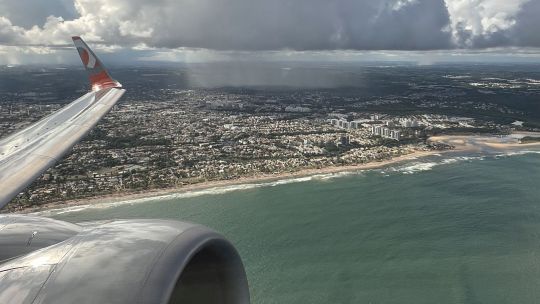
Conectividad regional, auge de escapadas y la pasión por el turismo deportivo del viajero argentino
El pulso del turismo emisivo en la Argentina atraviesa un momento de...
 WindwhistlerOctober 13, 20260
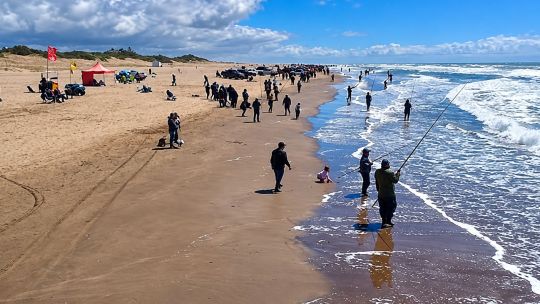
El último tiro cambió todo: pescó un pez elefante y ganó $ 20.000.000
Promediando el cierre de la semana pasada los pronósticos parecían tronchar la...
WindwhistlerOctober 13, 20260

Así rescataron a un cachorrito de lobo marino de un pelo en los médanos de Miramar
Un sorpresivo y emotivo procedimiento de preservación ambiental conmovió por completo a...
WindwhistlerOctober 13, 20260



Proyectan exportaciones récord del agro en 2027, pero advierten que aún faltan dólares para el año electoral
A un año de las elecciones presidenciales, la pregunta sobre si estarán...
WindwhistlerOctober 13, 20260
