
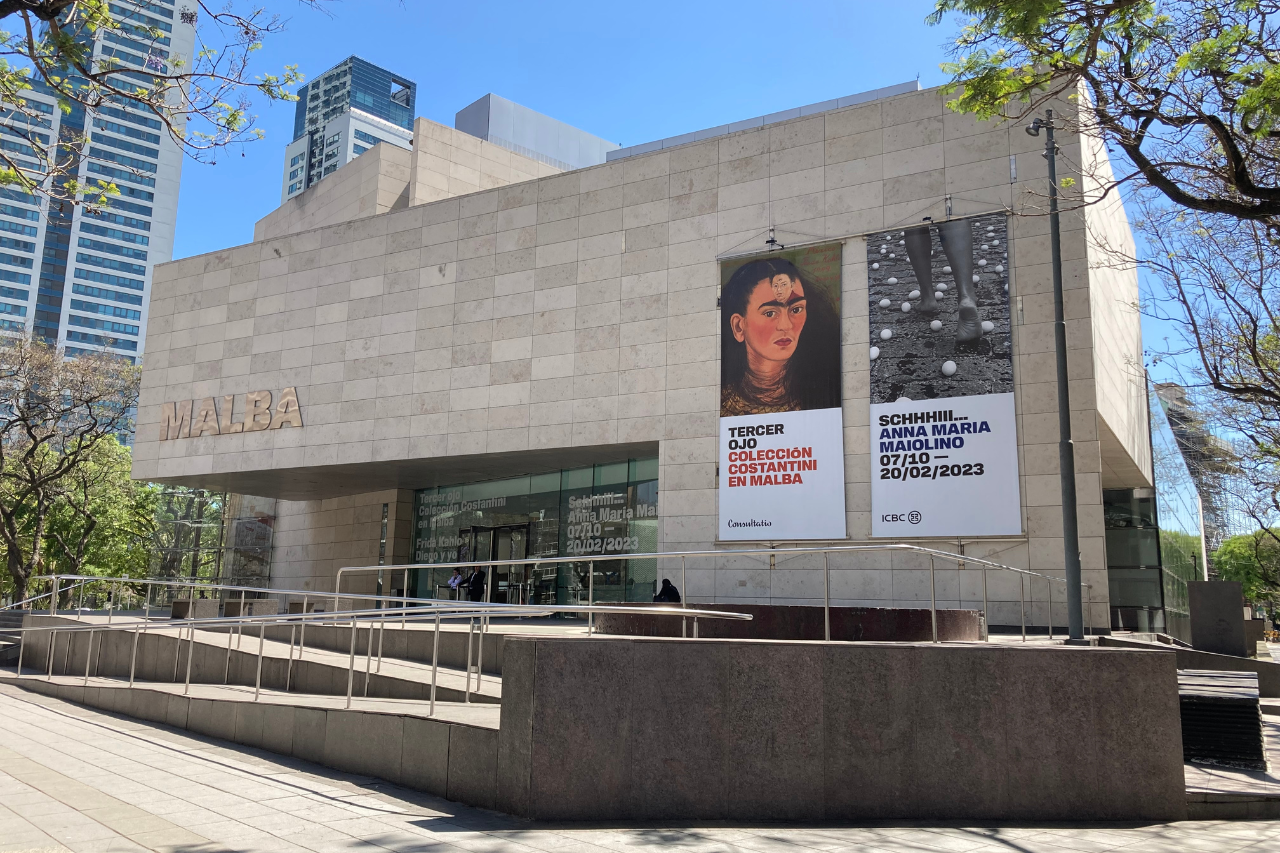
Malba museum to double in size with landmark acquisition of Daros Latinamerica Collection
 Buenos Aires HeraldDecember 16, 20253 Mins read
The Buenos Aires Museum of Latin American Art (Malba) announced a major expansion on Monday with founder and patron Eduardo Costantini’s acquisition of the Daros Latinamerica Collection, one of the most significant private holdings of contemporary art from the region. The purchase will add 1,233 works by 117 artists to the museum’s collection, nearly doubling its size. The move comes as the museum prepares to mark its 25th anniversary in September 2026. Museum officials said the acquisition places Malba among the world’s most important repositories of modern and contemporary Latin American art, while also signaling the return of major works to the region after decades abroad. “The incorporation of the Daros Latinamerica Collection brings me immense joy and marks a historic step in Malba’s sustained growth,” Costantini said in a statement. “Being able to envision such a leap forward as we approach our 25th anniversary is truly a dream come true.” Founded in Zurich in 2000 by Swiss collector Ruth Schmidheiny and entrepreneur Stephan Schmidheiny, the Daros Latinamerica Collection became internationally known for its rigorous focus on contemporary Latin American art. Rodrigo Moura, Malba’s artistic director, said the deal reshapes the institution’s role in the international art landscape. “This acquisition repositions Malba as the leading contemporary art collection on the continent, a position the museum already occupies in the field of modern art,” Moura said. “It strengthens our core mission — to serve the public — and reaffirms our commitment to the art of the present.” The Daros works span from the 1950s through to the 2010s, and includes paintings, sculptures, photographies, videos and large-scale installations. The collection deepens Malba’s representation of key movements such as geometric abstraction, conceptual art and New Figuration, while adding major artists previously absent from the museum. You may be interested in: Herald Archives: Liliana Porter flows to success in New York Among the highlights are works by Julio Le Parc, Lygia Clark, Gego, Antonio Dias, Mira Schendel, and Liliana Porter, as well as iconic pieces such as Hélio Oiticica’s Relevo espacial (1959) and Víctor Grippo’s Analogía I (1971). Doris Salcedo’s emblematic works from the 1990s and early 2000s will enter Malba’s collection for the first time. The acquisition also broadens the museum’s geographic scope, expanding into countries such as Costa Rica, Honduras, Jamaica, Panama and the Dominican Republic. An underground expansion To accommodate the expanded holdings, Malba announced plans to nearly double its physical size as well, through a new underground extension beneath Plaza República del Perú, adjacent to the museum in the Palermo neighborhood. The expansion will add new galleries and bring the museum’s total surface area to about 8,000 square meters. The project will also allow Malba to launch a comprehensive program dedicated to design and textile art, museum officials said. Malba opened in 2001 after Costantini donated more than 200 works from his private collection, laying the foundation for what would become one of Latin America’s most influential museums. Operating as a nonprofit, it has since built a reputation not only for its permanent collection — best known for modern masterpieces by artists such as Frida Kahlo, Tarsila do Amaral, Diego Rivera, and Antonio Berni — but also for its film, literature and public programs. In 2024, the institution expanded beyond the capital with the opening of Malba Puertos in Escobar, north of Buenos Aires, aimed at reaching new audiences. Across its two venues, Malba receives an estimated 750,000 visitors each year. For Malba, the return of the Daros Latinamerica Collection to the region carries symbolic weight as well as institutional impact. “The museum embraces the responsibility of preserving and publicly reactivating this extraordinary group of works,” Moura said, “ensuring they are accessible to audiences and continue to generate dialogue for decades to come.”

Conectividad regional, auge de escapadas y la pasión por el turismo deportivo del viajero argentino
El pulso del turismo emisivo en la Argentina atraviesa un momento de...
 WindwhistlerOctober 13, 20260

El último tiro cambió todo: pescó un pez elefante y ganó $ 20.000.000
Promediando el cierre de la semana pasada los pronósticos parecían tronchar la...
WindwhistlerOctober 13, 20260

Así rescataron a un cachorrito de lobo marino de un pelo en los médanos de Miramar
Un sorpresivo y emotivo procedimiento de preservación ambiental conmovió por completo a...
WindwhistlerOctober 13, 20260



Proyectan exportaciones récord del agro en 2027, pero advierten que aún faltan dólares para el año electoral
A un año de las elecciones presidenciales, la pregunta sobre si estarán...
WindwhistlerOctober 13, 20260
