
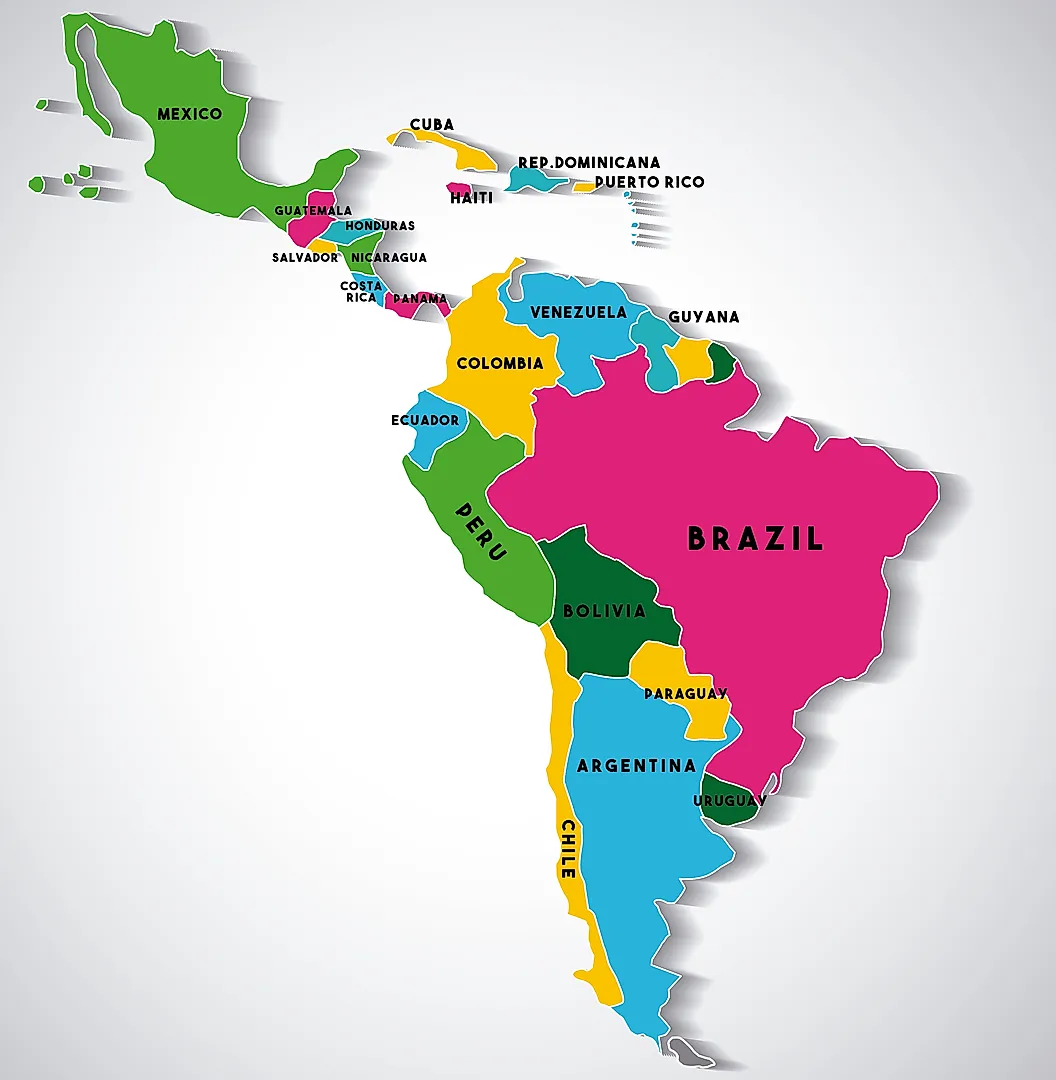
Gabriela Águila is a historian at the Universidad Nacional de Rosario and CONICET specializing in the 1976-1983 dictatorship When the armed forces overthrew María Estela Martínez de Perón’s government in the early hours of March 24, 1976, the event caused almost no surprise. The coup had been largely expected. It involved broad civilian sectors — right-wing nationalists, Catholic organizations, as well as politicians and business groups — and sought to resolve the country’s deep political, institutional, economic, and social crisis via a military intervention. This had happened many times before. The coup was just one of many that had marked Argentine political life throughout the 20th century. It would also mark the end of that series. Political instability, authoritarianism, and repressive violence were recurring features of the country’s recent history. From 1930 onward, Argentina experienced at least one coup per decade — 1930, 1943, 1955, 1962, 1966, 1976 — each giving way to authoritarian governments of varying character, revealing the weakness of democratic institutions and the centrality of the military as a political actor. Violence against social and political conflict — targeting wage earners, young people, indigenous groups, and working-class sectors — conducted by the armed and security forces was also prevalent during the 20th century, not only under dictatorships but during periods of constitutional rule as well. The 1976 coup was the last of a series of military interventions that took place in South America during the Cold War between the 1960s and 1980s: Brazil (1964), Argentina (1966), Uruguay and Chile (1973), and once again in Argentina in March 1976. These dictatorships shared certain features. The central role of the armed forces and the ideological influence of counterinsurgency and national security doctrines; the goal of restoring a social order seen as threatened by various “internal enemies” — communism and subversion; and, in the 1970s in particular, repressive methods that included the cross-border circulation of ideas and personnel and supranational coordination activities, like Operation Condor. These authoritarian historical processes, of which the 1976–1983 Argentine dictatorship is a part, call into question its exceptional nature. Neither authoritarianism, nor the curtailment of civil rights, nor restrictions on political activity, nor the persecution and repression of social protest were novel in March 1976. And yet this was not just another dictatorship. A turning point What made it singular in a history marked by coups, military interventions, and state violence was first and foremost the nature of repression, which had begun well before the coup itself. The methods and scale of the violence had no precedent. Surveilling and persecuting men and women; kidnapping them; establishing hundreds of clandestine detention centers; implementing a systematic plan to torture, disappear, and murder detainees; as well as stealing children born in captivity. All of this speaks to the exterminatory character of state violence, which produced tens of thousands of victims — among them the detained, the disappeared, and the exiled — concentrated especially in the early years of the dictatorship. That brutal violence was carried out by the armed forces and security forces, combined with a sweeping offensive against workers and their organizations. This offensive featured an economic strategy that hit the working class in particular and transformed the country’s productive structure. It also included pervasive authoritarianism, censorship, and the suppression of civil rights — a global process of unprecedented scope and character. Viewed from the present, the individual and social effects of that repression remain visible — extending far beyond those directly affected — as do the structural legacies of the socioeconomic transformations the dictatorship imposed. In short, this was a historical process that, in many ways, was singular and exceptional. A turning point dividing Argentine history in two. It marked the end of a historical cycle defined by alternation between military and civilian governments, praetorianism, political instability, and a weak democratic system — a cycle that had defined the 20th century. Yet this singularity should not place the last dictatorship in an “abnormal” dimension — as if it were a historical aberration, severed from the social, political, and structural processes that preceded it. It is precisely its continuities and legacies, its deep entanglement with Argentine history, that make it possible and necessary to explain and understand it.
The 1976 coup wasnt unprecedented. What followed made it a turning point
Date:


More like thisRelated
Guerre au Moyen-Orient: el fatalismo de los patrones de las multinacionales de energía, reuniones en Texas

Este artículo te lo ofrecemos Para leer gratis este...
En Italia, el referéndum perdido de Giorgia Meloni ouvre un nuevo capítulo de la legislatura
Este artículo te lo ofrecemos Para leer gratis este...
Cincuentenario después del golpe de estado militar argentino, lesma de Buenos Aires, lugar de memoria impugnada
Este artículo te lo ofrecemos Para leer gratis este...
Tearing down the pact of silence remains the mission

Buenos Aires Herald editorial (versión en español a continuación)...