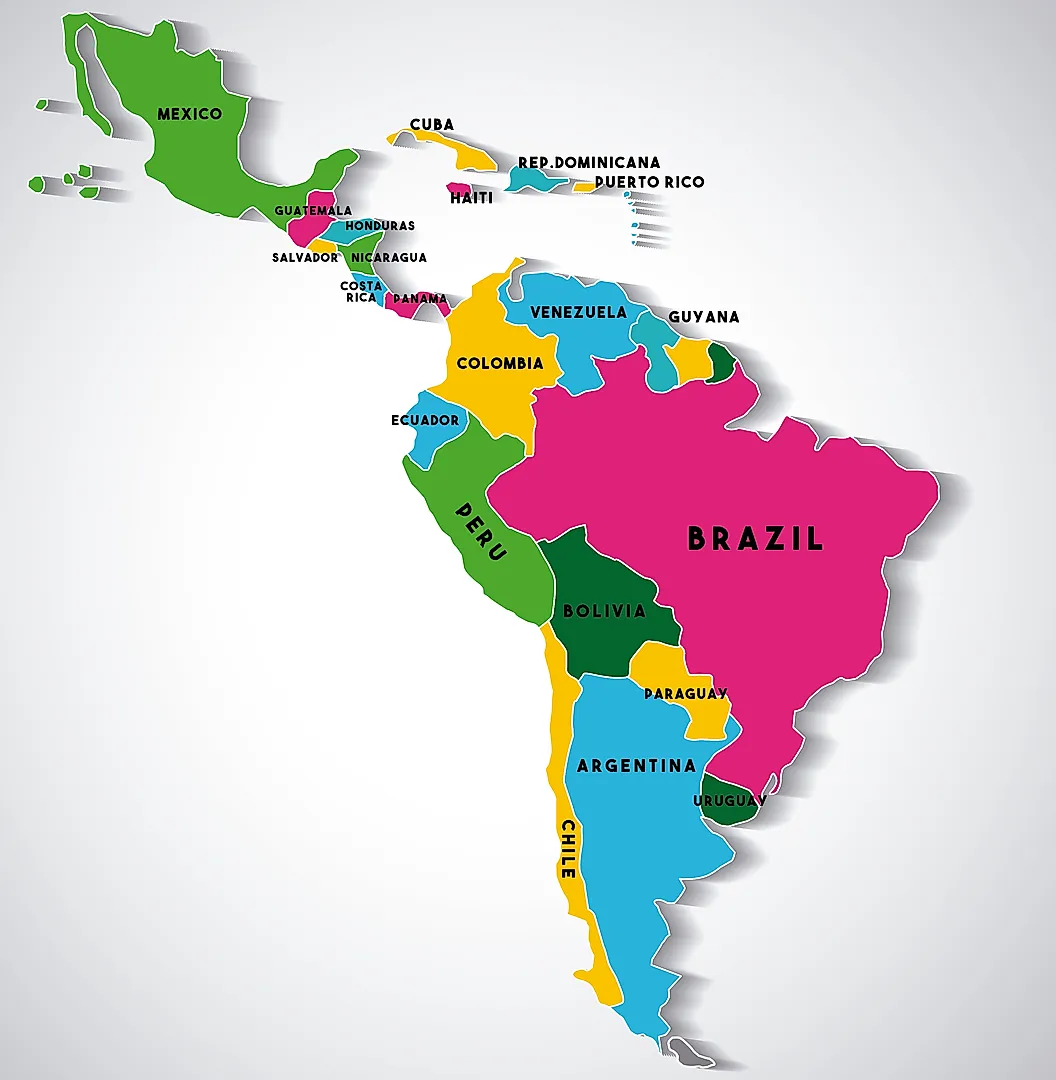
The Herald is publishing a special series to mark 50 years since the Operation Condor agreement was signed. The pieces can be viewed on this link. They were co-produced with the Plancondor.org project, coordinated by Dr. Francesca Lessa in collaboration with Project Sitios de Memoria Uruguay, the Observatorio Luz Ibarburu of Uruguay, and Chile’s Londres38 with support from University College London. All through the afternoon, the boy in the square wouldn’t let go of the baby girl at his side. By the bench where they huddled, rides clattered around their circuit, their operator eyeing the children. They did not seem to be accompanied by an adult. Eventually, he thought, someone would come for them. But nobody did. As the day wore on, the people in the square began to pay them more notice. They had been there too long to be waiting for someone. Their neat little clothes suggested they were not street children. And they were in Valparaiso, Chile, but the boy did not speak with a Chilean accent. Eventually, the police came, and the children were taken to a home run by the juvenile court, then into Chile’s care system. Local newspapers reported on the strange case of the children who had appeared in Plaza O’Higgins square. But still, nobody came for them. It was December 1976, shortly before Christmas. As the months turned into years, a Chilean couple met the children and started the long process of adopting them. The boy’s name was Anatole and the girl, Victoria. Then, in 1979, an older lady arrived. For the past three years, she had been speaking to embassies, human rights organizations, social workers, and anyone else she could think of who might have a clue as to the whereabouts of her kidnapped grandchildren. After a tip-off from a Chilean social worker living in Venezuela, who had spent time with the children in the care system, she had made the voyage from Uruguay. PVP poster demanding the Uruguayan dictatorship say where Victoria, Anatole, and other kidnapped children were. Image: via Sitios de Memoria Uruguay The appearance of María Angélica Cáceres de Julién in the children’s lives was the beginning of a decades-long journey during which they would learn about who their biological parents were, why their family had been torn apart, and how an estimated 500 babies and young children had also been taken away from their parents by Argentina’s dictatorship. From Uruguay to Argentina Mario Roger Julien Cáceres and Victoria Lucía Grisonas Andrijauskaite were Uruguayan activists with the Partido por la Victoria del Pueblo (PVP), a group for political exiles, which exists today as a political party. After the dictatorship swept to power in their home country in 1973, they fled to neighboring Argentina with their young son, Anatole, seeking safety. It was in Buenos Aires, in May 1975, that Victoria Lucía gave birth to her daughter, Victoria Eva. She registered her under her maiden name, Grisonas Andrijauskaite: the Uruguayan dictatorship were looking for her husband and giving her the unusual surname Julien could have attracted dangerous attention. Just under three years after the coup that ushered in a brutal period of dictatorship in Uruguay, Argentina’s military also forced out the government of Isabel Perón, which, despite growing increasingly violent and authoritarian, was nonetheless democratic. Between March 24, 1976, and December 10, 1983, the junta forcibly disappeared, tortured, and killed 30,000 people. What wasn’t publicly known at the time was that in November, 1975, intelligence chiefs from Argentina, Bolivia, Chile, Paraguay and Uruguay had met in Santiago, the Chilean capital, to co-ordinate hunting down political dissidents across borders. For thousands of people who became political refugees during this period, it meant they weren’t safe even after fleeing their countries. The agreement they signed on November 28, 1975, would later become known as Operation Condor. It soon grew to include dictatorships from Brazil, Ecuador, and Peru. There was support from further north, too: the United States government provided the regimes with significant support and financing. A massive, violent operation On September 26, 1976, the dictatorship descended upon the Julien family. Witnesses would later describe a massive, violent operation to raid the house where Mario Roger and Victoria Lucía were living in hiding in the western Buenos Aires suburb of San Martín. Witnesses say that Mario Roger was killed during the operation. Officers began to beat and torture Victoria Lucía, picking her up and flinging her to the ground, face first. Mother and children were taken to a mechanic’s workshop in the Buenos Aires neighborhood of Floresta, known as Automotores Orletti. The workshop harboured a clandestine detention center where the dictatorship tortured people. Subsequent investigations have concluded that at least 300 Argentines and Uruguayans passed through the center — and it was often used as a staging house for Argentina and Uruguay to coordinate their persecution in the context of Operation Condor. What happened to Victoria Lucía after she was taken to Automotores Orletti is known only to the military officials who perpetrated the crimes: she remains disappeared to this day. Fragments of memory When the children’s grandmother arrived, she told seven-year-old Anatole his story all at once. Suddenly, strange, disturbing fragments of memory started to make sense, he told the Herald in a video call from Chile. “I did remember the day of the operation. I remembered a machine gun, my parents on the ground.” After the children were kidnapped, they were taken across the border to another clandestine detention center in Uruguay. After that, Anatole remembers being flown to Chile on a small plane. “You could see into the cockpit, it was so small,” he said. “They asked if I wanted to look, and I saw the Andean cordillera.” A letter from the Uruguayan ambassador in Chile to the Chilean foreign minister, asking him to confirm reports that Anatole and Victoria had been found. Document via PlanCondor.org The children’s adoptive parents initially shielded young Victoria from the details. However, they did agree to develop a relationship with the children’s biological family. “I, with my little girl’s mind, didn’t ask myself why I had more grandmas, or why people would come from abroad to see us,” Victoria said. “I liked it a lot, it was fun.” The siblings have never learned why they were taken to Chile and abandoned at such a tender age. The best they have gleaned is theories. Perhaps the military officers chose Chile, rather than Argentina or Uruguay, because the country had no connection with their case. Perhaps they were planning to deliver the children to someone. Perhaps something went wrong. “The strange thing is that those operations are supposed to have planned logistics, so it was a bit absurd to leave us so publicly in a square,” Victoria said. “You ask yourself these things. But since my parents were in Argentina, obviously the surviving family was going to look for us in Argentina, and if not there, in Uruguay. They would never have thought to go to Chile.” The search Even after their grandmother, María Angélica Cáceres de Julién, learned where her grandchildren were, it would take time before she could approach them. “There was this whole operation to investigate first,” Victoria said. “You don’t just arrive and say, ‘Hey, maybe your kid isn’t yours!’” First, their grandmother and the human rights defenders accompanying her had to establish where the children went to school and who had adopted them. They had to tread carefully: many children of the detained and disappeared in Argentina were appropriated by families with ties to the dictatorship. But their adoptive father, Jesús Larrabeiti, and their mother, Sylvia Yáñez, were regular Chilean civilians who had met them through the care system. “When my grandmother saw us, of course, she saw our parents in our features,” Victoria said. They didn’t have access to DNA testing at the time, although they would later get genetic confirmation of their identities through testing via CONADI, Argentina’s National Identity Commission. Jesús and Sylvia had not completed the adoption paperwork when their paternal grandmother, María Angélica, found the children, and she could have pushed for custody. “My grandmother realized that we had recovered something unrecoverable, which was a mom and a pop, and that we were doing well,” Victoria said. “People were really critical of her when she got back to [Uruguay]. People would say to her, ‘How could you not bring them? How could you not exercise your rights?’ But she understood that what we needed the most was a pop and a mom.” Learning the truth Jesús and Sylvia formed a loving, affectionate family, and the children never wanted for anything. “My parents were always my parents,” Victoria said. “But I had sensations that I couldn’t explain, mood shifts that were rather intense at such a young age. Sometimes I felt very, very depressed and I didn’t know why.” She learned the truth at the age of nine, when her adoptive family visited her biological family in Uruguay. First, her Chilean parents told her that they loved her very much, but that her biological parents had died. Then, once they arrived, her family told her what had happened. “I learned the term ‘torture,’ what it was, how they used to torture people, and for a nine-year-old girl, that was incomprehensible,” she said. “But I do remember a feeling of a very great emptiness, of oppression, and keeping quiet about it.” Victoria was too young to recall being separated from her parents, or abandoned in the square, but like her brother, when she learned about her past, her feelings started to make sense. “It was like, I’m not crazy!” she said. “That’s how I understood that trauma doesn’t need to remember what happened. It’s enough for a baby to be separated from its mother to create a psychological rupture.” A good life Today, Anatole is 53 and works as a lawyer and prosecutor in Arica, in northern Chile. Victoria, now 50, trained as a psychologist. She lives in Valparaiso with her husband and daughter, and cares for Sylvia, who is in her 80s. They and their Uruguayan family visit each other regularly. “[What happened] has affected me, but I’ve decided that it doesn’t define me,” Victoria said. “I’m not just a daughter of the detained and disappeared. I have had a good life. I’ve been happy. I’ve achieved goals.” Motherhood changed her perception of her own family history. “I couldn’t bear the thought of someone stealing my daughter and never seeing her again, or putting myself in my parents’ shoes, having children in a situation of kidnapping and forced disappearance.” Anatole speaks via video link at the Inter-American Court of Human Rights. Photo: via Inter-American Court of Human Rights Their family’s case was included in a series of five interlinked trials in Argentina that kicked off in 2010, examining crimes against humanity committed at the Automotores Orletti clandestine detention center. Across four of the trials, nine men were convicted of crimes against dozens of victims — the first trial alone examined atrocities committed against 65 people. The other, Automotores Orletti II, was combined with the broader Operation Condor trial. In 2012, ten people were convicted of the systematic appropriation of children during Argentina’s dictatorship in a landmark trial that demonstrated the systematic nature of this brutal practice. The trial investigated crimes against 34 children, two of whom were Victoria and Anatole. It’s believed that officials with Argentina’s dictatorship took around 500 babies and children from their parents while they were in detention. Many were either given to families with ties to the military and raised under a false identity. Others were left anonymously at orphanages and taken into the care system. The Grandmothers of Plaza de Mayo, the group formed by women looking for these children, has found 140 of them so far. Although the grandchildren are now in their late 40s and early 50s, they are still recovering their identities: grandchild 140 was identified in July, 2025. Unanswered questions Victoria travelled to Buenos Aires to speak at the trials. There, she set eyes on the men responsible for the kidnap and murder of her parents, but they wouldn’t meet her gaze. If she could speak to them, she wouldn’t. “There’s nothing to say,” she said. “What they did is unforgiveable, and they know it.” The siblings point out that far more people were involved in their family’s devastation than have ever stood in the dock. Some of the most delicate questions, such as the fate of their mother or why they were taken to Chile and abandoned, have never been answered. In 2021, the Inter-American Court of Human Rights ruled that the Argentine state itself was responsible for the forced disappearance of Mario Roger and Victoria Lucía, as well as for a series of failings and rights violations towards Anatole and Victoria. Despite these judgements, Victoria feels that for some things, there can be no redress. “There’s been some justice, but they have to talk,” Victoria said of the people who killed her parents and abandoned her and her brother in a square in another country. “They still see themselves as heroes.” Cover image: Photos provided by Victoria and Anatole of themselves as adults
The Operation Condor files: The mystery of the kids abandoned in a square in Chile
Date:


More like thisRelated
Susan Ochoa sigue apostando por lo inédito y estrena su nueva canción inédita Reina

Susan Ochoa lanza su nueva canción 'Reina', un emotivo...
Escándalo en ‘Yo soy’: imitadores de Jowell y Randy habrían sido expulsados tras supuesta pelea en Latina

El programa 'Yo soy' vuelve a estar en el...
Homenaje a Selena Quintanilla en Viña del Mar 2026 desata la furia de su hermano AB Quintanilla: “Mal del estómago por el mal trabajo...
El Festival Internacional de la Canción de Viña del...
Irán responde al ataque con misiles a Israel y bases militares de EE.UU. en Medio Oriente: “Ahora estamos más preparados que nunca”

Irán toma represalias y responde a los ataques recientes...