
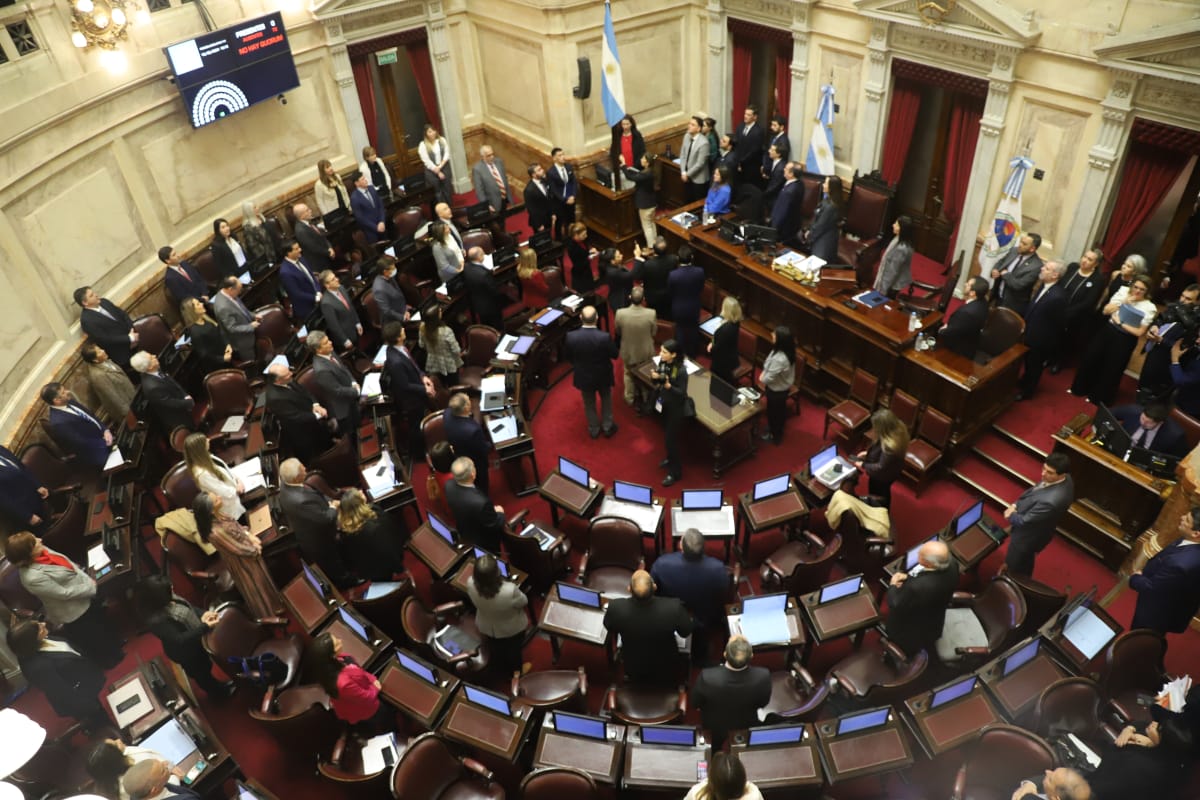
Upper house approves changes to glaciers law, ratifies Mercosur-EU deal
 Buenos Aires HeraldFebruary 27, 20262 Mins read
Updated Friday 10.30 a.m. The Argentine Senate approved changes to a law protecting glaciers and their surrounding areas in order to loosen restrictions that currently ban mining in these ice masses. The motion ended with 40 votes in favor, 31 against, and 1 abstention. The bill, which will now move on to the lower house, would allow provinces to decide the extent of these protected areas and whether they want to allow mining in them or not. The upper house also gave final approval to the Mercosur-European Union trade agreement. The final tally showed widespread support, with 69 votes in favor, 3 against, plus 3 abstentions. Argentina became the second country to ratify the deal, since Uruguay approved the same initiative only a few hours earlier. Congress is currently in an extraordinary session period before the regular sessions begin on March 1. Implementation of the deal, which was signed in January, is currently delayed as the European Parliament recently sent the agreement to the EUs top court to verify whether it complies with existing EU treaties. Protests to changes to the glaciers law Earlier on Thursday, a group of Greenpeace activists was arrested for carrying out a protest on the steps of Congress. At around 7:30 a.m., they jumped the fence in front of Congress and proceeded to sit on plastic or cardboard toilet seats while wearing suits and a presidential sash. Congress security and police intervened, arresting at least 12 activists. A cameraman was also arrested and injured by police while he was registering the crackdown. Press members present at the scene were affected by tear gas as well. The worlds largest free-trade area Following 26 years of negotiations, representatives of the Mercosur countries and the European Commission signed the EU-Mercosur trade deal at a ceremony in Asuncin, Paraguay, on January 17. The agreement creates the worlds largest free-trade area, comprising more than 715 million people. Regional leaders on both sides of the Atlantic have endorsed it as a powerful gesture of multilateral cooperation, peace, and free trade at a time when world powers such as the U.S. are turning towards protectionism and a worldview guided by spheres of influence. For all elements of the deal to enter into force, they must be approved by the parliaments of each country involved. Although the trade provisions are expected to come into effect sooner because the approvals process is simpler. While popularly described as a trade deal, the free trade provisions are part of a broader association agreement. It will involve not only the gradual reduction of tariffs on more than 90% of bilateral trade between the blocs but also a series of commitments on political cooperation, investment, and the environment. The delegation of the European Union to Argentina is planning to hold an EU-Argentina Trade and Investment Forum on June 1-2 to investigate investment opportunities and explore value chain opportunities. Farmers and politicians in European countries such as France and Poland said that the deal risks flooding their market with cheap agricultural goods. Opponents in South America, meanwhile, have argued that the deal will foster the export of raw materials to Europe and the import of complex, value-added manufactured goods in return, fostering a colonial dynamic.
Conectividad regional, auge de escapadas y la pasión por el turismo deportivo del viajero argentino
El pulso del turismo emisivo en la Argentina atraviesa un momento de...
 WindwhistlerOctober 13, 20260
El último tiro cambió todo: pescó un pez elefante y ganó $ 20.000.000
Promediando el cierre de la semana pasada los pronósticos parecían tronchar la...
WindwhistlerOctober 13, 20260

Así rescataron a un cachorrito de lobo marino de un pelo en los médanos de Miramar
Un sorpresivo y emotivo procedimiento de preservación ambiental conmovió por completo a...
WindwhistlerOctober 13, 20260


Proyectan exportaciones récord del agro en 2027, pero advierten que aún faltan dólares para el año electoral
A un año de las elecciones presidenciales, la pregunta sobre si estarán...
WindwhistlerOctober 13, 20260
