
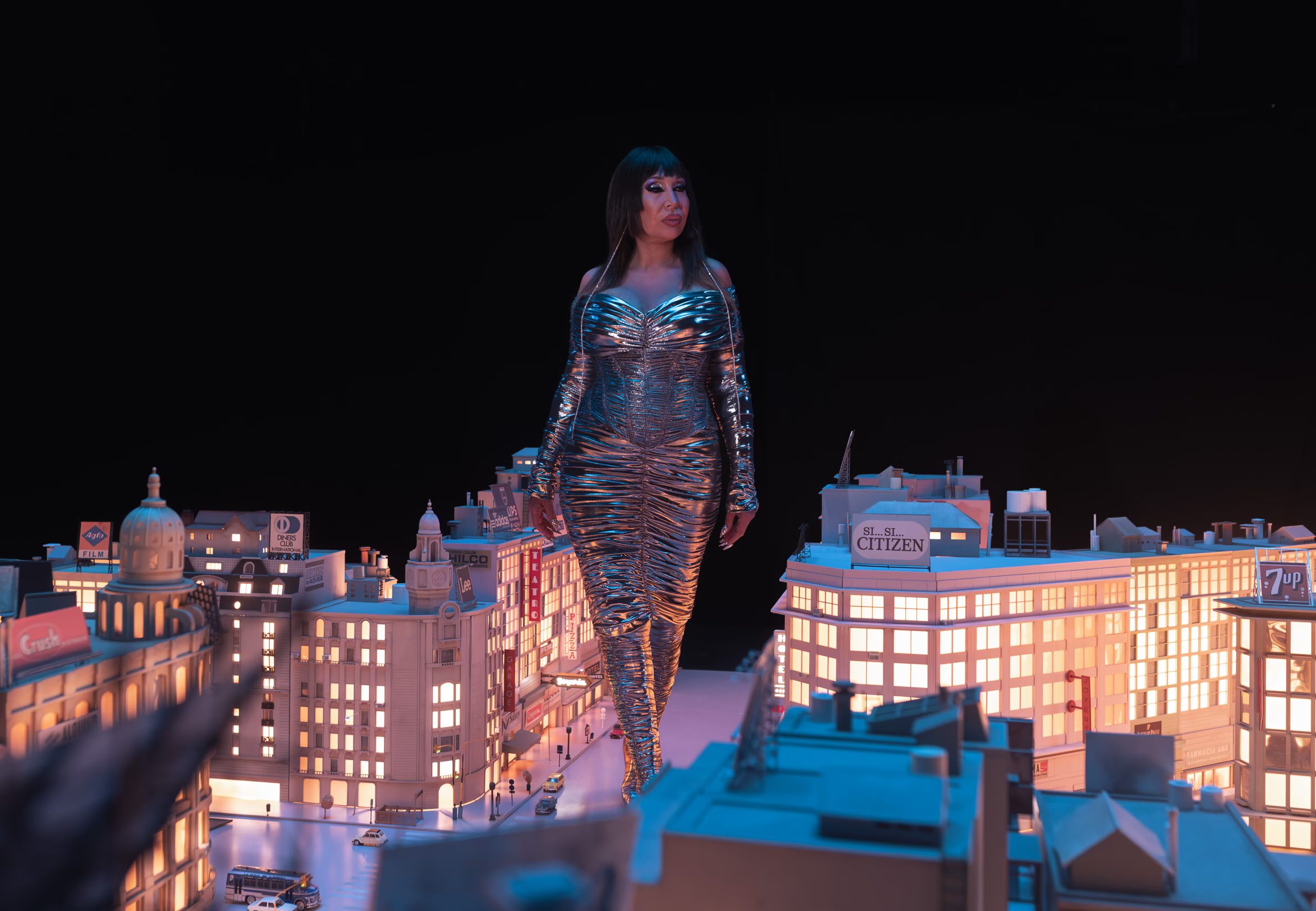
Who is Moria Casán, the vedette who became a local gay icon and now a Netflix star
 Marcelo Fernandez BitarAugust 21, 20262 Mins read
For more than five decades, Moria Casán has made a career out of refusing to behave like anyone expects her to. Actress, vedette, television host, producer, provocateur and self-styled icon, Casán has become one of Argentina’s most recognizable and difficult to categorize pop-culture figures. Now, as she turns 80, her extraordinary career has been transformed into a Netflix series. Casán’s longevity cannot be explained by her early sex-symbol status alone. She repeatedly reinvented herself, moving from theater to television and talk shows, and eventually becoming a famously outspoken media personality and talent show judge. Her deliberately extravagant persona, complete with outrageous outfits, theatrical insults and an apparently inexhaustible supply of catchphrases, became almost as important as her professional work. That persona also helped turn her into an enduring gay icon in Argentina. For generations of LGBTQ+ Argentines, Casán represents an unapologetic form of self-invention: flamboyant, sexually liberated, irreverent and unwilling to submit to conventional ideas about femininity. Her appeal was not simply that she was a glamorous woman with big curves. Rather, it was that she treated identity itself as performance: something to exaggerate, reinvent and control. Now, coinciding with her 80th birthday, Netflix has released biopic Moria worldwide, taking on her mythology as its starting point. The eight-episode series fictionalizes Casán’s life and makes the star herself part of the storytelling. Her daughter, acclaimed actress Sofía Gala Castiglione, and actors Griselda Siciliani and Cecilia Roth portray her at different stages of her life, while Moria herself also appears in the production. An extraordinary life Born Ana María Casanova in Buenos Aires in 1946, Moria entered Argentine show business in the early 1970s, eventually becoming one of the defining vedettes of the country’s golden age of revue theater, or teatro de revista. Her image combined glamour, sexual confidence and comedy, while appearances in films and television alongside popular comedians such as Alberto Olmedo, Jorge Porcel and Susana Giménez helped expand her fame. Since the mid-1980s, Casán has also established herself as one of Argentina’s top TV personalities, hosting various sketch comedy programs and talk shows throughout the years, like “Monumental Moria”, “A la cama con Moria” (To bed with Moria), and “Entre Moria y vos” (Between Moria and You). She also starred in the highly successful all-female play “Brujas”, from 1991 to 1996. After establishing herself in show business, Moria attempted to enter politics, running for a seat in the lower house of Argentina’s Congress in 2005, but lost. Most recently, Casán was a judge on the popular TV dance competition “Bailando por un Sueño” (Dancing for a dream) from 2006 to 2017 Argentine journalists have described her as larger than life, with her popularity remaining high, despite controversial personal disputes and media scandals. One of her classic catch-phrases, “Quiénes son?”(Who are they?), usually used to discredit critics, was sampled by pop star Lali, and the two later performed together at 45,000-seat Vélez stadium. Other popular phrases are “Si querés llorar, llorá” (If you want to cry, cry), and “El decorado se calla” (The scenery shuts up). In short, Moria Casán did not simply become famous by playing a character. Over decades, she turned herself into one — and then kept rewriting it.



CONMOCIÓN: murió Rosa del Valle Rasgido
 notienredSeptember 13, 20260

Claudio Barrelier reveló por qué mató a Agostina Vega: Obsesión por la
notienredSeptember 13, 20260

Asesinaron a Alfredo Wiebel y se dieron a la fuga
notienredSeptember 13, 20260



Clima en Ciudad de Buenos Aires: sábado 12 de septiembre
Sábado en la Ciudad de Buenos Aires con una temperatura máxima de...
 WindwhistlerSeptember 13, 20260
