
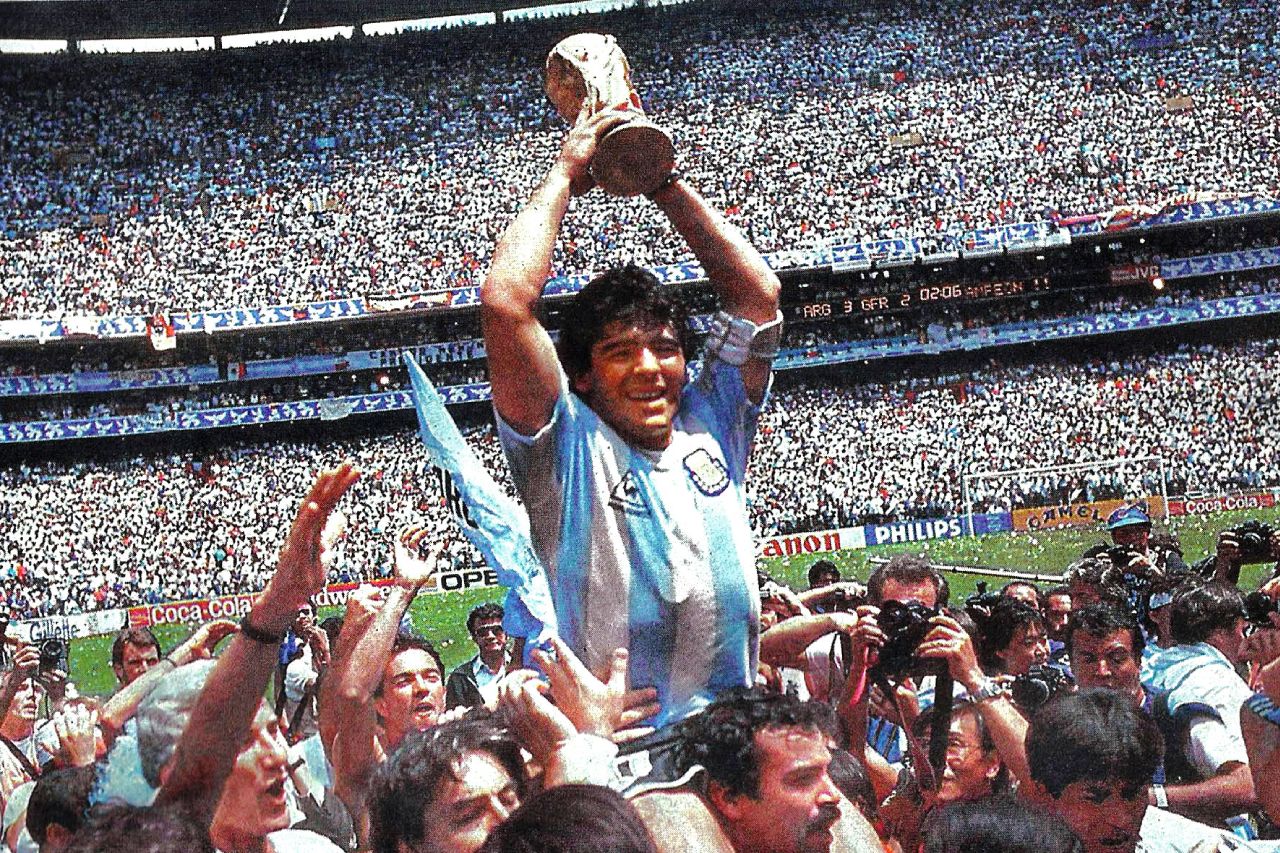
40 years from Mexico 1986: Maradonas greatest hour and how it nearly never happened
 Fernando Romero NunezMay 31, 20266 Mins read
Out of Argentina’s three successes at the FIFA World Cup (78-86-22), it’s easy to argue that the trophy lifted in 1986 is the most emblematic. The crowning achievement of Diego Maradona’s career was a moment of nationwide healing, after the bloody regime of the 1976 coup, the tragedy of the Malvinas war and the growing pains of the newborn democracy. However, it was also a moment of vindication for Maradona himself and Carlos Salvador Bilardo, the head coach. With the victory turning 40 this year, and the World Cup returning — at least partially — to Mexico, we decided to look back on how this historic achievement came to be. A rocky start Bilardo had joined the Albiceleste in 1983, with the team in the midst of a crisis after the departure of former coach César Luis Menotti. Menotti’s stint at the helm of Argentina was revolutionary, reconfiguring the workings and perception of the squad within national football, before leading it to success in the 1978 World Cup. However, four years later Argentina was eliminated in the second round after losing to the two title favorites, Italy and Brazil, and the coach departed soon after. Moving from Menotti’s idealistic, near-poetic views on football to Bilardo’s pragmatic, win-at-all-costs mentality was a tectonic shift for Argentina, and a controversial one at that. The press had long labeled Bilardo — who was coming off a 1982 First Division title with Estudiantes — and his mentor Osvaldo Zubeldía as “anti-football” coaches, who focused on the defensive side of things and weren’t shy about vying on the margin of the rules, or perhaps even a little bit on the other side of them. Biladon’s decision to hand over the captain’s armband to Diego Maradona, replacing the beloved leader of the ’78 team, Daniel Passarella, was also criticized in the press. After debuting with a 2-2 tie in a friendly game against Chile, the press came out swinging, criticizing Bilardo’s “mechanical” team’s “structured movements,” claiming the team “hadn’t seduced the fans.” Menotti further fueled the debate from the sidelines, claiming that some of the players “had lost some prestige” after the game. Ousted in the first round of the 1983 Copa América, it set the stage for a stormy World Cup Qualifiers in 1985. A narrow escape Despite a win in the opening fixture against Venezuela, a 3-2 win at San Cristóbal, the match left more doubts than certainties for fans. At the time, the Herald reporter Rex Gowar noted the team looked “light years away” from making it to Mexico. After a 3-0 win, again against Venezuela, on June 9 at the Monumental, Gowar wrote the “55,000 crowd were not pleased” with a performance “riddled with mistakes.” The Herald reported on Argentina’s lackluster play Yet the criticism seemed exaggerated: Argentina led the standings after four matches, with four wins. It all nearly came crashing down fast. A 1-0 loss to Peru in Lima in the second-to-last matchday left Bilardo’s team with all to play for in the return leg, set to be played at the Monumental Stadium in Buenos Aires. The Peruvian team needed a win, while the Albiceleste only needed a tie to advance. So high were the stakes that the Herald reported on Peruvian “witch doctor” Luis Ramírez traveling to Buenos Aires to use prayers and “witchcraft” against Maradona and in favor of the man who had nullified him in Lima, Luis Reyna. It went down to the wire. With Peru 2-1 ahead in the last minutes, an effort by Pasarella hit the post and crawled along the goal line, with striker Ricardo Gareca smashing it into the back of the net. The goal sent Peru to the CONMEBOL Qualifiers playoff, where it lost 2–5 aggregate to Chile. It did not make the World Cup again until 2018, ironically with Gareca as the head coach. Miraculous preparations Bilardo began preparations as soon as possible. With the World Cup being played at an altitude of some 2,200 meters above sea level, a 14-player delegation traveled to train in Tilcara, Jujuy, in northern Argentina, in January 1986. Team doctor Bernardo Lozada admitted that any physical conditioning the players achieved would be lost the moment they returned to sea level, but the mental preparation wouldn’t. “We talk about psychological adaptation. Once a player overcomes the altitude, he no longer fears it,” he said. It was then that one of the biggest legends about that team came up. According to accounts, some of the players visited the sanctuary of the Virgin of Copacabana in Punta Corral, one of the most important shrines in northern Argentina and asked her to help them win the World Cup. The players allegedly promised a return trip to thank the Virgin, which never materialized, and this has been blamed for Argentina’s curse before the 2022 World Cup, after losing the 1990 and 2014 finals. However, the players and Bilardo have since rejected the story, claiming they never made such a promise, even though a few of them returned to Tilcara in 2018 for a Coca-Cola spot. Hitting the ground running When Mexico 1986 rolled around, Argentina was in Group A alongside South Korea, Bulgaria and defending champions Italy. Bilardo’s team debuted on June 2 with a 3-1 victory over South Korea, then tied 1-1 with Italy and beat Bulgaria 2-0, advancing to the next round as Group A leaders. The round of 16 was a Río de la Plata derby against Uruguay. With Diego Maradona playing one of his best games of the tournament, Argentina took the lead through striker Pedro Pasculli, then endured a rough and hard-fought second half under torrential rains. Perhaps Argentina’s best performance ever under Bilardo, it set up the most famous game of that World Cup, Diego Maradona’s career, and perhaps even Argentine football history: Argentina vs. England, on June 22, at the Azteca Stadium. It was a controversial matchup. Just four years earlier, the two countries had clashed in the Malvinas War, a ten-week conflict between Argentina and the United Kingdom over two sets of islands in the South Atlantic. In the build-up to the game, the Herald reported how several Peronist senators requested President Ricardo Alfonsín withdraw Argentina from the tournament as an “act of demonstration of Argentina’s permanent right over the Malvinas and other islands.” Two groups of veterans sent Argentine players a message asking them to “play like Exocets,” the rockets that sank several British ships. Maradona distanced himself from the noise at the time, saying the team was there “to play World Cup football, not politics.” Argentina v. England The game proved a tough affair. With both teams closely matched up, the English focused their efforts on nullifying Maradona, who was fouled 10 times in the game, a fifth of the 53 fouls he received across the tournament, a World Cup record. But they could only do so much. In the 51st minute, the Argentine star went to intercept a backpass for England goalkeeper Peter Shilton. As the two jumped for the ball, he caught the ball with his outstretched left arm, punting it into the back of the net. Despite protests from the England players, the referee confirmed the goal. Maradona would later say it was not his hand that touched the ball, but “the hand of God,” a phrase that was first published in English by former Herald reporter Rex Gowar. Four minutes later, Maradona picked up the ball inside his own half and started a 52-meter dash towards the English goal, dribbling past five English, including goalkeeper Peter Shilton on his bottom, and slotting the ball into the empty goal. As part of the buildup to the 2002 World Cup, FIFA opened a vote for the ‘Goal of the Century’ on its website, with Maradona’s second goal winning by over 18,000 votes, nearly double the tally of the runner-up. World Cup champions The win against England galvanized the team. In the semifinals, Maradona once again scored twice against Belgium to secure a spot in the final, where West Germany awaited. The win came in typical Argentina fashion with a hard-fought result. After taking a 2-0 lead before the first hour of play, Bilardo’s team lost concentration for a moment and was punished for it. Karl-Heinz Rummenigge in the 74th minute and Rudi Völler in the 82nd scored to tie the game 2-2 in a match that seemed bound to go to extra time, but the genius of Maradona appeared once more. In the 85th minute, he darted through several rivals in the middle of the pitch to set up Burruchaga, who scored the final 3-2. The title was on the cover of the Herald The win sealed Maradona’s spot not only in football’s pantheon, but in Argentine collective memory. His undeniable charisma, bold and quasi-impertinent attitude, and unstoppable determination on the pitch made him an icon of Argentinity. For Bilardo, it was vindication after a process that was born and raised under heavy criticism from fans and the press alike. Four years later, a much less inspired Argentina crawled its way to the final, where it was denied by the same rival and a controversial, last-minute penalty, marking the end of an era. However, the legacy had already been written in the heat of Mexico. Editorial disclaimer: Although the UK refers to the territory as the “Falkland Islands”, Argentina stromngly contests this name. The Buenos Aires Herald uses “Malvinas” to refer to the islands.
Conectividad regional, auge de escapadas y la pasión por el turismo deportivo del viajero argentino
El pulso del turismo emisivo en la Argentina atraviesa un momento de...
 WindwhistlerOctober 13, 20260
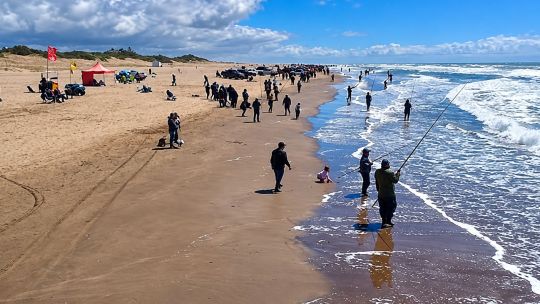
El último tiro cambió todo: pescó un pez elefante y ganó $ 20.000.000
Promediando el cierre de la semana pasada los pronósticos parecían tronchar la...
WindwhistlerOctober 13, 20260

Así rescataron a un cachorrito de lobo marino de un pelo en los médanos de Miramar
Un sorpresivo y emotivo procedimiento de preservación ambiental conmovió por completo a...
WindwhistlerOctober 13, 20260



Proyectan exportaciones récord del agro en 2027, pero advierten que aún faltan dólares para el año electoral
A un año de las elecciones presidenciales, la pregunta sobre si estarán...
WindwhistlerOctober 13, 20260
