
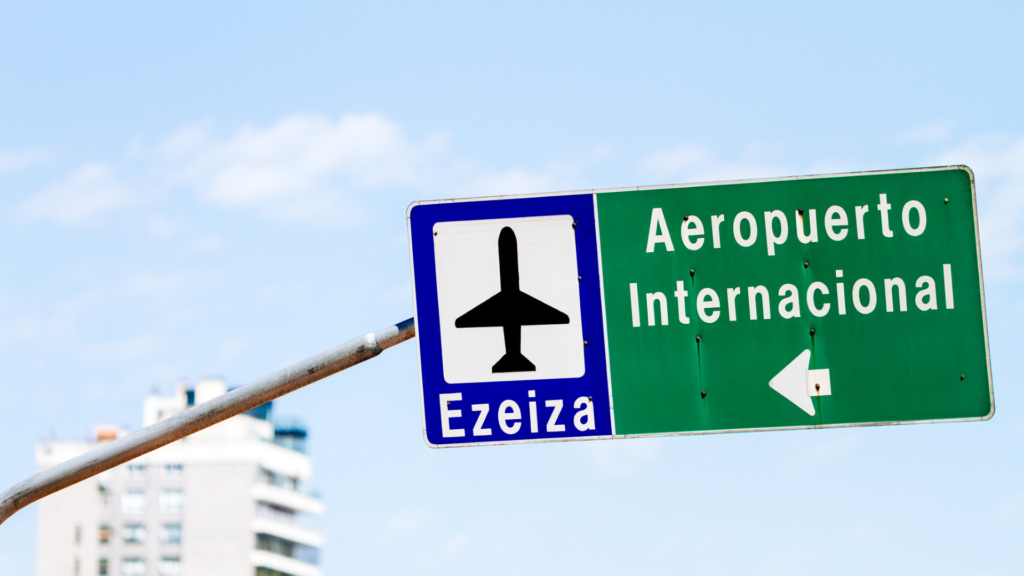
Argentina is losing ground as an international tourism destination: what happened?
 Juan Marcos PollioMay 31, 20264 Mins read
Known on the tourist map for its landscapes, tango, wine, beef and football, Argentina has struggled to cement itself as a destination for international travelers. If anything, it has been losing foreign visitors of late. According to Argentina’s statistics institute INDEC, 3,502 foreign tourists visited Argentina in the first four months of 2026. While that was a 6.5% improvement on the same period of 2025, it marked a sharp drop from the same stretches in 2024 (-20.5%) and 2023 (-19.3%). Daniel Schteingart, a researcher at the Fundar think tank, told the Herald that “Argentina is one of the few countries in the world that hasn’t managed to grow its tourism exports over the past 15 years.” “The rest of the world has kept developing tourism and pulling in foreign visitors, but we’re stuck in place. Countries that used to be behind us, like Colombia, are now ahead,” he added. What happened? Laura Vernelli, an economist at the consultancy Equilibra, told the Herald that “the most important relative price for whether foreigners come in or not is the real exchange rate” in other words, the price of the dollar. “The moments when the real exchange rate is cheap are the ones that kill foreign tourism, because it gets very expensive for them to stay and live in Argentina,” she said. She pointed to last year as an example, when “very few people were coming from abroad on vacation, while a lot of Argentines were vacationing abroad.” Schteingart agreed that “the stretches with an exchange-rate gap and macroeconomic disorder” were a brake on the sector. “It scares off Europeans and North Americans a bit; it makes life more complicated for them.” That said, he noted that those same stretches also pulled in tourists from neighboring countries, “because they take advantage of the exchange-rate edge.” In fact, he said, “the opposite is happening now.” “Total tourism is below 2023 levels, mostly because foreign tourism from the region dropped sharply Argentina is more expensive in dollars but longer-haul tourism is growing, which is a different kind of demand, a bit more premium,” he said. Changes in the sector Roberto Amengual, president of the Tourism Hotel Association (ATH), told the Herald that while “Argentina used to depend heavily on the exchange rate to generate quick demand, for some time now other factors have helped generate a different kind of demand.” He pointed to the surge in sporting events and concerts by local and international artists, which has “generated a lot of demand in Buenos Aires and the rest of the country,” especially because “international concerts don’t go to Chile, Uruguay or Paraguay.” “They generate demand from those countries, where tourists from neighboring countries used to come just to shop cheap. That’s not happening as much anymore, but you’re seeing more of the segment that comes to catch an event,” Amengual said. He also pointed to the importance of food tourism, since both Mendoza and Buenos Aires are featured in the Michelin Guide. “It’s a big draw for international tourism. We’re one of the few countries in the region that have it, and we have a high share of Michelin Guide restaurants,” the hotel executive said. He also flagged the rise in tourism from Asia. “Demand from Chinese tourism coming into Argentina has doubled in the past year, which requires an adjustment process when it comes to breakfast, service, courtesies and cultural understanding.” What can be done? Schteingart stressed that Argentina is “among the five countries with the most climate diversity in the world,” which gives it “huge potential for nature tourism, which is heavily underused.” “There are incredible places in Argentina with major tourism potential that haven’t been developed yet: from the yungas in Salta and Jujuy, to Catamarca province, the Iber wetlands in Corrientes, the impenetrable Chaco, the Baado La Estrella in Formosa and Patagonia itself can still grow more,” he said. He added that “there are some policies that should be explored” to encourage tourism routes. For example, “instead of Aerolneas Argentinas flying Buenos Aires-Punta Cana, which is all outbound tourism, it could push a So Paulo-Ushuaia route.” Vernelli was more pessimistic: “The policies on promotion, restoration, routes and all that do matter, but no matter how good are the city, the wine or the hotels, if it’s too expensive for those people, they’re not going to come.” Amengual, for his part, complained that “the investments are huge and hard to face, because financially they’re very challenging for a normal hotel cash flow.” “If you have to buy air-conditioning equipment for a 150-room hotel, that’s an entire year of profit,” he said. He also said a “tax reform is clearly needed,” especially in regions near the border, where the exchange-rate gap with other countries hurts competitiveness as in the case of Puerto Iguaz and Foz do Iguau, Brazil. “The tax component in Argentina is almost 70% of the sale, and over there it’s 30%,” he said. Finally, he mentioned the need for “simplification on the operational side when it comes to meeting municipal, provincial and federal requirements,” because “there are so many overlapping departments between the city and the province that they end up issuing regulations on the same thing and contradicting each other.” He gave a concrete example to illustrate the absurdity of the situation: “There are regulations in this country that ban carpets in hotels.”

Conectividad regional, auge de escapadas y la pasión por el turismo deportivo del viajero argentino
El pulso del turismo emisivo en la Argentina atraviesa un momento de...
 WindwhistlerOctober 13, 20260
El último tiro cambió todo: pescó un pez elefante y ganó $ 20.000.000
Promediando el cierre de la semana pasada los pronósticos parecían tronchar la...
WindwhistlerOctober 13, 20260

Así rescataron a un cachorrito de lobo marino de un pelo en los médanos de Miramar
Un sorpresivo y emotivo procedimiento de preservación ambiental conmovió por completo a...
WindwhistlerOctober 13, 20260



Proyectan exportaciones récord del agro en 2027, pero advierten que aún faltan dólares para el año electoral
A un año de las elecciones presidenciales, la pregunta sobre si estarán...
WindwhistlerOctober 13, 20260
