
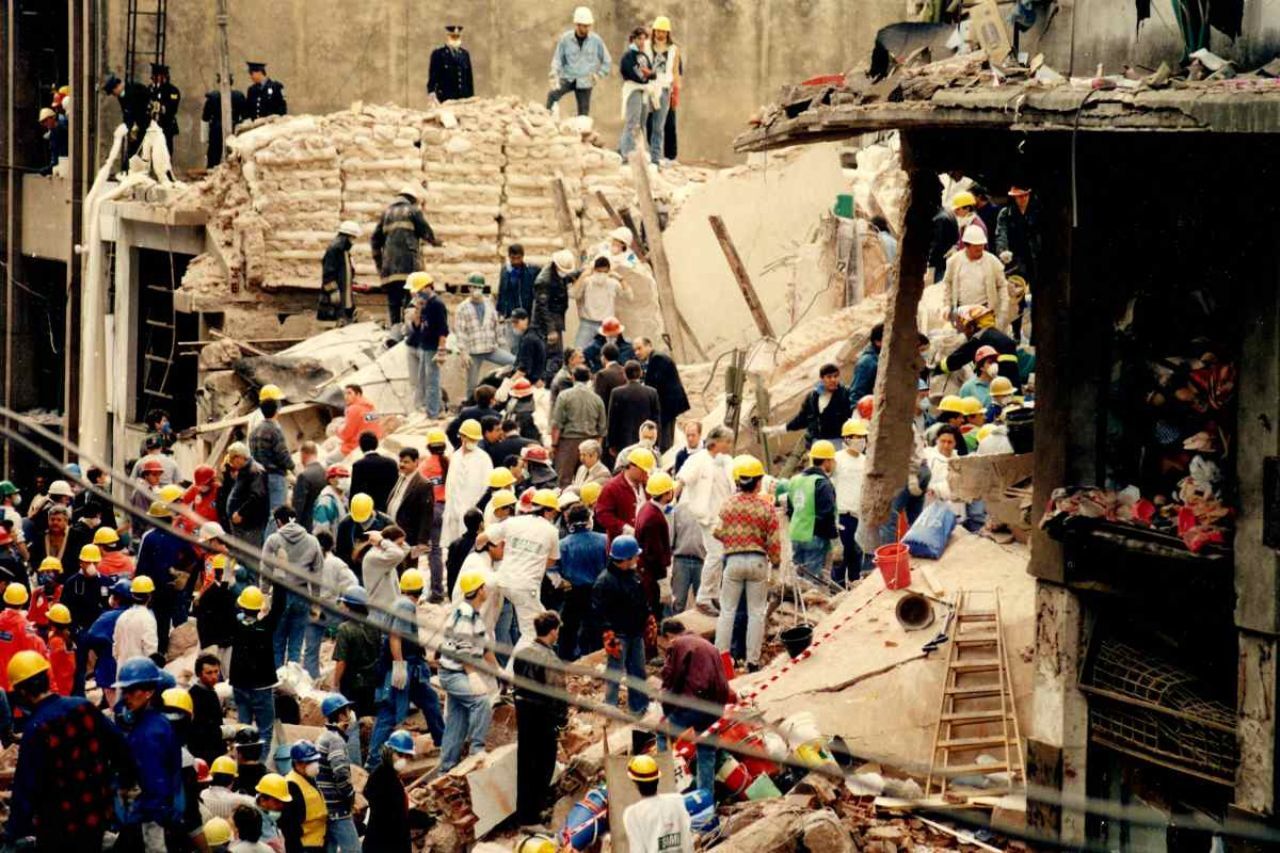
AMIA prosecutor seeks indictment of ten suspects on 1994 bombing
 Buenos Aires HeraldMarch 6, 20262 Mins read
The prosecutor of the Special Investigation Unit on the 1994 AMIA bombing, Sebastián Basso, requested on Wednesday the indictment of ten Iranian and Lebanese suspects. “What I requested was to move quickly against the ten defendants so we can hold a trial in absentia as soon as possible, and show society the evidence gathered by the Argentine State over the last thirty years,” Basso told outlet Radio Mitre. The people accused were identified as Ali Fallahijan, Ali Akbar Velayati, Mohsen Rezai, Hadi Soleimanpour, Ahmad Reza Asghari, Mohsen Rabbani, Salman Raouf Salman (also known as Samuel Salman El Reda), Abdallah Salman, Hussein Mounir Mouzannar, and Ahmad Vahidi. Vahidi was commander of the Quds Force back in 1994 and was recently appointed head of the Iranian Revolutionary Guard following the United States and Israel bombings in Tehran, which resulted in the death of several high-ranking officials. The accused are the same 10 men whom Judge Daniel Rafecas moved to trial in absentia in June last year, and are currently fugitives from the Argentine justice, which requested that Interpol issue red notices for their arrest in 2006. Basso insisted that, until the enabling law that was passed last year, it was impossible to move the case forward against specific individuals. Between 2006 and 2023, Argentina submitted extradition requests to Iran and Lebanon for the ten individuals, which were never granted. The prosecutor was adamant in his case against the Shia Islamist Lebanese political party and paramilitary group Hezbollah, of which the Salman brothers and Mouzannar are suspected members. “It was [that group] who carried out the attack,” Basso said. “They are puppets [of Iran] and both the masterminds and perpetrators of the attack.” The prosecutor confirmed in 2025 that the investigation unit had contacts with a group of Iranian dissidents who provided inside information. “That was vital for us, because it allowed us to reconstruct everything that happened in Iran, how the regime works, and how they created and sustained Hezbollah,” he said. A decades-long case In 2013, during Cristina Fernández de Kirchner’s second presidential term, Argentina and Iran signed a memorandum of understanding that would have enabled Argentine prosecutors to interrogate Iranian citizens accused of involvement in the bombing. Two years later, the then-head of the AMIA Special Investigation Unit Alberto Nisman — who died under suspicious circumstances in 2015 — filed a lawsuit against Kirchner, alleging that the memorandum amounted to an impunity pact. In 2024, the Supreme Court ordered Kirchner to stand trial in that case. In 2025, Congress passed a law allowing for trials in absentia for crimes like genocide, torture, and terrorism when the suspect is a fugitive. Some AMIA victim’s organizations favored trying the accused in absentia, while others did not. The AMIA itself, together with the Delegation of Argentine Israelite Associations (DAIA), stated that such a trial would guarantee the international community’s interest in preventing and punishing terrorism and serious human rights violations. They added that the law allowing these kinds of trials “represents a significant progress for the victims, who demand justice, and for the State, which has the duty to provide it.”
CONMOCIÓN: murió Rosa del Valle Rasgido
 notienredSeptember 13, 20260
Claudio Barrelier reveló por qué mató a Agostina Vega: Obsesión por la
notienredSeptember 13, 20260
Asesinaron a Alfredo Wiebel y se dieron a la fuga
notienredSeptember 13, 20260



Clima en Ciudad de Buenos Aires: sábado 12 de septiembre
Sábado en la Ciudad de Buenos Aires con una temperatura máxima de...
 WindwhistlerSeptember 13, 20260
