
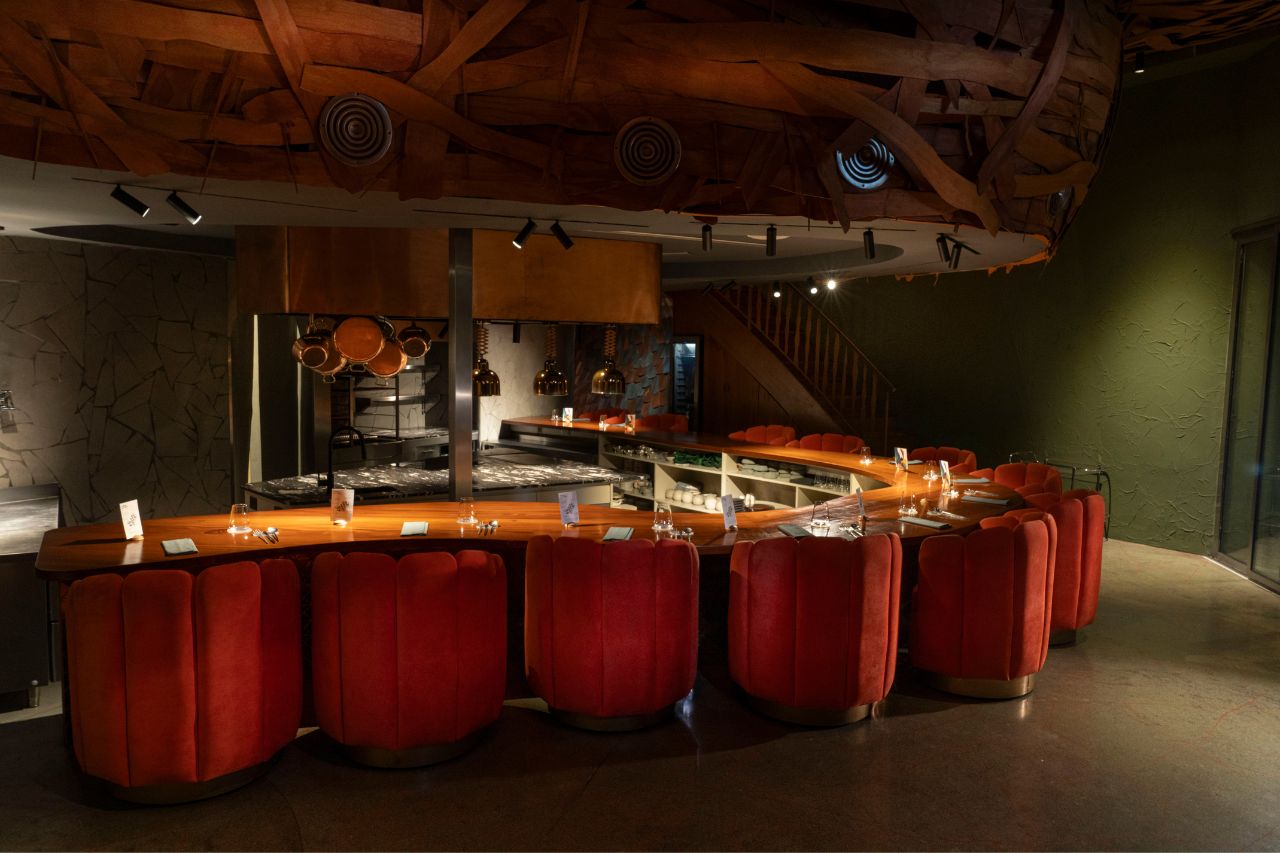
As wallets shrink, Buenos Aires fine dining weathers the storm
 Agustin MangoMarch 28, 20264 Mins read
Argentine fine dining was introduced to the global stage in 2023, when the Michelin Guide launched its first guide to the country’s restaurants. The move had a significant impact on the fine dining sector — particularly by boosting tourism and increasing national recognition. In its debut, the guide reviewed and recommended dozens of eateries. In Buenos Aires City, only three restaurants got stars: Trescha and Don Julio got one, while Aramburu got two. The Michelin Guide also helped counter a prior narrative that centered on the supposed decline of tasting menus and restored visibility and momentum to the segment. “It gave these restaurants a new level of visibility, putting them back on the map in Argentina,” Trescha chef Tomás Treschanski told the Herald. Treschanski also received the Young Chef Award that year, at age 26. “I think this helped a lot more people in Argentina become interested in visiting these restaurants, and it brought in a lot more tourism — so it definitely helped a lot.” Things are a bit different these days. The economic crisis, which has brought on a 30% drop in year-to-year consumption, together with higher operational costs and a significant drop in foreign tourism, has been a significant factor in the closure of several high-profile restaurants. Among them are Michelin-recommended places like Sal and Franca, as well as Palermo vegan eatery Amador, and a long-standing classic like El Palacio de la Papa Frita on Corrientes Avenue. Born almost at the same time as Michelin’s arrival, Trescha just turned three. It recently celebrated the occasion with an outdoor gathering in Villa Crespo featuring cooking by Don Julio, Mengano, and Michelin star awardee Crizia. You may be interested in: Michelin confirms what chefs already know: Argentina’s culinary star is on the rise There were also a series of panels on regional cooking and pairings hosted by journalist Rodo Reich. Among the speakers were international chefs from Evvai, Tuju (both from São Paulo), El Chato (Bogota), and EM (Mexico City), as well as top local cooks and sommeliers like Gonzalo Aramburu, Germán Martitegui, and Inés de los Santos. An oasis in the middle of the desert, given the context. Trescha itself is not immune to the crisis. Treschanki admits that the situation is much worse than when they opened. A year and a half ago, the restaurant had waiting lists every day, three months out. In mid 2025, they went through the worst winter for tourism in Argentina since 2001. “Now it’s picked up a bit, but it’s still not great. And you never really know — in three months we could be having a completely different conversation,” he says. Fine dining and economic crisis as an Argentine pairing Back in the early days, Treschanski was told something that has proven to be true. “Argentina is a country that moves from one crisis to the next. There can be good moments in between, but it’s a volatile economy, and you have to know how to survive and adapt if you want to maintain a business of this scale, with 25 to 30 employees.” With that in mind, last winter he introduced a shorter, more accessible, and affordable menu. The goal was “to bring more people in” amid a steep drop in tourism, on which fine dining restaurants in Buenos Aires rely. “Unfortunately, the local public alone isn’t enough,” says Treschanski, who adds that it’s the audience they enjoy hosting the most. “My dream would be to serve only Argentines and regulars every day. But we understand these are destination restaurants, very particular, and when people travel, they want to come and see what we do. So, yes, this affects us a lot.” Although one might think fine dining, being at the top of the food chain in terms of prices and clientele, has more resilience, Treschanski explains it’s the opposite: fine dining is one of the sectors of the food industry with the lowest margins — perhaps the lowest of them all. Costs are extremely high, and margins are very tight. Tomás Treschanski “The difference between having slightly more or slightly fewer guests is what determines whether we make money or lose a lot,” he says. Fine dining establishments also require bigger initial investments than most restaurants in infrastructure, daily operating costs, staff, and press. Because of this, shutting down overnight also carries a very high cost. “You often have to hold on, whether you want to or not. Sometimes it’s more expensive to close than to endure a bad year,” says Treschanski. He also rejects the perception that fine dining is protected or cushioned against economic turmoil. “People assume everyone in fine dining is wealthy, but the reality is it’s just a different kind of business. I don’t have a wealthy investor backing me. It’s just two regular people who put all our savings into opening this place.” In this tough scenario, still, the ability to work with top-tier Argentine products is better than before. “I actually think that situation is improving all the time. Producer development is growing exponentially,” says Treschanski. Today, he adds, the available ingredients are “infinitely better” than five years ago. He added that there’s “a generational shift” in consumers toward seasonal, higher-quality products, and restaurants respond to it. “Ultimately, we provide a service — we respond to what the customer wants. And that’s definitely improving a lot.”


CONMOCIÓN: murió Rosa del Valle Rasgido
 notienredSeptember 13, 20260

Claudio Barrelier reveló por qué mató a Agostina Vega: Obsesión por la
notienredSeptember 13, 20260

Asesinaron a Alfredo Wiebel y se dieron a la fuga
notienredSeptember 13, 20260



Clima en Ciudad de Buenos Aires: sábado 12 de septiembre
Sábado en la Ciudad de Buenos Aires con una temperatura máxima de...
 WindwhistlerSeptember 13, 20260
