
Three startups run by Argentine women that aim to transform entire industries
 Facundo IglesiaMarch 29, 20264 Mins read
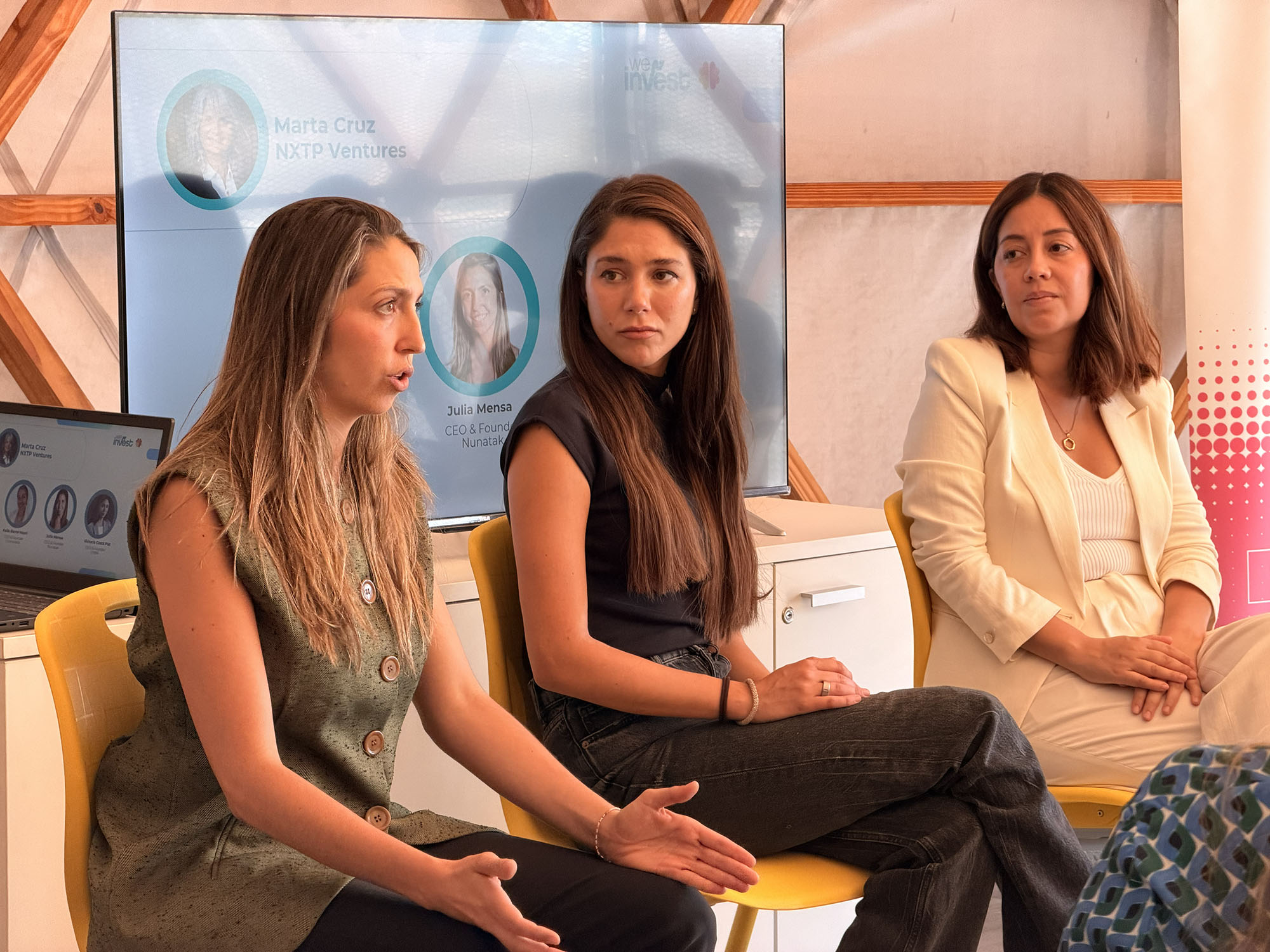
At an event organized in Buenos Aires by two accelerators that aim to encourage a larger presence of women in male-dominated businesses, three young female founders presented their startups, which aim to disrupt industries — mental health treatments, agriculture, and medical data. The presentation was organized by Emprendedoras LAC and WeInvest, two initiatives that, since 2012 and 2019, respectively, have sought to close the gap in representation and funding for women in Latin America’s entrepreneurial and investment ecosystem. “All three projects are scalable globally, will have a significant impact on improving people’s health, and their economic impact will stem from having successfully identified the right business model based on the genuine and compelling value proposition they offer,” said Marta Cruz, co-founder of WeInvest andEmprendedoras LAC, as well as managing partner of NXTP Ventures, one of the pioneering technology investment funds in Latin America’s venture capital industry. “After investing in more than 30 or 40 companies, I realized that I wasn’t seeing any companies led by women. The typical photo with all men and just one woman. I said: ‘We have to do something,’” Cruz retold. She claims that the startup environment is highly male-dominated and that men receive preferential treatment. “Investors asked men questions about growth. They asked women questions about risk mitigation. To the first: ‘How soon will you expand regionally?’ To the second: ‘If you don’t close the funding round, how will you survive?’” she illustrates. That’s why, together with Susana García Robles, she founded WeInvest in 2019 — a community of female investors focused on Latin America that now brings together more than 400 members who, collectively, have invested in over 2,000 startups. The numbers, they claim, speak for themselves: 62% of funds in the region have no women in decision-making positions, only 6.5% have at least one female partner, and venture capital flowing to projects led by women does not exceed 2%. However, the data also shows why it’s worth changing this reality. According to community figures, funds with women involved have an internal rate of return that is 4.5% higher. And for every dollar invested in startups led by women, a 7.2% higher return is generated. With this in mind, these are three startups they have chosen to accelerate. EYWA: Lab-grown psilocybin to treat mental health According to research, 75% of patients with depression do not respond to conventional treatment or relapse. Victoria Costa Paz, CEO and founder of EYWA, proposes an alternative treatment. EYWA, she says, wants to use psilocybin —a natural psychoactive compound found in hallucinogenic mushrooms— to treat mental health issues. The substance is the subject of recent studies, some of which are promising. For example, a Phase II trial published in 2022 in the New England Journal of Medicine found that a single 25-mg dose was effective in participants suffering from treatment-resistant depression. Costa Paz explains that EYWA’s goal is to manufacture the substance at scale. To do so, her company managed to teach “microorganisms that grow at scale, such as bacteria or fungi, to produce psilocybin” in industrial bioreactors. The substance, she says, “is then extracted and purified, leaving a powder from which we produce a 25-mg dose of pure psilocybin — the standard currently used for treatment-resistant depression.” EYWA’s technology aims to make the treatment 60% cheaper than traditional extraction methods. The company has raised $4.5 million, with United States venture capitalist Tim Draper among those who backed the project. Its primary market is Australian clinics that treat depression, where psilocybin use is already legal. Costa Paz is aware of the risks of ventures like hers. Tim Draper, for example, invested in Theranos, a medical biotechnology startup founded by American Elizabeth Holmes that promised to revolutionize blood testing with a machine that would need only a single drop to diagnose all kinds of diseases. The technology turned out to be fake, and Holmes was convicted of fraud in 2022. Draper publicly defended her even after the scandal. “I always ask him about that case because I’m also a woman, I’m in biotechnology, and I’m doing something controversial. I asked him what I could learn from it, and he said, ‘Always speak for yourself. Stand up for your company. That’s what makes you trustworthy, transparent, and makes people want to support you,” she said. Nunatak: Extremophile Microorganisms for More Sustainable Agriculture Julia Mensa, co-founder of Nunatak, seeks answers in the most inhospitable places on Earth: Antarctica, the Beagle Channel, and other extreme ecosystems. There, she studies the microbiome of plants that survive under extreme conditions and, using bioinformatics and biotechnology tools, selects the most promising microorganisms to develop agricultural products. “Less than 1% of the world’s soil microorganisms have been studied by science. We understand very little of what happens on our planet, which is why we need to advance science further to better solve these problems,” says Mensa. The product is applied to seeds or leaves and helps farmers increase their yields sustainably, as a complement to conventional fertilizers. “We don’t have the illusion of replacing all chemical products. Our clients are companies that want to improve what they already have sustainably — something they can’t do on their own today,” says Mensa. Their first product, designed for wheat and barley, is currently undergoing approval by SENASA, the Argentine government agency that regulates and certifies products of animal and plant origin. They are already working with food companies and the fertilizer industry in Argentina and will conduct field trials in Mexico this year. They have investors from Italy and Spain who are interested in the transition toward a more sustainable food system. Cromodata: A Latin American health data platform Keila Barral Masri, CEO and founder of Cromodata, shares the stage with Harry, her guide dog and the company’s “Chief Firuláis Officer.” Barral Masri is tackling a structural problem: Latin America lacks its own standardized health data. “Our competitors are from other parts of the world, with data from other patients and different genetics. Today, we are the leading provider of Latin American health data to the world,” says the entrepreneur. To stay ahead of regulations, which are still in their infancy in the region, they developed a digital informed consent platform that medical centers use for free to obtain explicit permission from patients before sharing their data with the scientific community. The company raised a first round of $1.2 million and closed a second round of $4 million in January, enabling it to expand across Latin America.


CONMOCIÓN: murió Rosa del Valle Rasgido
 notienredSeptember 13, 20260

Claudio Barrelier reveló por qué mató a Agostina Vega: Obsesión por la
notienredSeptember 13, 20260

Asesinaron a Alfredo Wiebel y se dieron a la fuga
notienredSeptember 13, 20260



Clima en Ciudad de Buenos Aires: sábado 12 de septiembre
Sábado en la Ciudad de Buenos Aires con una temperatura máxima de...
 WindwhistlerSeptember 13, 20260
