
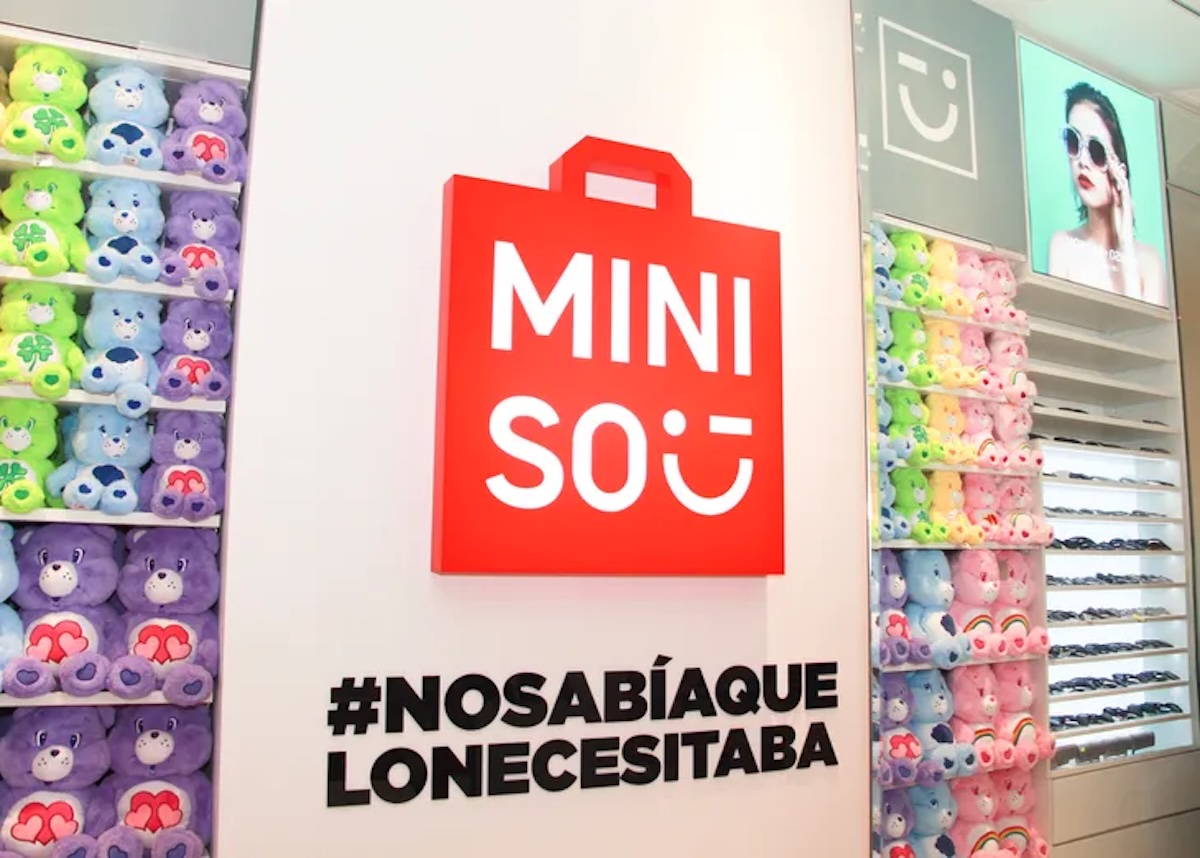
Miniso showcases Chinas shift from world factory to global trendsetter
 Estefania RoucoApril 25, 20262 Mins read
This piece is part of the Argentine-Chinese Chamber of Commerce’s monthly column in the Buenos Aires Herald. Walking into a Miniso store is like stepping into a paradox. A chaotic yet carefully designed environment with pastel colors, ubiquitous cartoon characters, and the chain’s jingle — “Happy Miniso” — playing in a loop. In just over a decade, Miniso has gone from being a fixture in Chinese shopping malls to a global retail player. In addition to its standard stores, in 2020 it launched Top Toy, a subsidiary focused on collectible toys, reaffirming its commitment to emotional consumption. Currently, it operates in more than 100 countries and has around 8,000 stores worldwide, with international expansion establishing itself as one of its main growth drivers. After a brief presence in Argentina in the past decade, the store is now returning to the country with a plan to open 100 stores. Miniso’s expansion reflects China’s transformation from a “world factory” to a generator of global brands. Companies like Miniso do not just sell products: as the visible faces of contemporary Chinese retail, they also build identity and experience. Recent phenomena, such as the craze for Labubu figures, demonstrate the extent to which these strategies — based on emotional consumption and the element of surprise — can transcend their home market. This is not limited to Miniso. Companies like Pop Mart, with its model of collectible figures and collaborations with artists and designers, or Shein, which consolidated its global presence through digital fast fashion, show how a new generation of Chinese companies is committed to branding and direct connection with the consumer. The rise of Miniso Although Miniso sells everything from snacks to cosmetics, the whole place feels like a toy store. It wasn’t always like this. According to the brand’s own narrative, Miniso founder Ye Guofu came up with the idea after a trip to Japan. After seeing stores that combined attractive, minimalist design with affordable prices — like Muji — he decided to replicate that model in China. He opened his first store in Guangzhou in 2013. In line with its Japanese inspiration, the brand even incorporated Katakana — one of the Japanese syllabaries — into the original logo. That ambiguity eventually became problematic. In the early 2020s, amid heightened geopolitical sensitivities, Miniso launched a rebranding process to reaffirm its identity as a Chinese brand. As it identified its target audience, the company also began to move away from the minimalist bazaar aesthetic and embraced pop culture. A key factor was its collaboration with well-known franchises, which led to products featuring Disney, Harry Potter, and Sanrio, among other IPs. In China, there are various terms used to describe this type of consumption. The one that most closely aligns with Miniso’s strategy is xiaoqe xing (小确幸), which refers to “small daily joys.” Rather than meeting a need, the shopping experience aims for emotional gratification: curiosity draws customers in, and the sense of discovery drives the purchase. The constant rotation of products, which are promoted on the brand’s official social media channels, fuels the anticipation of visiting to discover something new. The brand itself uses a key phrase to define the shopping experience: treasure hunting. The chain already has a solid presence in Latin America, with stores in Mexico, Chile, Brazil, Colombia, and Peru. Its challenge in Argentina will be to differentiate itself from the large import bazaars — which are heavily focused on beauty and home decor — to build a distinctive brand in a market dominated by offerings lacking their own identity. It also remains to be seen how its pricing strategy will translate in the local context and whether this model — based on a purchasing dynamic centered on immediate gratification — will succeed in establishing itself in a market like Argentina’s.

CONMOCIÓN: murió Rosa del Valle Rasgido
 notienredSeptember 13, 20260

Claudio Barrelier reveló por qué mató a Agostina Vega: Obsesión por la
notienredSeptember 13, 20260

Asesinaron a Alfredo Wiebel y se dieron a la fuga
notienredSeptember 13, 20260



Clima en Ciudad de Buenos Aires: sábado 12 de septiembre
Sábado en la Ciudad de Buenos Aires con una temperatura máxima de...
 WindwhistlerSeptember 13, 20260
