
Patagonia workers project to be big winners in Mileis economic plan
 Juan Marcos PollioMay 13, 20262 Mins read
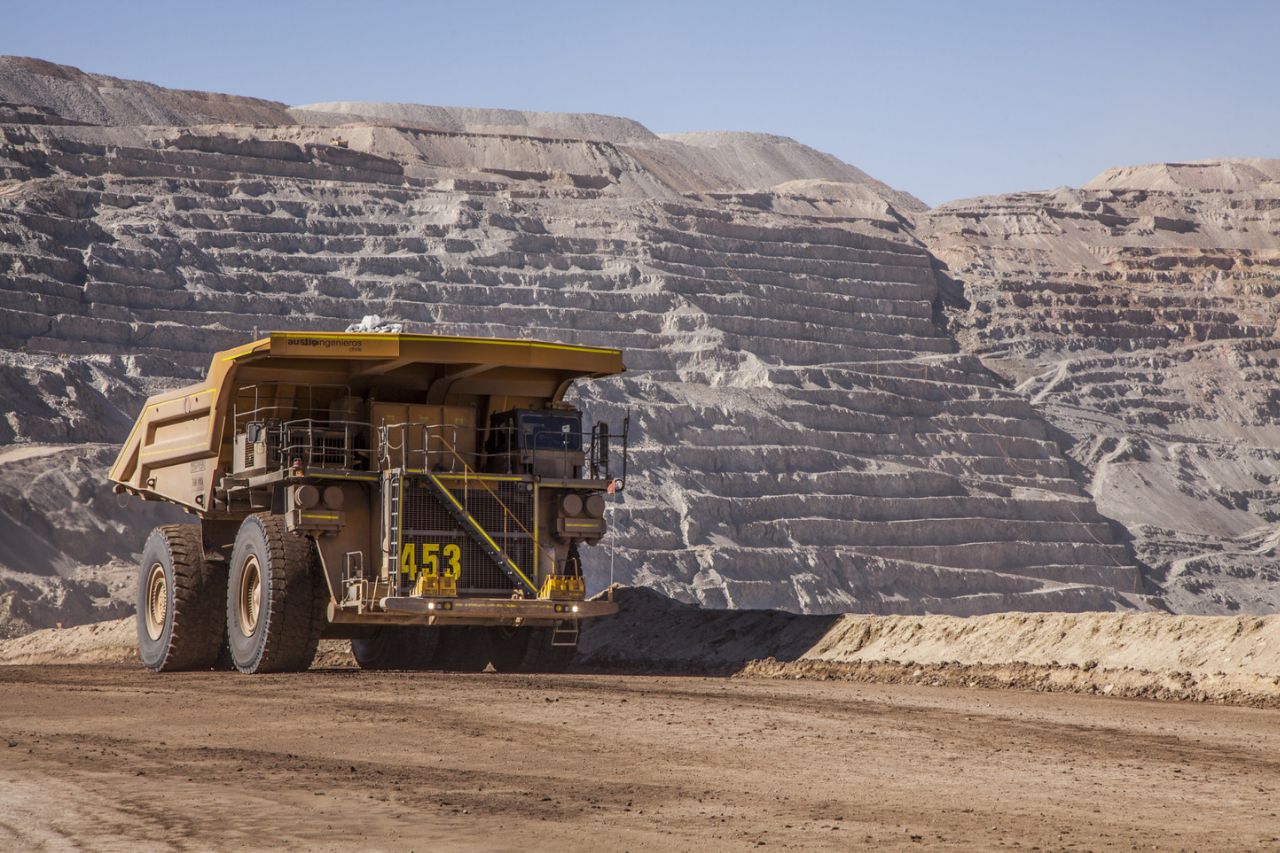
Argentine Patagonia region is shaping up as the country’s main source of new jobs in the coming years, on the back of multibillion-dollar oil and mining investments championed by President Javier Milei’s government, according to the latest report from the Fundación Mediterránea think tank. The southern part of the country region is the largest beneficiary of the Large Investment Incentives Regime (RIGI, for its acronym in Spanish), approved by the government in late 2024, and ranks first with announced investments totaling US$12.284 billion. “Neuquén and Río Negro stand out, thanks to a range of large-scale shale oil and gas projects and the infrastructure tied to the Vaca Muerta fields, cementing the region as a destination for energy investment,” the report said. As a result, Patagonia is also the region poised to create the most jobs, with an estimated 35,564 new positionsjobs. More than half of those are accounted for by Neuquén — the epicenter of Vaca Muerta’s oil boom — where a single gas and oil project alone is expected to generate 19,000 jobs. Fundación Mediterránea noted that the figure “shows that this industry, although capital-intensive, generates a chain of services and construction with a significant multiplier effect at the local level.” The new economic engine Several recent studies have highlighted the boost these resource-driven investments are providing to the region, even amid an otherwise unfavorable backdrop. A recent report from Universidad Austral found that southern Argentina has emerged as the country’s growth engine in recent quarters, outpacing the central region, which has historically been tied to industry and agriculture. Monthly growth in the southern region between February 2025 and February 2026 was 0.5%, well above the national average of 0.15%, according to Indec’s Monthly Economic Activity Estimator (EMAE). Universidad Austral analysts said this amounts to structural expansion “in line with the energy sector’s momentum — Vaca Muerta — where heavy investment is flowing into unconventional oil and gas, and into the infrastructure needed to export it.” A productive shift in real time “This shift in how the economy is organized raises important questions for economic policy and the public debate,” the Universidad Austral team said. The experts explained that Argentina is undergoing a remaking of its production base, “in which traditionally central sectors are losing relative weight against new activities tied to natural resources and energy.” The Cuyo region of Cuyo (Mendoza, San Juan, San Luis) is another area where activity is growing above the national average, with monthly growth averaging 0.2%, according to the Austral report. That tracks with Fundación Mediterránea’s findings, which highlighted Cuyo as another major winner from the shift, emerging as the second-largest destination for investment with US$10.146 billion in announced fundinginvestments. That investment is also expected to boost job creation, with an estimated 27,575 new jobs, according to Fundación Mediterránea. The Nnorthwest region comes in third, with US$7.705 billion in announced investment — most of it linked to the “lithium triangle” — and an estimated 11,150 jobs. “The new macroeconomic context has already begun to shift the national map of production and employment, and we will most likely see this trend consolidate in the years ahead,” said Gerardo Alonso Schwarz, an economist at Fundación Mediterránea. “That’s why we need smart coordination between federal, provincial, and municipal governments, to align incentives and make it easier to channel investment — and therefore job creation — into every region of the country,” he added.
CONMOCIÓN: murió Rosa del Valle Rasgido
 notienredSeptember 13, 20260

Claudio Barrelier reveló por qué mató a Agostina Vega: Obsesión por la
notienredSeptember 13, 20260

Asesinaron a Alfredo Wiebel y se dieron a la fuga
notienredSeptember 13, 20260


Clima en Ciudad de Buenos Aires: sábado 12 de septiembre
Sábado en la Ciudad de Buenos Aires con una temperatura máxima de...
 WindwhistlerSeptember 13, 20260
