
Argentina deepens nuclear cooperation with US on next-generation reactors
 Juan Marcos PollioJune 7, 20263 Mins read
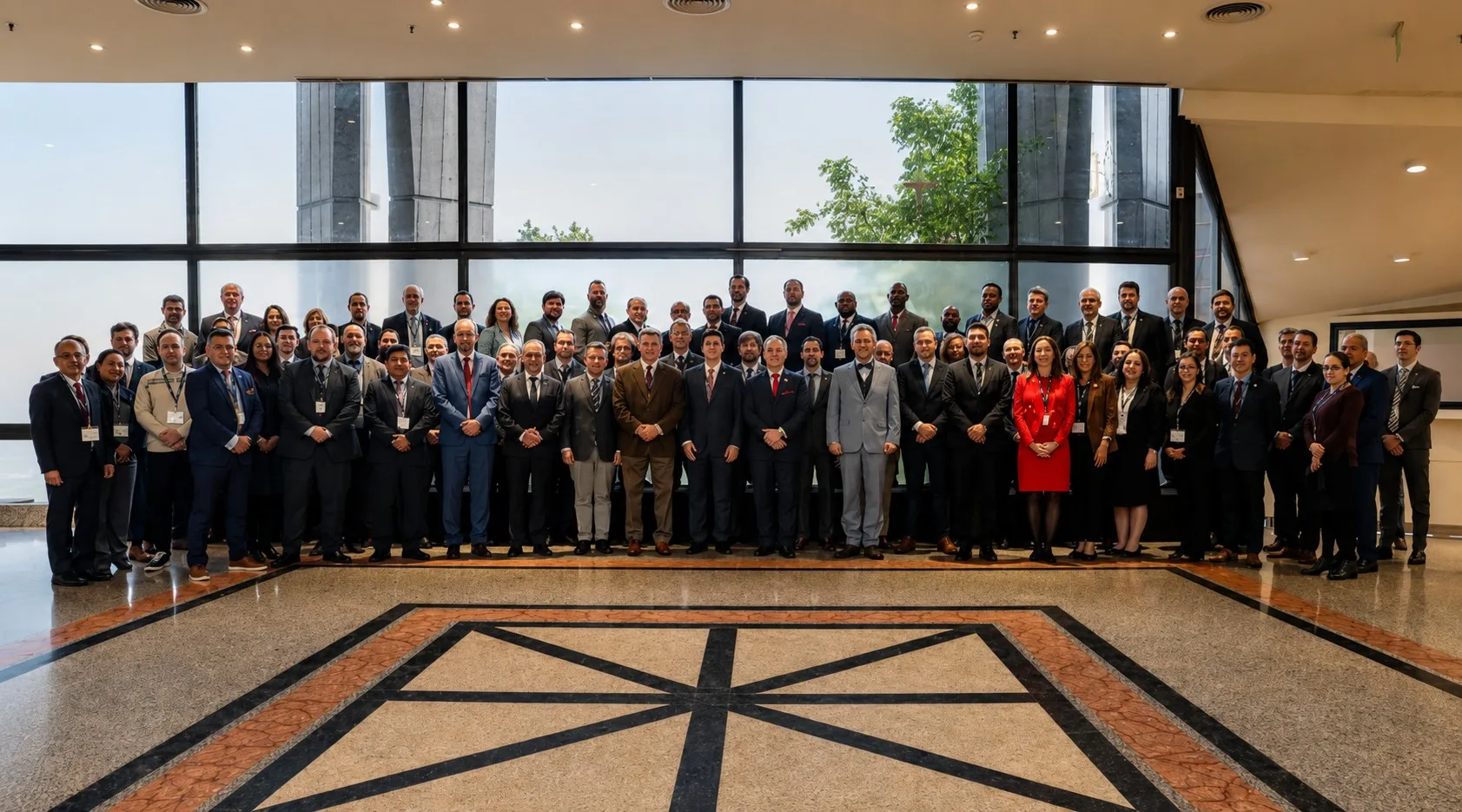
Argentina recently hosted the fourth annual Latin America and Caribbean edition of the U.S.-led Foundational Infrastructure for the Responsible Use of Small Modular Reactor Technology (FIRST) program, a regional nuclear technology workshop organized by the United States. Argentina joined as a contributing partner of the program in September 2025, becoming the first Latin American country to enter the category. This is the first time they have hosted the event. The development comes on the heels of the announcement made by Javier Milei’s government that they were taking their nuclear policy in a new direction, now focused on exporting services and attracting foreign investment. Federico Ramos Napoli, the Milei administration’s nuclear affairs secretary, said that Argentina has more than 70 years of experience in the peaceful use of nuclear energy. He added that having the workshop in the country reflects a “commitment to working alongside the United States” and its allies. U.S. Ambassador to Argentina Peter Lamelas said his country “is leading the development of advanced nuclear technology” and that the partnership with Argentina “generates jobs, investment, and new opportunities for both countries.” The workshop, which took place between June 2nd and 4th, also featured Christopher Yeaw, U.S. deputy assistant secretary of state for arms control and nonproliferation. “The nuclear energy technologies of the United States and our partners in this room remain the safest and most advanced in the world. That’s why we believe we are the partner of choice for countries looking to expand their civilian nuclear programs,” the U.S. official said. The event also brought together experts from Chile, Costa Rica, Ecuador, El Salvador, Jamaica, Mexico, Paraguay, Peru, and the Dominican Republic, as well as from other FIRST partner countries, including Canada, Japan, and the United Kingdom. The interest in Argentina The official statement from the Trump administration explained that FIRST works with countries “exploring their potential in nuclear energy, including the use of small modular reactors (SMRs) to meet their energy needs.” The emphasis on SMRs was also flagged by Martn Porro, president of the National Atomic Energy Commission (CNEA), who said the event highlighted “international recognition of Argentina’s capabilities to support the region in developing SMRs.” Argentina has significant experience in the SMR field, thanks to its development of the CAREM reactor. It was set to be the first nuclear reactor designed and built entirely with Argentine technology, but its development was halted under the Milei administration. In late 2024, then-CNEA president Germn Guido Lavalle had said in an internal memo that the CAREM reactor’s design was not commercially viable. Going forward, he added, the commission would look into other SMR designs. That led the Milei administration to set its sights on the Argentine company INVAP, which had patented the design of the ACR-300, another type of SMR, in the U.S. In March 2025, then-president of state-owned Nucleoelctrica Argentina Demian Reidel said the government would build four of those INVAP-designed reactors at the Atucha complex, with the first reactor expected to come online by 2030. Since then and especially after Reidel’s resignation in February of this year amid corruption allegations there have been no official updates on the project. In fact, the latest overhaul of Argentina’s nuclear policy, announced last Sunday, made no mention of that initiative. Still, the project doesn’t appear to have been shelved. In May, Meitner Energy made its public debut. The firm holds a 40% stake in INVAP and owns the patent for the ACR-300. On its website, it describes the design as “the only SMR designed to be scalable and profitable.” Why are SMRs so important? Nuclearis nuclear company CEO Santiago Badran told the Herald that ever since it took off in the 1950s, the nuclear industry has “followed a trend of building ever-larger reactors, going from a few hundred megawatts to units of up to 1,700 MW.” He explained that while those large plants can supply electricity to millions of people, they come with a major weakness. “If one were to fail and go offline suddenly, millions of people would be left in the dark.” As a result, the approach to building nuclear plants began to shift in the 1990s as the SMR concept gained ground a development “driven by the search for lower upfront costs, faster construction, and serial manufacturing.” “Instead of depending on a single high-power unit, several smaller units could be distributed across a country, providing greater supply security,” he said. Even so, the profitability of SMRs remains under scrutiny. With more than 70 projects in development around the world, only two are currently in commercial operation: Russia’s KLT-40S, in service since 2020, and China’s HTR-PM, online since 2023 both with longer development timelines, higher costs, and lower capacity than originally expected. Despite that, Badran stressed that interest in smaller and smaller reactors hasn’t stopped growing in recent years. In fact, Nuclearis is currently developing a Micro Modular Reactor (MMR), “an even smaller category, between 10 and 50 MW, designed for remote applications, mining, and data centers.” Cover image: Group picture of the fourth annual Latin America and Caribbean edition of the U.S.-led FIRST program held in Buenos Aires (Credit: Argentina.gov)
CONMOCIÓN: murió Rosa del Valle Rasgido
 notienredSeptember 13, 20260

Claudio Barrelier reveló por qué mató a Agostina Vega: Obsesión por la
notienredSeptember 13, 20260

Asesinaron a Alfredo Wiebel y se dieron a la fuga
notienredSeptember 13, 20260



Clima en Ciudad de Buenos Aires: sábado 12 de septiembre
Sábado en la Ciudad de Buenos Aires con una temperatura máxima de...
 WindwhistlerSeptember 13, 20260
