
A look at the reform aimed at creating non-human companies
 Juan Marcos PollioJune 9, 20265 Mins read
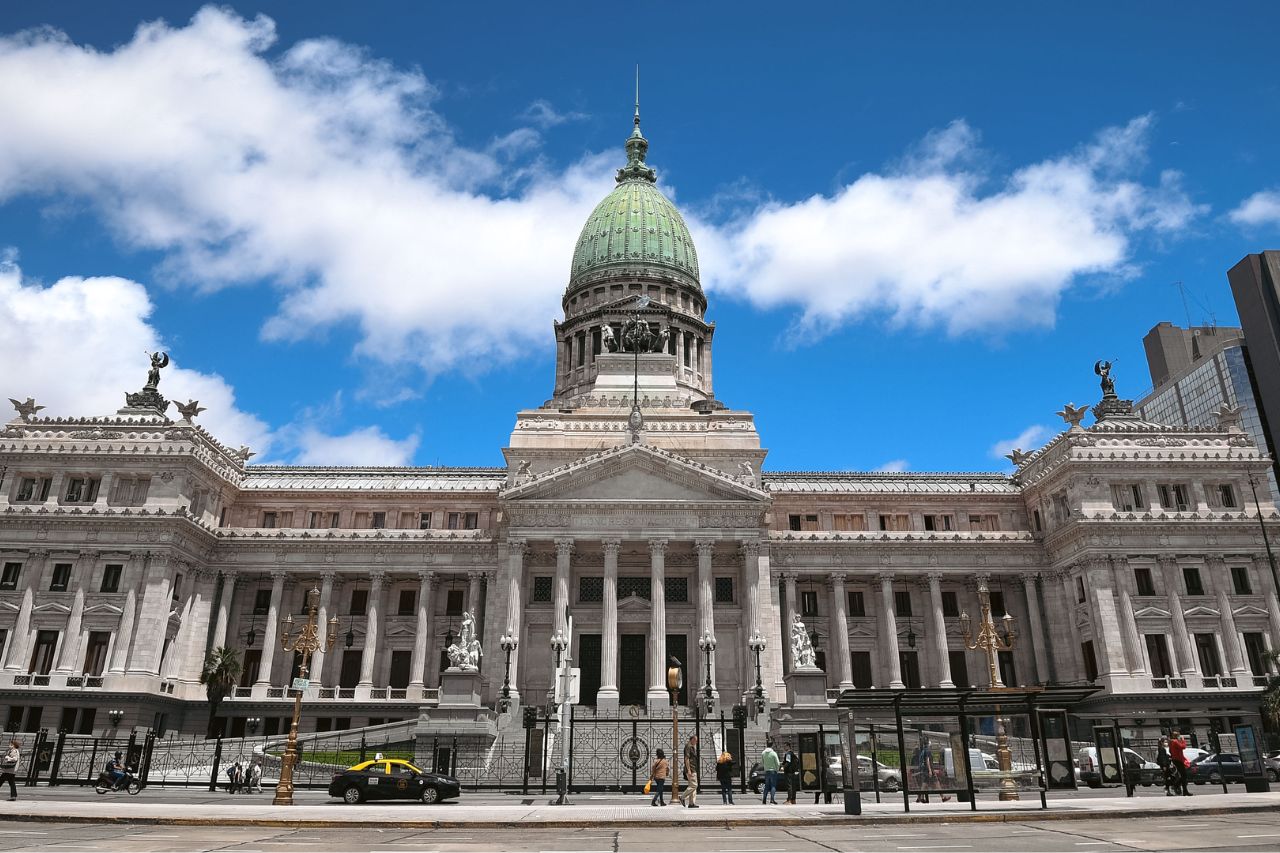
It is no secret that President Javier Milei wants to position Argentina as the ideal destination for investments in the technology sector. A bill sponsored by Deregulation Minister Federico Sturzenegger, which was recently sent to the Argentine Congress, is a concrete step in that direction. If the initiative, which seeks to reform the General Companies Act, is approved, it would grant legal status to “non-human companies”— i.e., managed exclusively by AI — and would also create the legal entity of decentralized organizations. The Companies Act regulates the creation, operation, and dissolution of companies operating in Argentina. Under the guise of modernizing it — the law dates back to the 1970s — one of its main changes would be introducing the concept of an “automated company.” According to a report by the Legal and Social Sciences School at the National University of La Plata (in Spanish, UNLP), this means “a company that can operate completely autonomously through algorithms or artificial intelligence, without the need for employees for its day-to-day operations.” The legislation “enables a business model where decision-making and the execution of operations are handled by the automated system, not by individuals during working hours.” María Eugenia Lafuente, the general counsel for the multinational legal and business advisory firm Binder Dijker Otte (BDO) in Argentina, told the Herald that, “if approved, the draft bill will be the first legislation of its kind in the world.” According to attorney Pablo Serdán, the closest thing to an automated entity is AI agents. This means systems that “execute operations, enter into contracts, and move funds on their own, for example, in trading.” He clarified, however, that they “always exist within a company with human owners.” “What is unprecedented about the bill is that it would give that agent its own legal entity, with limited liability and without requiring a human behind it. It is an experiment, not a copy of a proven model,” he explained to the Herald. Companies with no employees — and no accountable parties? The bill clarifies that these AI-run companies must identify themselves as such in their articles of incorporation. They will also be liable with their assets “for damages caused by their autonomous algorithmic systems or artificial intelligence agents.” For Serdán, this regulation means three things, and “all three are a problem.” First, he explained that, in the event of harm, “the AI isn’t sued: the company is sued, and compensation is paid up to the limit of its assets. If the damage exceeds that capital, no one pays the rest. The victim absorbs the difference.” Second, it implies that no personal liability is possible. “A human can be disqualified or, in serious cases, criminally prosecuted. An algorithm cannot. The only penalty is financial, and it is limited by design.” Finally, he explained that, to determine what went wrong, the code must be reviewed, but the bill protects that code from scrutiny, except by court order. “The victim has to go to court first, just to be able to see what caused the damage, and by then the harm has already been done.” He emphasized that under Argentine law, companies are not criminally liable for crimes; rather, it is the individuals with legal responsibility who are. This would not occur in a company of this type, since they do not have human officials who can be charged with any non-economic crime. “These types of organizations tend to hide the true perpetrators. That is why the Financial Action Task Force (FATF) views them with suspicion, and that is precisely why serious countries do not promote them.” Decentralized and automated companies Another change is the creation of companies operating as DAOs, an acronym for decentralized autonomous organizations. These companies record their operations using blockchain technology — the same technology used by cryptocurrencies — and follow predefined guidelines in automated agreements known as smart contracts. “Unlike automated companies, whose operations rely on centralized algorithms, DAOs are based on smart contracts and a power structure distributed among their members,” the UNLP representatives explained. While acknowledging that she is not aware of any DAOs currently operating in Argentina, Lafuente, from BDO, explained that, unlike automated societies, there are indeed regulations governing them in various parts of the world. One of the first sovereign nations to recognize DAOs was the Marshall Islands in 2022. The Cayman Islands and the Bahamas have a figure known as foundation companies, which act as the “legal umbrella” for DAOs. Within the U.S., for example, Lafuente highlighted the case of Wyoming, which passed its own law to attract DAOs in 2021 and was later followed by Vermont, Utah, and Tennessee. In Europe, for example, she cited the case of Switzerland, where DAOs are typically structured under the legal framework of Swiss associations or foundations. The Cardano Foundation, for instance, operates representing the blockchain platform and cryptocurrency of the same name. Cardano’s ambassador in Argentina, Mauro Andreoli, explained to the Herald that “the Cardano blockchain decides autonomously, like a large DAO, how to spend the treasury budget. It is not decided by an executive body.” “Any individual in the community submits a proposal, it is voted on by the various holders, and that amount of funds is awarded to the person who made the proposal,” he added. Andreoli clarified that DAOs “are an older concept than they appear.” The first ones, which appeared between 2017 and 2018, are currently “being used less and less.” In any case, he noted that this is a proposal that will bring “legal certainty to investors or to technology development or financial infrastructure companies.” “For large investors, [this change] can serve as collateral to guarantee the existence of that proportional share of equity, and even enforce it in court,” he stated. In other words, the tokenized shares acquired could be used as financial collateral and recognized by the Argentine courts. The problem of identification Serdán, however, is also skeptical of the DAO model. He mentioned the promise made by Milei in his column in the Financial Times, in which he pledged that such companies would disclose who their ultimate beneficiaries are so as not to serve as a haven for illicit funds. “It sounds good. The problem is that identifying the owners is exactly what these structures are designed to avoid, and we’ve already seen it fail elsewhere,” he said. He cited the case of Wyoming, whose regulations, he claimed, did not attract DAOs. “They required them to disclose owners, which is impossible with thousands of anonymous members. They had to invent another entity in 2024 — the Decentralized Unincorporated Nonprofit Association (DUNA) Act — to circumvent that requirement.” He also mentioned the case of Malta, which ended up on the FATF’s gray list for failing to guarantee who was behind those projects. Finally, he warned that the very reform Milei is pushing prohibits auditing the code of the smart contracts that govern DAO operations except by court order. “Even the most lax jurisdictions, such as the Marshall Islands, maintain a human point of contact — they require an identifiable registered agent. It is worth asking what level of control Argentina retains if, in addition to joining that club, it prevents the code from being audited,” he concluded.


CONMOCIÓN: murió Rosa del Valle Rasgido
 notienredSeptember 13, 20260

Claudio Barrelier reveló por qué mató a Agostina Vega: Obsesión por la
notienredSeptember 13, 20260

Asesinaron a Alfredo Wiebel y se dieron a la fuga
notienredSeptember 13, 20260



Clima en Ciudad de Buenos Aires: sábado 12 de septiembre
Sábado en la Ciudad de Buenos Aires con una temperatura máxima de...
 WindwhistlerSeptember 13, 20260
