
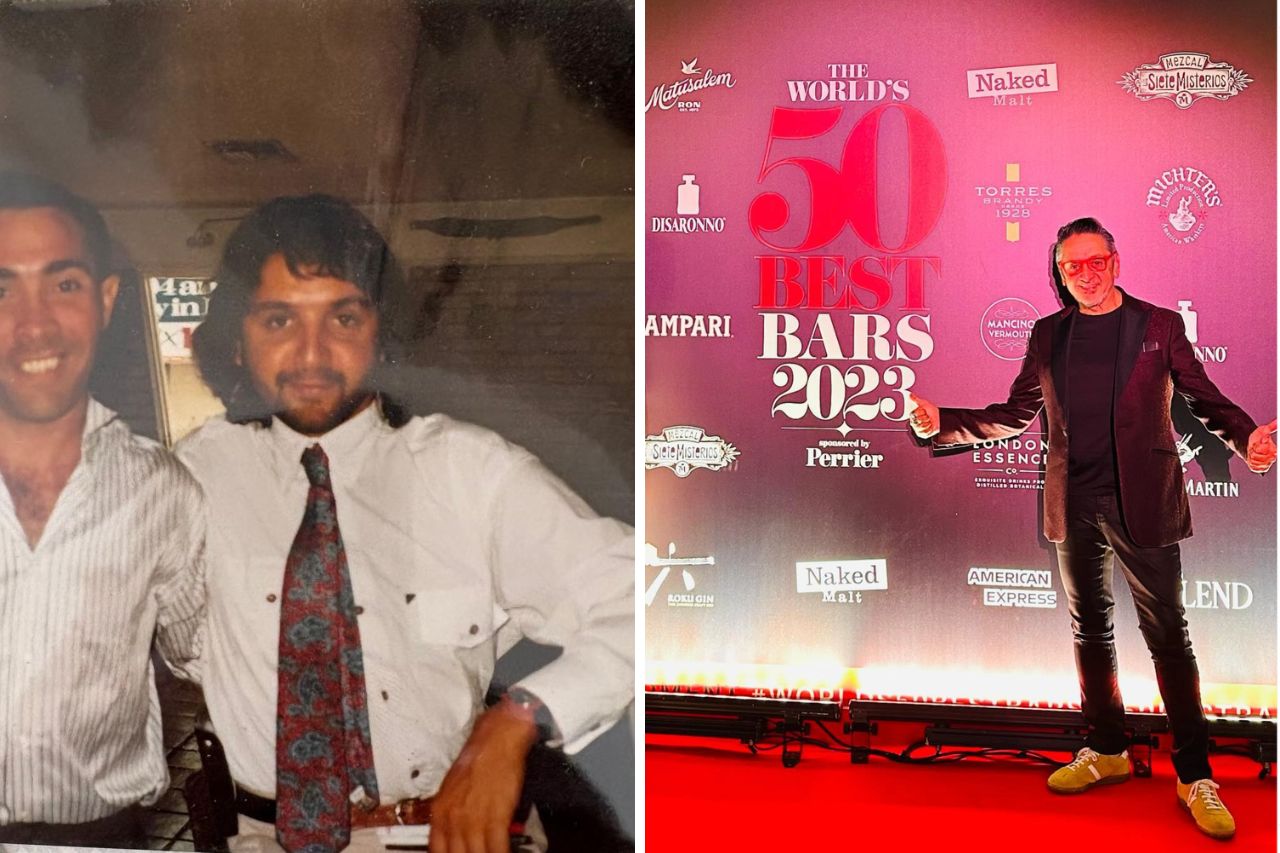

Three alerts have sounded this past week as a timely reminder that when a light breeze lifts leaves from the slow path, let it show you the way. The first clang was taking a supposedly fast train from Madrid to San Sebastián in the Basque Country last Sunday. I understood fast to mean ‘train with Wi-Fi’, perhaps it was more hope on my part because the eternal optimist thought I’d be able to finish preparing for two classes that I was giving the following day at the Basque Culinary Centre, but to no avail. I almost finished reading the page-flicking spy thriller Slow Horses. (And it certainly wasn’t Latin lateness on my behalf; the esteemed establishment had sent over the necessary documents the Friday before.) The second clang was the overnight plummet of some 50 followers on my social media account. It seemed odd so I consulted the Internets to ask what was going on, and it turned out I was in the most excellent company: Leo Messi had also lost out, around five million. But I later questioned my reaction. Why was I concerned? Why did I even notice? And why should it even matter? Time to adjust phone-use settings. And the third clang was a conversation with bar owner Tato Giovannoni, who recently opened an establishment in Washington DC. Taking the Florería Atlántico bar and Brasero Atlántico restaurant concepts to Barcelona (now shuttered) and Bahrain, Giovannoni joined forces with fellow Argentine hospitality entrepreneur Alex Resnik a few years ago to set up The Hierophant Group, for which Georgetown was the location for the most recent opening. Resnik at Florería Atlántico Barcelona In our chat, Giovannoni shed some light on how Resnik got started: “His first job in the US was cleaning bathrooms.” I’ve known Resnik for some years, meeting him in Uruguay when his former partner, Austrian chef Wolfgang Puck, teamed up with Francis Mallman to cook at Bodega Garzón (Puck is the culinary icon who has catered Hollywood’s Oscars Governors Ball for more than 30 years, legit gastro glitterati.) Although Resnik actually started out washing dishes, in our fast-paced, image-led, consumer-driven world, it was refreshing to recall that hard graft, blood, sweat and tears pay off. One used to work their way up through the ranks; you’d start as a junior (in my case a junior sub-editor on B2B magazines in London), and understood that hard work and talent would prevail. So often I hear from owners that new members of staff aren’t prepared to be barbacks and learn how to prep, believing they should be slinging cocktails days within starting work. With a need to feel instantly gratified, they aren’t able to appreciate how essential it is to learn all aspects of running a bar, gaining valuable experience and knowledge. Tato Giovannoni (left) & Alex Resnik (right) Cheered to learn of someone in hospitality who started in the most humble of ways in the US almost 40 years ago — and still loves what he does — I wanted to know more about Resnik’s beginnings as a migrant in a new country; much of his story resonates with the same reasons as today’s generation seeking opportunities. “Under very tough financial circumstances in Argentina, my wife and I left with our three-year-old for Los Angeles in January 1989,” he tells me. “I didn’t speak any English, in fact, I don’t have any formal education; I was kind of a useless individual, but I did have a very strong desire to develop a future for my family.” California was an obvious destination for the Resniks, as some family members already lived there. It proved to be a key link when he agreed to deliver a pair of shoes to a fellow Argentine, who, unknown to him, was already in the steakhouse business there. “I met Adolfo Suaya’s mother by coincidence while buying shoes on Santa Fe Avenue in Buenos Aires. In my exchange with the salesman, she overheard I was moving to Los Angeles, and she asked if I could kindly deliver some shoes to her son. I said yes and took them to LA that January,” says Resnik. Suaya’s Gaucho Grill in Hollywood had already racked up acclaim, and he hired Resnik as a dishwasher. “He was kind enough to give me my first job, and I eventually became his operations’ vice president, opening nine Gaucho Grills between Santa Monica and Pasadena. Adolfo was my first boss, and I will always be grateful to him because he gave me the opening that, with a lot of hard work, I took.” Resnik’s big break came after leaving Gaucho Grill to open his own project in 1997. Porters, in Brentwood, was a modern steakhouse, ahead of its time, in my words, but “when nobody was doing modern steakhouses,” in Alex’s. “A terrible performance on my part. I behaved absolutely incompetently, raising money without any business plan or planning, no vision, just pure emotion,” he recalls. That wasn’t enough to do good business, and he closed down a year later. “I lost everything. For the first time in my life, I had been able to save money, but I lost it all in one year. Fortunately, I was able to repay the investors, but I lost everything I had.” Yet Resnik’s biggest failure became his biggest break. Not even being able to return to his original job washing dishes, it took four months to find work. That’s when he was hired by Wolfgang Puck in 1998, their professional relationship endured 24 years, culminating with Resnik as worldwide operations director. And today, as managing partner of The Hierophant Group, he’s just celebrated a year operating in Bahrain, relishing the challenges in this new market. It’s ideal timing to take stock. Resnik at the future Brasero Atlántico in Bahrein “My big break was failing as an entrepreneur and my ability to look in the mirror and be at peace with my weaknesses and incompetency — that’s my biggest asset,” he says. Sometimes the slow way, riding a slow horse, is in fact the best way.

CONMOCIÓN: murió Rosa del Valle Rasgido
 notienredSeptember 13, 20260

Claudio Barrelier reveló por qué mató a Agostina Vega: Obsesión por la
notienredSeptember 13, 20260

Asesinaron a Alfredo Wiebel y se dieron a la fuga
notienredSeptember 13, 20260



Clima en Ciudad de Buenos Aires: sábado 12 de septiembre
Sábado en la Ciudad de Buenos Aires con una temperatura máxima de...
 WindwhistlerSeptember 13, 20260
