
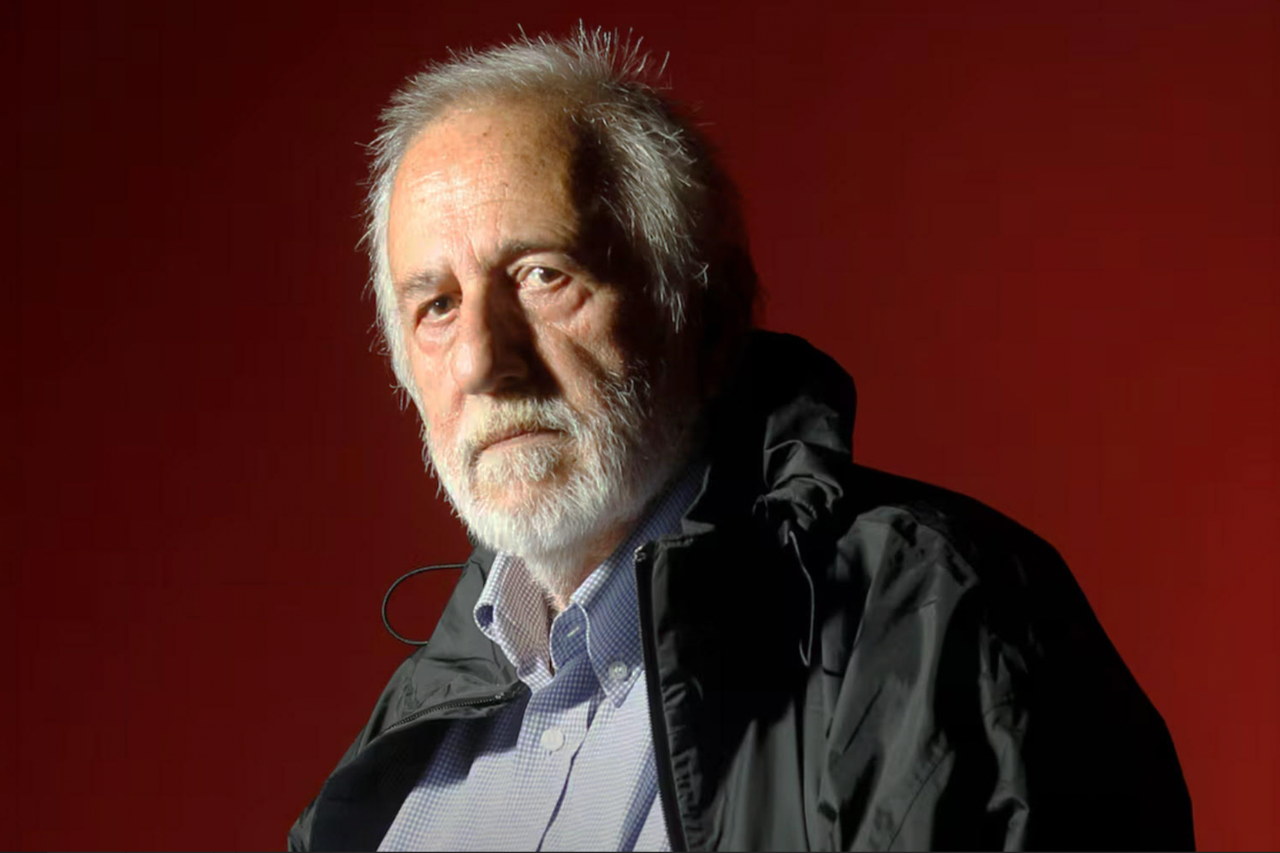

Adolfo Aristarain, perhaps the last classic director in Argentine cinema, died on Sunday at the age of 82. Either through his early light comedies, film noirs, or thoughtful character-based films, Aristarain’s solid storytelling always delivered a determined political stance — either outspokenly or covertly — through the tropes of his beloved classic Hollywood cinema. Born in Parque Chas, Buenos Aires, Aristarain began his career in the early 1960s as an assistant director. In that role, he worked in popular Argentine films like Daniel Tinayre’s La Mary and Emilio Vieyra’s The Great Adventure, but also under renowned directors like Spain’s Mario Camus, and spaghetti western legend Sergio Leone in Once Upon a Time in the West (1968). In 1978 he directed his first film, The Lion’s Share, a Buenos Aires-set film noir about a regular man struggling to succeed (played by Julio de Grazia) who stumbles upon a hidden cash loot and finds himself chased by the two criminals who committed the robbery. Played by Julio Chávez and Ulises Dumont, Aristarain based the duo on the assassins from Robert Siodmak’s original classic The Killers. In 1980, he directed two summer comedies (The Beach of Love and The Disco of Love) starring a very young Ricardo Darín that featured musical bits, meant to promote artists from record company Microfón. Within these seemingly light-toned films, Aristarain managed to start slipping social commentary into the stories. Time for Revenge In Time for Revenge, released in 1981 during the military dictatorship, Aristarain used the story of Pedro Bengoa (played by his regular leading man Federico Luppi), a former union delegate who confronts a huge corporation after a labor accident leaves him unable to speak, to mirror state repression at the time. Bengoa’s silence and moral resistance went unnoticed by authorities as an allegory of censorship, fear and corporate complicity during the dictatorship. In 1982, he did it again in his adaptation of José Pablo Feinmann’s novel Last Days of the Victim. The film features a retired hitman (Luppi) who is hired to follow and kill a man. Published in 1979, the book — an insight into paranoid power and constant surveillance — had managed to slip under the military dictatorship’s censorship. Between Argentina and Spain He also worked in Spanish television and directed an English-speaking thriller for Columbia Pictures entitled The Stranger, before what would become one of his most popular films, Un lugar en el mundo (A Place in the World) in 1992. Again starring Luppi alongside Cecilia Roth and José Sacristán, the film depicts a family of former activists trying to run a rural school and wool cooperative together with a progressive nun in San Luis province. The film, which he co-wrote with Alberto Lecchi and his Uruguay wife Kathy Saavedra, was submitted as Uruguay’s bid for the 1993 Oscars. The film was included in the nominations for best film in a foreign language, but the Academy later withdrew the nomination because the movie was considered an Argentine production, and the country had already submitted Eliseo Subiela’s El lado oscuro del corazón. A Place in the World film won the Goya for best Ibero-American film that year. A Place in the World (1992) Also in Spain, Aristarain made La ley de la frontera (Spanish for ‘The law of the frontier’), a 1995 western/adventure film in the style of John Ford and Howard Hawks, set in early 20th century Galicia. In that country, he also shot most of Martin (Hache), his most successful film, about a disoriented young man’s relationship with his cynical father. A co-production with Spain starring Juan Diego Botto and Federico Luppi, the film was a box office hit at the time, selling almost 400,000 tickets in Argentina and more than 500,000 in Spain. Final stage After a long hiatus, Aristarin returned in the early 2000s with two crepuscular movies, in which he dealt with issues like old age, marriage and outdated political ideas. Based on a novel by Aristarain’s cousin Fernando Aristarain and co-written by the filmmaker and his wife, the 2002 drama Common Grounds depicts a literature professor who is forcibly retired from his university position amid Argentina’s economic crisis. Unable to find work, he and his wife decide to sell her family’s apartment and move to a small farm near Villa Dolores to reduce their expenses and become lavender farmers. A quiet-paced family drama, the film bluntly delivers Aristarain’s thoughts on issues like parenthood, love, class, and political history. The film won the Goya for best adapted screenplay. Aristarin’s last film, Roma (2004), was an almost autobiographical story about a successful writer (José Sacristán) trying to tell his life story to a biographer, played by Juan Diego Botto. José Sacristán (left) and Juan Diego Botto (right) in ‘Roma‘ Starring Susú Pecoraro as the character’s mother and Botto in a second role as the writer’s younger version, the film was both a young boy’s coming of age story and a nostalgic reflection on decades of Argentine politics, film and music history. In 2022 he published the book The Craft of Cinema, which included some of his complete screenplays as well as his thoughts on film and the audiovisual industry. “Filmmaking is a ruthlessly treacherous profession for those who practice it, “ Aristarain said upon receiving the Gold Medal at the Spanish Film Academy in 2024. “Even if you try to hide who you are, sooner or later a director unwittingly bares their soul in the foreground. You are the films you make.”

CONMOCIÓN: murió Rosa del Valle Rasgido
 notienredSeptember 13, 20260

Claudio Barrelier reveló por qué mató a Agostina Vega: Obsesión por la
notienredSeptember 13, 20260
Asesinaron a Alfredo Wiebel y se dieron a la fuga
notienredSeptember 13, 20260



Clima en Ciudad de Buenos Aires: sábado 12 de septiembre
Sábado en la Ciudad de Buenos Aires con una temperatura máxima de...
 WindwhistlerSeptember 13, 20260
