
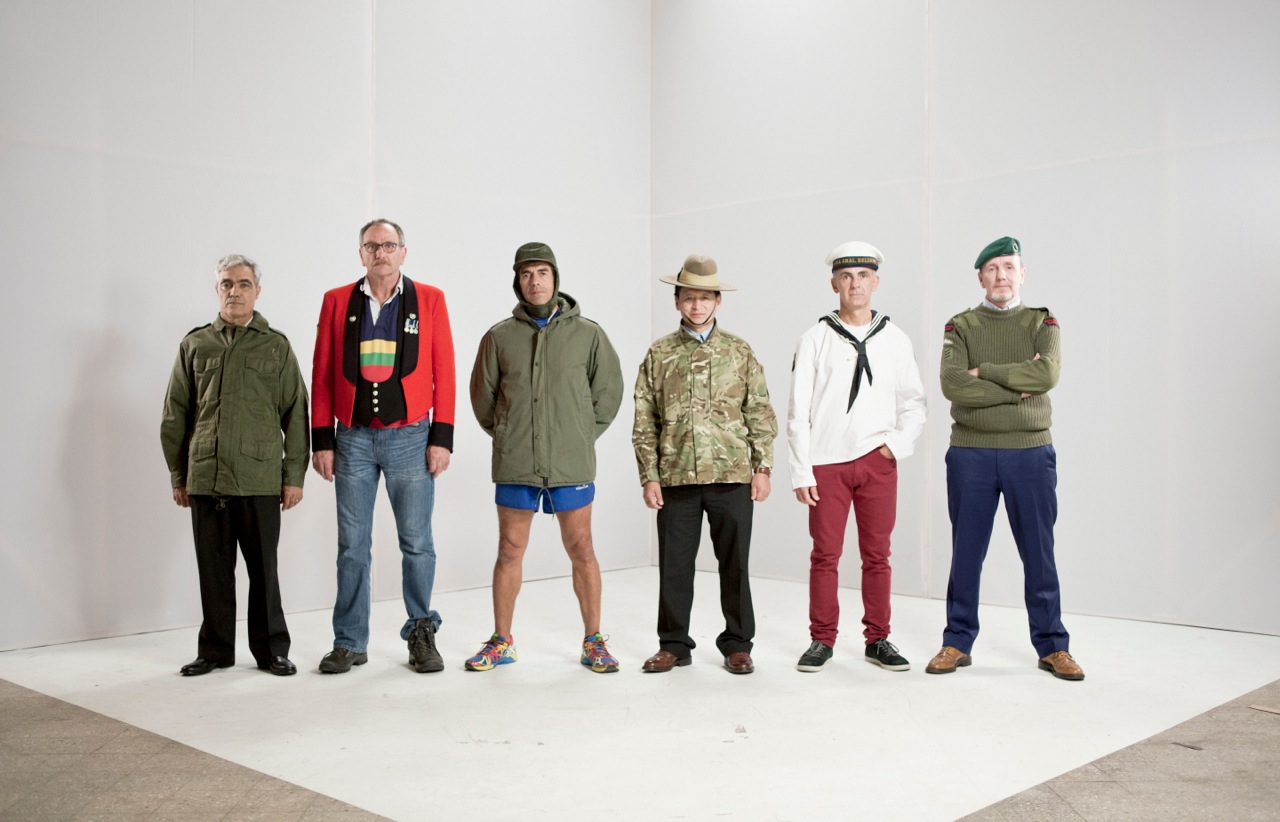
Into the Minefield: Buenos Aires Herald hosts acclaimed Malvinas play
 Buenos Aires HeraldJune 9, 20264 Mins read
Argentine playwright Lola Arias’ acclaimed Mavinas War piece Minefield will return to the stage ten years after its first presentation as part of the celebrations for the Buenos Aires Herald’s 150th anniversary. The play, a reflection on the war that brings UK and Argentine veterans together on stage, will be produced by Daniel Grinbank and the British Council and run at the Coliseo Theater in Buenos Aires in November. The confirmed shows will run from Thursday, the 19th, through Sunday, the 22nd, all starting at 8 p.m. Minefield, which premiered at the London International Festival of Theater in 2016, is a documentary drama that includes live music and audiovisual resources. The performers are former military: three from Argentina, two from Great Britain, and one from Nepal (an elite soldier known as a Gurkha), all real Malvinas War veterans who revisit their war experiences before a live audience. Diving into the minefield “As the aircraft took off, I began to think about how the Argentine junta would take political activists and throw them out of an aircraft into the South Atlantic Ocean — and I was terrified they were going to do that to us.” The audience hears this true story from one of the performers, a former British soldier stationed at the Malvinas Islands in 1982 who was later captured by Argentine forces. The soldier’s capture made headlines on April 2, and his picture surrendering became iconic. Originally played by Lou Armour — the actual soldier who was photographed — he was later replaced by former Royal Marine Tip Cullen after Armour left the cast for personal reasons. The other veterans all have similarly compelling stories they share on stage. Argentine Rubén Otero survived the infamous sinking of the General Belgrano cruise ship after it was torpedoed by a UK submarine outside of the exclusion area. He now plays in a Beatles tribute band. David Jackson spent the war listening to and transcribing radio codes and now listens to fellow veterans as a psychologist. Gabriel Sagastume was a soldier who never wanted to fire a weapon and is now a criminal defense lawyer. Sukrim Rai was a Gurkha who mastered the use of his kukri knife and now works as a security guard. Marcelo Vallejo was a mortar gunner who struggled with substance abuse after the war and is now a triathlon champion. On stage, the six veterans tell their own stories using a mix of spoken word, music, archival material, and reenactments. They also role-play political figures, such as the late Prime Minister Margaret Thatcher and Argentine dictator Leopoldo Galtieri, adding layers of irony and reflection to the narrative. The veterans are playing a role but also performing as themselves, revisiting traumatic experiences that continue to shape their lives. Walking straight into the minefield of trauma remembrance, the play is less a depiction of conflict or adversaries than an insight into memory — how it is formed, performed, and shared. Minefield unfolds in a hybrid space — a film set turned “time machine” — where performers shift between who they were during the war and who they have become since. The result is a living archive of memory, one that is at once political, personal, and profoundly human. The project began in 2013, when Arias started researching the long-term effects of war as part of an international artistic initiative. After interviewing dozens of veterans, she selected six participants, not only for their contrasting wartime roles but also for their willingness to revisit deeply personal memories. The creative process in fact became part of the piece: participants kept diaries, contributed to the script, and maintained control over how their stories were told, turning authorship into a collective endeavor. In 2018, Arias reimagined her play for the screen in the film Theatre of War, bringing the same Argentine and British veterans into a cinematic space. Blending documentary and fiction, the film deepened the play’s exploration of trauma, identity, and performance and was selected for the 68th Forum of the Berlinale Film Festival. The film received several prizes, including the Best Director award at the 20th Buenos Aires Independent Film Festival and the Silver Condor Award for Best Adapted Script. Bringing real life on stage Widely recognized for her innovative approach to biography, history, and collective authorship, Arias is considered a leading figure in contemporary theatre. She has a global reputation for creating projects that merge real-life testimony with staged performance. Arias has worked in documentary theater since 2007, creating over twelve plays in collaboration with people who have lived through different events and historical experiences. Her works — often featuring non-professional performers — have been presented at major festivals and venues worldwide. One of her most remembered plays in the Buenos Aires theater circuit, My Life After (2009) is based on the life stories of six performers who re-enacted their parents’ lives during the Argentine dictatorship (1976-1983). Her 2018 play What They Want to Hear is the reconstruction of the real case of a Syrian archaeologist trapped in German bureaucracy for years with no legal status. Her second feature film, Reas (2024), premiered at the 74th Forum of the Berlinale Film Festival. The film brings together stories of cis women and trans people who spent time in prison in a reinvention of the musical genre in documentary format, mixing the former inmates’ personal stories and experiences with music and choreography. Arias has also published poetry, fiction, and music albums and curated art performances and exhibitions. In 2024, she received the prestigious Ibsen Award, previously awarded to internationally renowned playwrights such as Jon Fosse and Peter Brook. “By bringing those whose stories are being told into the very process of shaping and performing the work, she has asked profound questions about ownership, agency, ethics, and artmaking,” the selection committee stated at the time. * Editorial disclaimer: Although the UK refers to the territory as the “Falkland Islands,” Argentina strongly contests this name. The Buenos Aires Herald uses “Malvinas” to refer to the islands.
CONMOCIÓN: murió Rosa del Valle Rasgido
 notienredSeptember 13, 20260

Claudio Barrelier reveló por qué mató a Agostina Vega: Obsesión por la
notienredSeptember 13, 20260
Asesinaron a Alfredo Wiebel y se dieron a la fuga
notienredSeptember 13, 20260



Clima en Ciudad de Buenos Aires: sábado 12 de septiembre
Sábado en la Ciudad de Buenos Aires con una temperatura máxima de...
 WindwhistlerSeptember 13, 20260
