
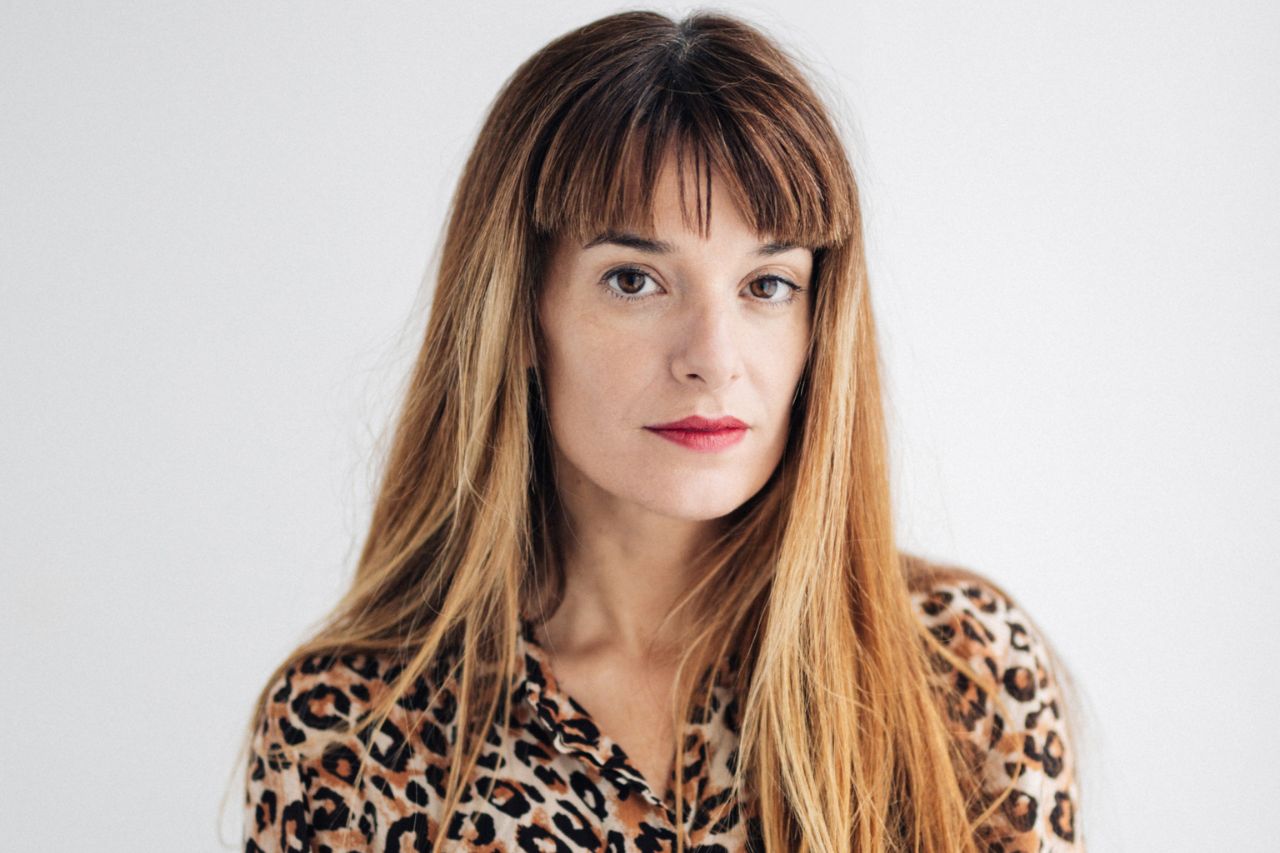
Playwright Lola Arias on war, hate, and the insanity of labeling artists state parasites
 Agustin MangoJune 9, 20266 Mins read
Ten years after Minefield transformed the Malvinas War into a haunting piece of documentary theater, Argentine playwright Lola Arias is still asking the same question that started it all. What does war do to the people who survive it? On a call from Berlin, Arias told the Herald that the play — which returns to Argentina as part of the celebrations for the Buenos Aires Herald’s 150th anniversary — was actually sparked by a British invitation. In 2012, the Battersea Arts Center in London asked her and other artists to participate in a series called After a War aimed at reflecting on the 100th anniversary of World War I. “As an Argentine woman raised in the 1980s, I started to think, what’s my relationship with war? And then Malvinas came up.” Two years later, Arias premiered Minefield at the 2016 London International Festival of Theater. Featuring six war veterans from Argentina, the UK, and Nepal, who revisit their war experiences in a documentary/musical setting, the play was an instant hit and toured in almost 40 cities around the world. The play will run in Buenos Aires in November at the Coliseo Theater, produced by Daniel Grinbank and the British Council. It has been 10 years since Minefield, a work of documentary theater that deals with actual people’s lives and memories of the war. How do you incorporate the passing of time into an ongoing play? The play was rewritten over the seven years the play toured — the last show was three years ago. Not a major rewrite, but new thoughts, memories, and details were added. The main change in recent years was that Lou Armour, one of the veteran English actors, left. We replaced him with another veteran who is also an actor. Obviously, the play bears witness to the passage of time because it’s impossible for a play about life itself not to reflect on time and its impact on people’s lives. The Malvinas issue, on the other hand, feels kind of stalled in political or diplomatic terms, where the only fresh perspectives seem to come through art. Have you noticed any new approaches? I was always very clear that sovereignty was never the central theme of the play. The play explores how war affects a group of men over time — they are now around 60 and went in to combat at 19 or 20. Another topic is this idea of whether the enemy exists. Whether it is possible to hear the pain of others or to understand the position of someone you were about to kill on a battlefield. The political issue of sovereignty appears as a point of disagreement. I think the play is more a reflection of what war does to people. Not only to the protagonists or the veterans, but also to society. That’s what makes it still relevant for so many people. Everyone has a memory, a connection — emotional, lived, or experiential — to Malvinas. In Argentina, Malvinas means something to everyone. It might be because they lost someone there, because they witnessed the war, because they were afraid the war would reach them, or because they were filled with hatred toward a country led by a demented mind like [former UK Prime Minister Margaret] Thatcher’s. I think the play focuses much more on our responsibility toward those who went to war. Whether we are capable of understanding the situation they were in, empathizing, and taking responsibility for what they went through for us. Minefield Minefield addresses the ultimate notion of enemy, which is the enemy in combat. How do you think that might resonate in a polarized society, supposedly immersed in a “cultural battle,” like the one Buenos Aires is today? The play explores the idea that we can coexist in disagreement. We don’t need to agree in order to relate to someone else’s pain or loss — and I think that’s incredibly valuable. Being able to listen, to be present, to coexist with that disagreement in order to try to create a space for connection. The play can be interpreted as an important space in political and social terms, as it is a neutral territory where former enemies meet again. A communal place where we can say, “We have to be able to listen to each other, even in disagreement.” One of the veterans, Marcelo Vallejo, was very outspoken about how he came out of the war full of hate, an emotion that seems to be ubiquitious these days. What Marcelo recounts is very interesting because he says that this hatred was also manufactured by other people who set up a certain narrative. He thought the Gurkhas had beheaded everyone, and he wanted to destroy them. But Argentine media were the ones who spun that idea. In reality, the Gurkhas didn’t even engage in combat. That hatred was manufactured — a phenomenon that echoes the hatred created by social media. It was also xenophobic, because it focused on the part of the army that wasn’t British. That’s when you realize that hatred is something fabricated by parties interested in creating a [specific] narrative. You have to be able to understand that this isn’t real. Indifference and manipulation in Argentina Arias began living between Argentina and Europe after her first documentary theater piece, My Life After, premiered in 2009. She moved to Germany permanently in 2019 due to the sustained institutional support for her artistic research. This was more difficult in Argentina, where political swings, she says, are an obstacle for long-term assistance. Would you like to work in Argentina again? Yes. What I want most is to work in Argentina again. But I’m not getting much of a reception from state-run theaters. I love working in Argentina, but right now I don’t see any institutional interest. We couldn’t even manage to restage The Days Out There, which only ran for a month at the Alvear Theater and then toured Europe for a year and a half. We did 27 performances, and it couldn’t be shown again in Argentina, because there’s no political will to stage a play like that again. Nobody seems to think it’s important to talk about what that play is about: the poverty, marginalization, and total helplessness experienced by more than 50% of the Argentine population, and the people who end up in jail are basically a result of that — a social disaster. You are also a filmmaker. What’s your take on what happened with cultural policies in recent years? Like the situation with the Argentine Film Institute? It’s heartbreaking. Destroying INCAA (the Spanish acronym for the Argentine Film Institute), striking down the Film Law, obliterating support for film production, and labeling artists as state parasites are all abhorrent actions committed by the government. The level of manipulation is terrifying. I think that’s what scared me the most about what happened in recent years. How artists were portrayed as people who were taking the bread out of people’s hands, consuming taxes. It’s insane. Themes and responsibility Settled in Berlin for the past 7 years, Arias has just premiered The Rape of Lucrece, A Casting, in Basel, Switzerland. The play, which focuses on sexual violence, reconstructs Shakespeare’s poem The Rape of Lucrece — the story of a woman who is raped by the son of the king her husband works for. As they attempt to reconstruct it on stage, the actors begin to speak about their own connections to sexual violence. The Rape of Lucrece, A Casting How did you come across the subject for your latest work? Stories of sexual violence have been haunting me for many years. Either from people very close to me or people I’ve worked with who ended up talking about sexual violence. Like those themes that follow you around until you decide to do something. What happened was that a student of mine in Bern, a survivor of sexual assault, did a project on the representation of rape in film. That confronted me with the problem of how sexual violence is represented and how we reproduce certain narratives by doing so in a particular way. That planted the seed for this work. I’m also working on a second piece based on the same topic but with a different angle with my former student. Women, gender minorities, war veterans, and immigrants were all subjects of some of your work. Do you feel working with victimized social groups such as these carries any kind of responsibility? I don’t usually think, “I have a responsibility to work with this group because they are marginalized.” My responsibility is different. Each of my works was born from a very deep desire to understand a problem and navigate it as an artist. I feel responsibility toward the people I work with. An artistic and ethical responsibility of representing them well. That the experience empowers them and gives them a new way to tell their stories, to understand what they’ve lived through. To discover something about their own experience. * Editorial disclaimer: Although the UK refers to the territory as the “Falkland Islands,” Argentina strongly contests this name. The Buenos Aires Herald uses “Malvinas” to refer to the islands. (Cover photo: Cherie Birkner)
CONMOCIÓN: murió Rosa del Valle Rasgido
 notienredSeptember 13, 20260
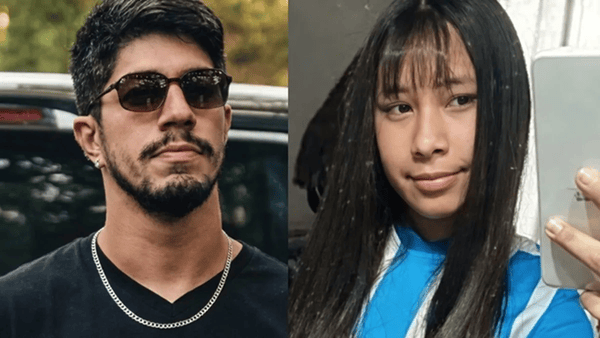
Claudio Barrelier reveló por qué mató a Agostina Vega: Obsesión por la
notienredSeptember 13, 20260
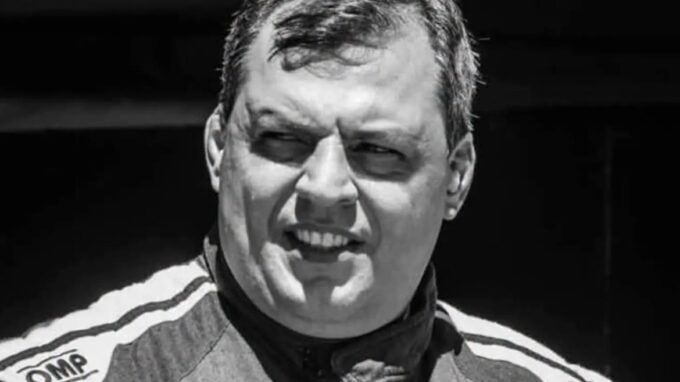
Asesinaron a Alfredo Wiebel y se dieron a la fuga
notienredSeptember 13, 20260



Clima en Ciudad de Buenos Aires: sábado 12 de septiembre
Sábado en la Ciudad de Buenos Aires con una temperatura máxima de...
 WindwhistlerSeptember 13, 20260
