
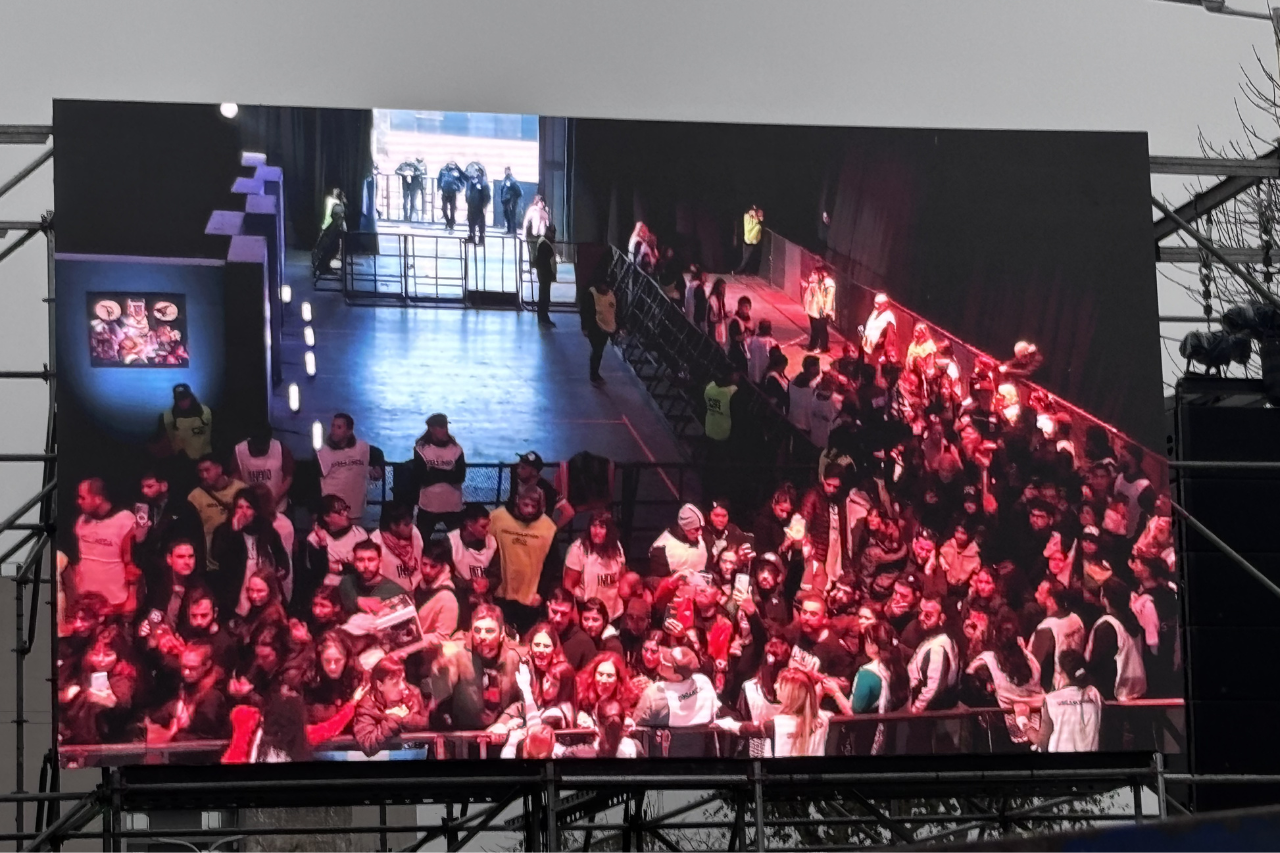
Argentinas largest farewells: five funerals that brought the nation to a standstill
 Buenos Aires HeraldJune 10, 20263 Mins read
Argentina has witnessed a handful of funerals so large that they transcended mourning and became national events. From political leaders to cultural icons, certain figures inspired massive displays of collective grief, drawing crowds that numbered in the hundreds of thousands and sometimes millions. The death of rock icon Carlos Indio Solari, which took the country by surprise on Friday, is the most recent showing of devotion to a popular figure. According to Buenos Aires province Minister Carlos Bianco, more than 500,000 fans walked by his casket inside Polideportivo Jos Mara Gatica during the massive public wake on Sunday. An additional 500,000 people gathered in the vicinity of the sports stadium during the rainy weekend to pay their respects. Where does Solaris memorial rank in terms of attendance in Argentine history? Eva Pern The benchmark still remains the funeral of Eva Pern in 1952. Widely regarded as the largest public farewell in Argentine history, Evitas death at age 33 triggered an outpouring of emotion rarely seen anywhere in the world. Her body was embalmed and lay in state for 16 days, while an estimated two million people participated in the ceremonies and procession, first at the Secretariat of Labor (now the Buenos Aires City Legislature) and then at Congress and the headquarters of the General Confederation of Labor (in Spanish, CGT). Eva Perns body was later seized by the military regime that came to power after the 1955 coup known as the Revolution Libertadora. It was secretly transported to Italy, buried under a false name in Milan, and eventually returned to Juan Domingo Pern in exile in Madrid in 1971. It was brought back to Argentina three years later by then-President Isabel Pern. Since 1976, Eva has rested in the Duarte family mausoleum at Recoleta Cemetery. Juan Domingo Pern Another monumental farewell came in 1974 with the death of Evita‘s husband, Juan Domingo Pern, founder of the Peronist party and a key figure in Argentine politics and society. Despite heavy rain, close to one million mourners gathered in Buenos Aires to pay tribute to the three-time president, first at Congress and then at the presidential residence in Olivos. He was buried at Chacarita Cemetery. In 2006, however, his remains were moved to his former home in San Vicente, Buenos Aires province, which is now a museum. Diego Maradona Third place belongs to football star Diego Maradona. He died suddenly at the age of 60 in 2020 while under home hospitalization in a gated community in Tigre, where he was recovering from surgery for a blood clot in his brain. His wake was held in the midst of the COVID-19 pandemic. Thousands, however, defied lockdown and flocked to Casa Rosada to pay their respects and take part in the collective farewell. It is estimated that almost one million people attended the presidential palace and Plaza de Mayo that day. His remains were later taken to the private cemetery Jardn Bella Vista, where his parents are also buried. Nstor Kirchner Ten years earlier, almost half a million people gathered at Plaza de Mayo to say goodbye to former president Nstor Kirchner, who died suddenly of a heart attack in El Calafate on October 27, 2010, at 60. After a stay at a viewing room in Casa Rosada, the casket was taken in a funeral procession to Aeroparque and flown to Ro Gallegos, Santa Cruz province. He was finally buried in the Kirchner family mausoleum at the citys municipal cemetery. Hundreds of thousands of mourners were present at each stop. Hiplito Yrigoyen Long before Peronism, the funeral of former president of the Radical Party, Hiplito Yrigoyen in 1933 marked an early turning point in Argentine political culture. Unprecedented crowds visited the coffin first at his home on Sarmiento Street and then carried in procession to Recoleta Cemetery, accompanied by hundreds of thousands of mourners estimated at nearly half a million people. Other notables Another Radical party president, Ral Alfonsn, inspired a historic farewell in 2009, when 150,000-200,000 people visited his coffin at Congress and Recoleta Cemetery. Almost 70 years earlier, a crowd of 100,000 people paralyzed Buenos Aires in 1936, when tango singer Carlos Gardel’s body finally arrived from Colombia, almost one year after his death in a plane accident. Music lovers lined the streets and crowded the Luna Park arena and Chacarita Cemetery to honor the beloved artist. In more recent times, the death of romantic singer Roberto Sandro Snchez in 2010 also attracted a massive audience. He died in Mendoza after a heart-lung transplant, and his body was flown to Buenos Aires to lie in state at the Congress, where mourners formed lines stretching approximately 15 city blocks. His remains were taken to a private cemetery in Longchamps in a massive funeral procession attended by approximately 100,000 people. Other notables with massive attendance include rock star Gustavo Cerati, and folklore giant Mercedes Sosa. Now, the farewell to Indio Solari has entered that select pantheon at number five. Taken together, these funerals reveal a distinctive Argentine tradition: the transformation of public mourning into a powerful expression of collective identity.
CONMOCIÓN: murió Rosa del Valle Rasgido
 notienredSeptember 13, 20260
Claudio Barrelier reveló por qué mató a Agostina Vega: Obsesión por la
notienredSeptember 13, 20260
Asesinaron a Alfredo Wiebel y se dieron a la fuga
notienredSeptember 13, 20260



Clima en Ciudad de Buenos Aires: sábado 12 de septiembre
Sábado en la Ciudad de Buenos Aires con una temperatura máxima de...
 WindwhistlerSeptember 13, 20260
